Quick Facts
- Primary Goal: Improve balance and muscle strength through low-impact movement.
- Target Audience: Seniors, individuals with limited mobility, or office workers.
- Frequency: 2-3 times per week for optimal functional mobility.
- Essential Gear: A sturdy, armless, wheel-less chair and a non-slip surface.
- Key Benefit: Counteracts the 1-2% annual muscle loss typically seen after age 50.
- Safety Note: Always place the chair against a wall to prevent sliding during exercises.
Chair yoga poses provide a safe, low-impact method for seniors to improve flexibility, functional mobility, and muscle strength. Regular practice helps counter age-related muscle loss and enhances joint health, which are essential for maintaining independence. By engaging the core and major muscle groups while seated or supported, practitioners can improve their spinal alignment and range of motion without the risks associated with floor-based exercises.
Effective chair yoga poses for building strength and stability include Seated Leg Lifts, Cat-Cow stretches, and the Supported Sit-to-Stand. The Seated Forward Fold helps mobilize the lower back and hamstrings, while standing poses like Supported Heel Raises use the chair for balance to strengthen the calves and ankles. These movements focus on core engagement and proprioception to help reduce the risk of falls and improve overall physical stability.
To practice chair yoga safely, use a sturdy, armless chair positioned on a flat surface, preferably against a wall for added security. Focus on slow, controlled movements synchronized with deep breathing techniques to maintain the mind-body connection. Beginners should start with a brief 10-minute routine and progress gradually by increasing the duration of holds or moving from seated to supported standing positions as their functional strength improves.
Safety & Setup: Preparing for Success
Before you begin your practice, setting the right environment is crucial for both safety and effectiveness. Unlike traditional yoga, your primary prop here is a chair, which means the quality of that chair determines the quality of your workout. You should always use a sturdy armless chair that does not have wheels. Using a folding chair or a standard dining chair is usually best, provided it feels stable under your weight.
For added security, place your chair on a non-slip yoga mat or a carpeted area. If you are practicing on a hardwood or tile floor, it is a non-negotiable safety step to place the back of the chair directly against a wall. This prevents the chair from sliding away from you during movements that involve shifting your center of gravity.
Beyond the equipment, your internal focus is just as important. Proper spinal alignment is the foundation of all chair yoga poses. Imagine a string pulling the crown of your head toward the ceiling while your sit-bones remain firmly rooted in the chair. Integrating specific breathing techniques—such as deep nasal inhalations and slow exhalations—will help calm the nervous system and ensure your muscles receive the oxygen they need to build strength.
Safety Checklist
- Chair is armless and has no wheels.
- Chair is placed against a flat wall or on a non-slip mat.
- Wear supportive, flat-soled shoes or practice barefoot if the surface is not slippery.
- Keep a water bottle nearby for hydration.
- Move slowly; if you feel sharp pain, stop the movement immediately.
Seated Poses for Core & Mobility
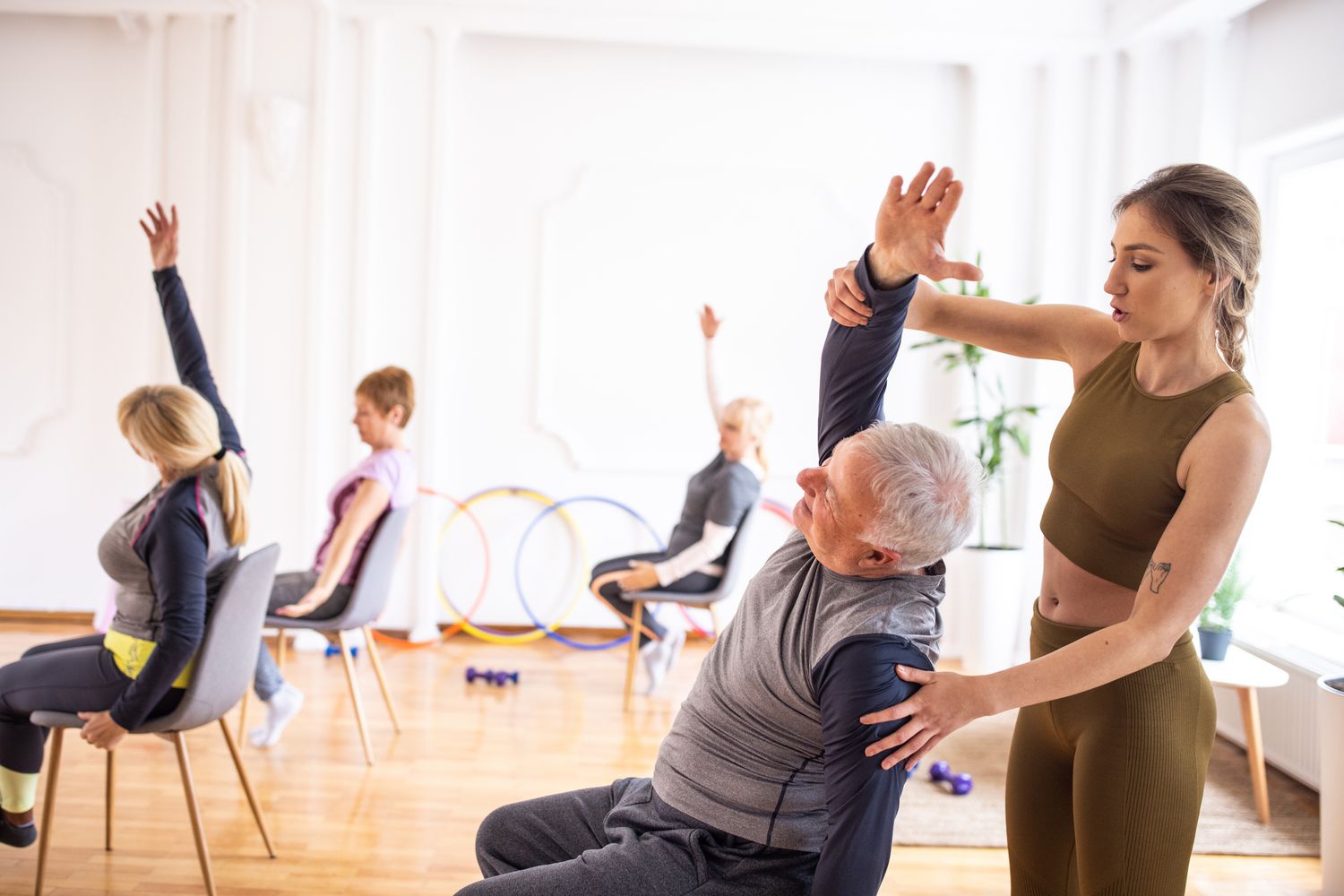
Many people underestimate the power of seated yoga for seniors, but the core engagement required to sit upright without the support of a chair back is a workout in itself. When we focus on the midsection, we improve our ability to stabilize the spine, which directly impacts our balance when walking or standing.
Research indicates that targeted exercise can have a profound impact on aging. In a study of older adults with osteoarthritis, an 8-week chair yoga program was shown to significantly improve gait speed while reducing reported pain and fatigue. This improvement starts with the core.
1. Seated Mountain (Tadasana)
This is the foundational posture for all seated chair yoga for core strength. It teaches you how to engage your abdominal muscles while maintaining a neutral spine.
- Setup: Sit at the front edge of your chair with your feet flat on the floor, hip-width apart.
- Breath: Inhale deeply, feeling your ribs expand.
- Action: Rest your hands on your thighs or by your sides. Engage your core by pulling your belly button slightly toward your spine. Roll your shoulders back and down.
- Reset: Hold for 5-10 breaths, then relax.
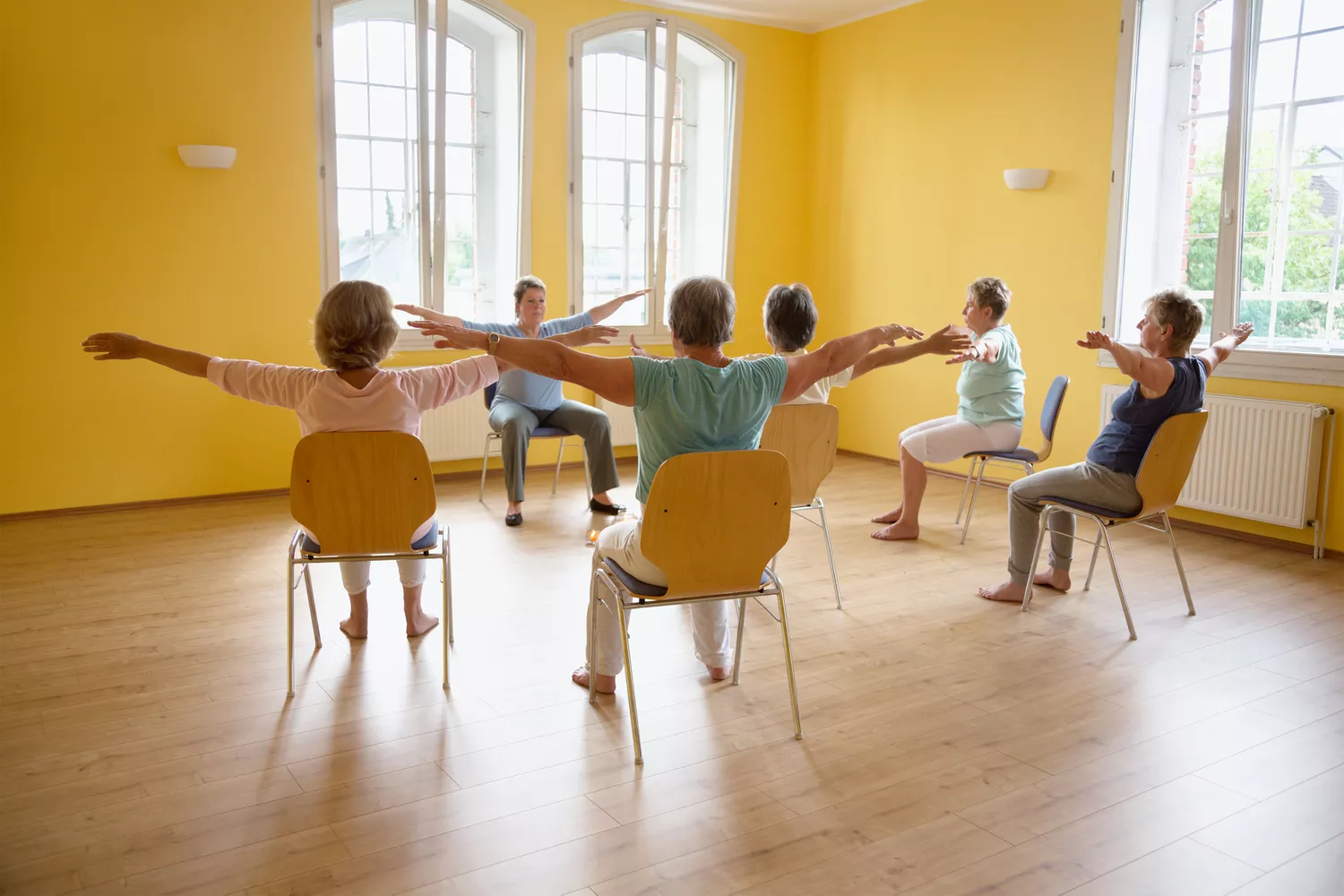
2. Cat-Cow Stretch
This movement is essential for maintaining range of motion in the spine and relieving the stiffness that often comes with prolonged sitting.
- Setup: Remain in your seated mountain position with hands resting on your knees.
- Breath: Inhale as you arch your back (Cow); exhale as you round your spine (Cat).
- Action: On the inhale, lift your chest and look slightly upward, allowing your belly to move forward. On the exhale, tuck your chin to your chest and round your back, pulling your navel in.
- Reset: Flow between these two positions 5 to 10 times.
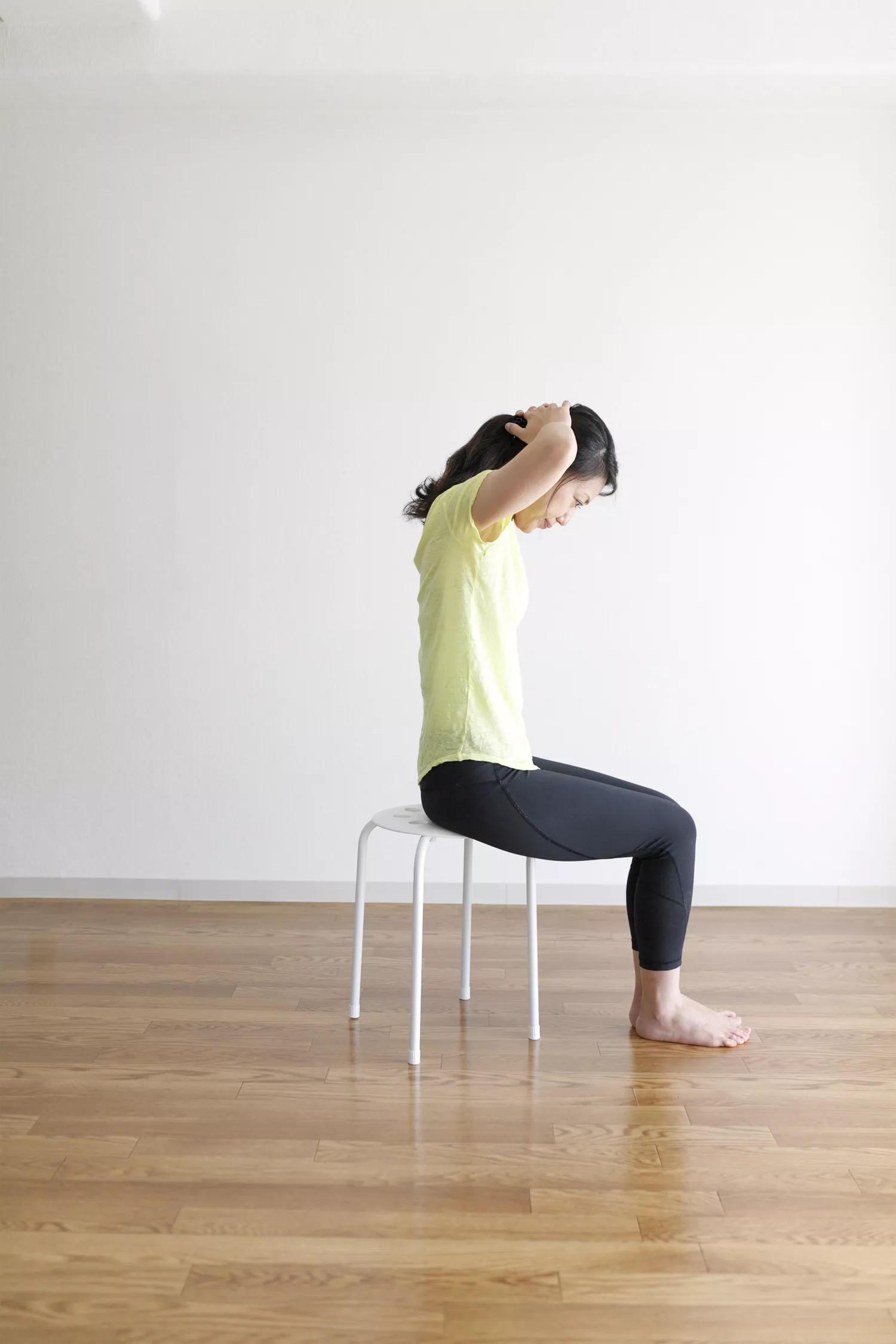
3. Seated Leg Lifts
To prevent muscle atrophy prevention in the lower body, we must target the quadriceps. This exercise is one of the most effective chair yoga poses for seniors with limited mobility because it builds the strength needed for walking and climbing stairs.
- Setup: Sit tall with your feet flat. You may hold the sides of the chair for stability.
- Breath: Exhale as you lift the leg; inhale as you lower it.
- Action: Extend your right leg out straight in front of you, flexing your toes toward your shin. Lift the foot a few inches off the ground while keeping your back straight.
- Reset: Lower the foot slowly and repeat on the left side. Aim for 10 repetitions per leg.
4. Seated Forward Fold
This pose helps with joint health by gently stretching the lower back and hamstrings. It also encourages blood flow to the upper body and head.
- Setup: Sit with your feet slightly wider than hip-width.
- Breath: Inhale to lengthen the spine; exhale to fold.
- Action: Slowly hinge at the hips, lowering your torso toward your thighs. Let your hands slide down your legs toward your ankles or the floor.
- Reset: Use your core to slowly roll back up to a seated position, one vertebra at a time.
Supported Standing Poses for Balance & Stability
While seated exercises are excellent, incorporating standing chair yoga poses using a chair for support is the best way to train the body for fall prevention in the elderly. These movements challenge your proprioception—the body's ability to sense its position in space—which naturally declines as we age.
Scientific evidence supports these interventions. Research involving a 12-week chair yoga intervention for elderly women found significant improvements in upper and lower limb strength, handgrip strength, and both static and dynamic balance.
5. Supported Sit-to-Stand
This is perhaps the most important functional movement you can practice. It mimics the act of getting out of a car or up from a sofa, which are critical tasks for maintaining independence.
- Setup: Sit at the edge of the chair with feet firmly planted.
- Breath: Exhale as you stand; inhale as you sit.
- Action: Lean your torso slightly forward. Using your leg strength (and as little hand support as possible), push through your heels to stand up completely.
- Reset: Slowly lower yourself back into the chair with control. Avoid "plopping" down.
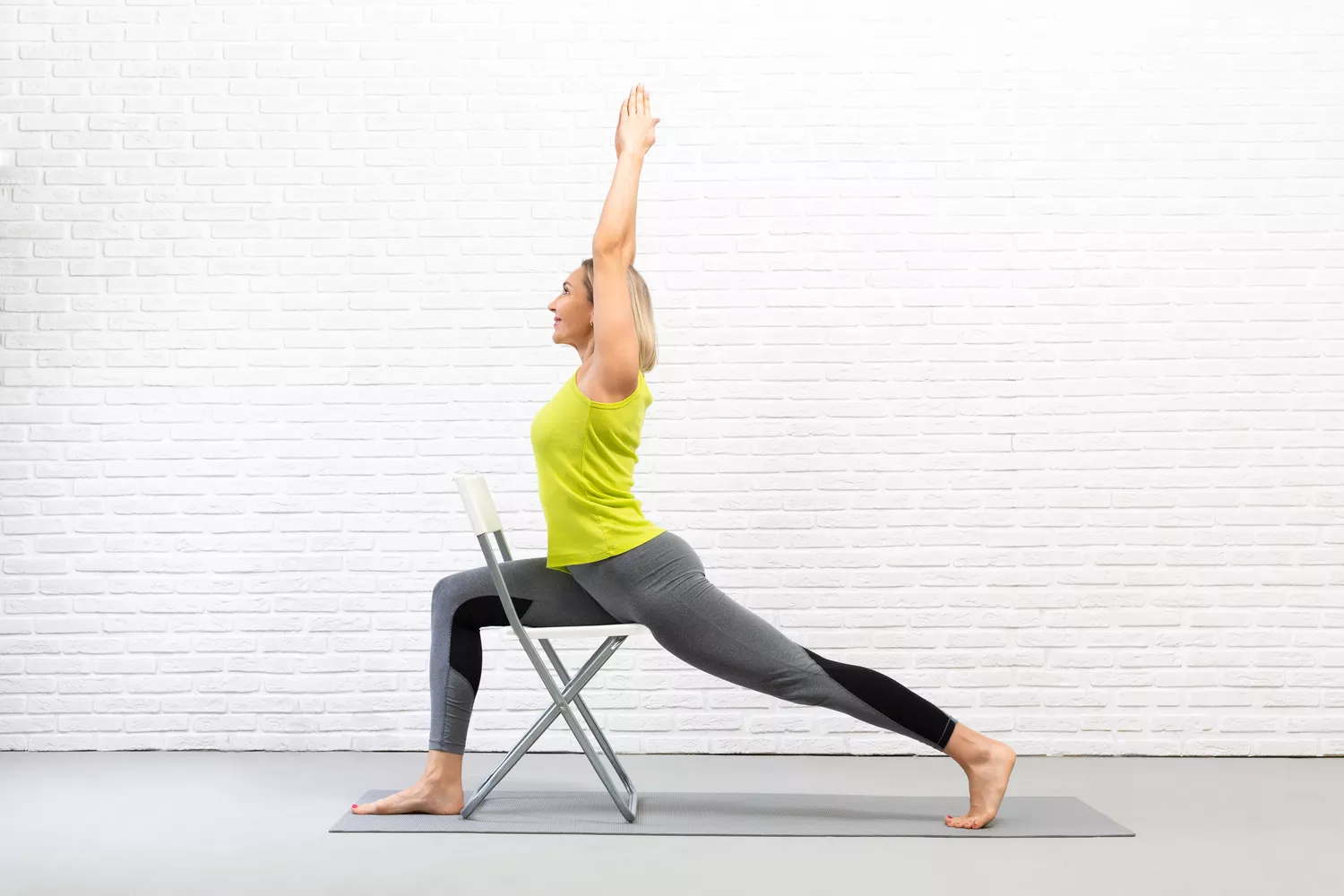
6. Chair Warrior I
This pose focuses on chair yoga for balance and stability by opening the hips and strengthening the legs simultaneously.
- Setup: Stand behind the chair, holding the backrest for support. Step your right foot forward under the chair and your left foot back.
- Breath: Breathe deeply into the chest.
- Action: Bend your front knee while keeping the back leg straight and the back heel pressed toward the floor. Keep your torso upright and square to the chair.
- Reset: Step the feet together and repeat on the other side.
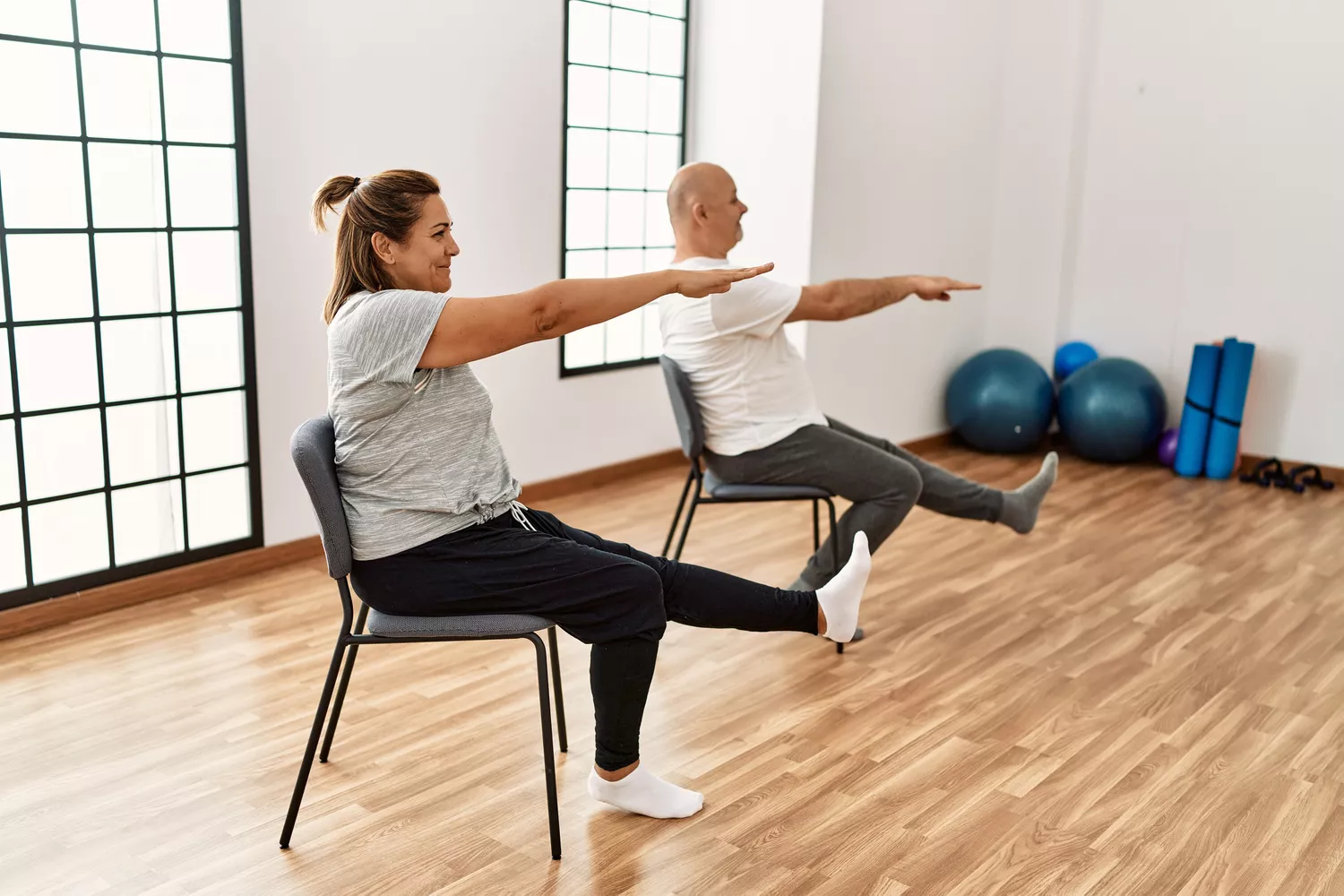
7. Supported Heel Raises
This is one of the best chair yoga exercises for leg strength and stability, specifically targeting the calves and ankles, which are the first line of defense against stumbles.
- Setup: Stand behind the chair with both hands on the backrest.
- Breath: Inhale to lift; exhale to lower.
- Action: Slowly rise onto the balls of your feet, lifting your heels as high as comfortable. Hold for a second at the top.
- Reset: Lower your heels back to the floor with control. Repeat 10-15 times.
A pilot study on seniors at high risk for falls demonstrated that an 8-week chair yoga program resulted in significant improvements in sit-to-stand functional performance and reduced fall risk categories as measured by the Tinetti assessment.
The 10-Minute Daily Routine
Consistency is the secret to seeing results with chair exercises for building strength. Even a short 10 minute chair yoga routine for daily practice can significantly improve how you feel and move throughout the day. By linking these poses together, you create a mind-body connection that promotes relaxation and mental clarity alongside physical gains.
The following table provides a structured way to combine the poses we've discussed into a manageable daily habit.
| Pose Order | Pose Name | Duration/Reps | Primary Focus |
|---|---|---|---|
| 1 | Seated Mountain | 1 Minute | Posture & Breathing |
| 2 | Cat-Cow Stretch | 5-10 Rounds | Spinal Flexibility |
| 3 | Seated Leg Lifts | 10 Reps per side | Quad Strength |
| 4 | Seated Forward Fold | 3 Reps (30s hold) | Lower Back Release |
| 5 | Supported Sit-to-Stand | 10 Reps | Functional Power |
| 6 | Chair Warrior I | 30s per side | Hip Mobility |
| 7 | Supported Heel Raises | 15 Reps | Ankle Stability |
When practicing this routine, remember that the quality of movement is better than the quantity. It is better to do five slow, perfectly controlled sit-to-stands than twenty fast ones using momentum. As your functional strength improves, you can gradually increase the duration of your holds or the number of repetitions.
FAQ
What are the best chair yoga poses for beginners?
For those just starting out, Seated Mountain and Cat-Cow are the best options. These poses focus on foundational movements like posture and spinal flexibility, which are easy to learn and provide immediate relief from tension. They allow beginners to get used to the rhythm of breathing with movement before advancing to more strength-heavy poses like leg lifts or standing variations.
Is chair yoga as effective as traditional yoga?
Yes, chair yoga is highly effective, especially for those who find floor-based yoga inaccessible. While it may look different, it utilizes the same principles of muscle engagement, stretching, and mindfulness. For many seniors, chair yoga is actually more effective because it allows them to perform movements with a greater range of motion and longer hold times due to the added stability of the chair.
What are the health benefits of chair yoga?
The health benefits are extensive and include improved cardiovascular health, better respiratory function through deep breathing, and increased bone density from weight-bearing standing poses. Mentally, it is known to reduce stress and anxiety. Physically, it is one of the most effective ways to combat muscle atrophy and maintain the balance necessary to prevent falls and maintain an independent lifestyle.
Are chair yoga poses safe for seniors?
Chair yoga is one of the safest forms of exercise for seniors because it removes the risk of falling that can occur during transition movements on a yoga mat. However, safety depends on using the correct equipment and following proper form. By using a sturdy armless chair and moving within a comfortable range of motion, seniors can safely build strength without overtaxing their joints.
What type of chair is best for chair yoga?
The ideal chair is a sturdy, armless, and wheel-less chair. A standard wooden dining chair or a high-quality metal folding chair works perfectly. It should have a flat seat and a straight back to help with spinal alignment. Avoid using office chairs with wheels or swivel bases, as these are unstable, and stay away from plush armchairs that make it difficult to sit upright and engage your core.