Quick Facts
- Primary Benefit: Target correction for 'Tech Neck' and rounded shoulders by strengthening the back.
- Core Focus: Activation of deep stabilizers including the multifidus and transversus abdominis.
- Equipment: Zero equipment needed; these are home-friendly floor exercises.
- Results Timeline: Visible postural changes in 4 to 8 weeks; structural memory in 12 weeks.
- Clinical Insight: A 12-week program significantly reduces thoracic kyphosis and improves lumbar lordosis.
- Global Trend: Approximately 65% of global practitioners engage in Pilates specifically for rehabilitation and flexibility.
The most effective Pilates posture exercises for better alignment include the Hundred, Swan, and Spine Stretch Forward, which target deep stabilizers like the transversus abdominis and multifidus. Incorporating planks and push-ups further supports alignment by strengthening the upper body and back, effectively counteracting rounded shoulders and forward head posture caused by sedentary desk work.
The Science of Alignment: Why Pilates Works
Posture is more than just standing tall; it is about the mechanical efficiency of your kinetic chain. Research shows that poor alignment can add 30 pounds of pressure to your spine. When your head shifts just 2 to 3 centimeters forward, the load on your cervical spine increases by roughly 20 to 30 lbs, leading to chronic tension and headaches. These Pilates posture exercises target deep stabilizers like the transversus abdominis to restore natural alignment.
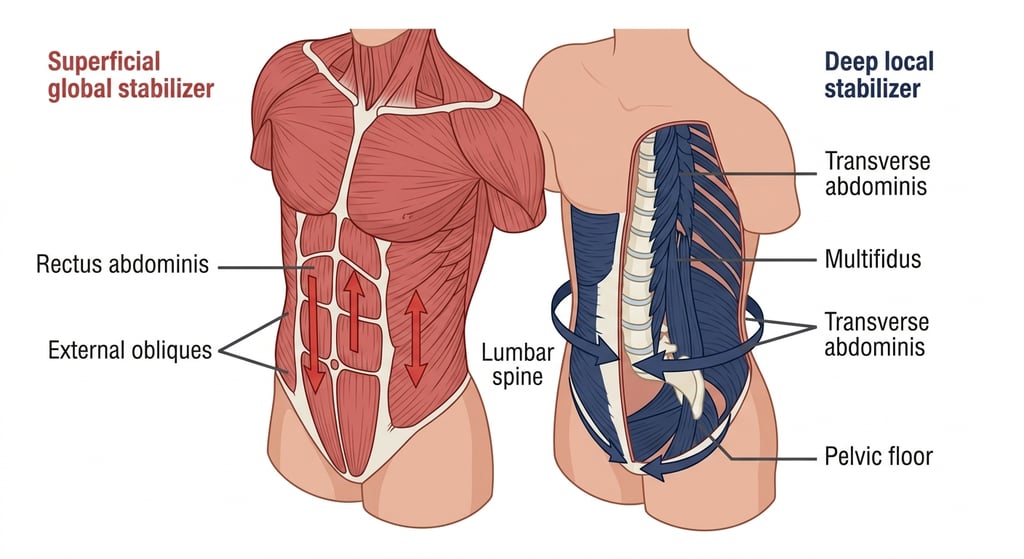
The magic of Pilates for spinal alignment lies in its focus on local stabilizers rather than just global movers. While many gym workouts focus on the large muscles you can see in the mirror, Pilates activates the multifidus—the tiny muscles that hug the vertebrae—and the pelvic floor engagement necessary for a stable base. A 2024 systematic review published in BMC Sports Science, Medicine and Rehabilitation concluded that regular Pilates practice leads to significant improvements in both static and dynamic posture, while reducing the severity of spinal deformities such as scoliosis and kyphosis.
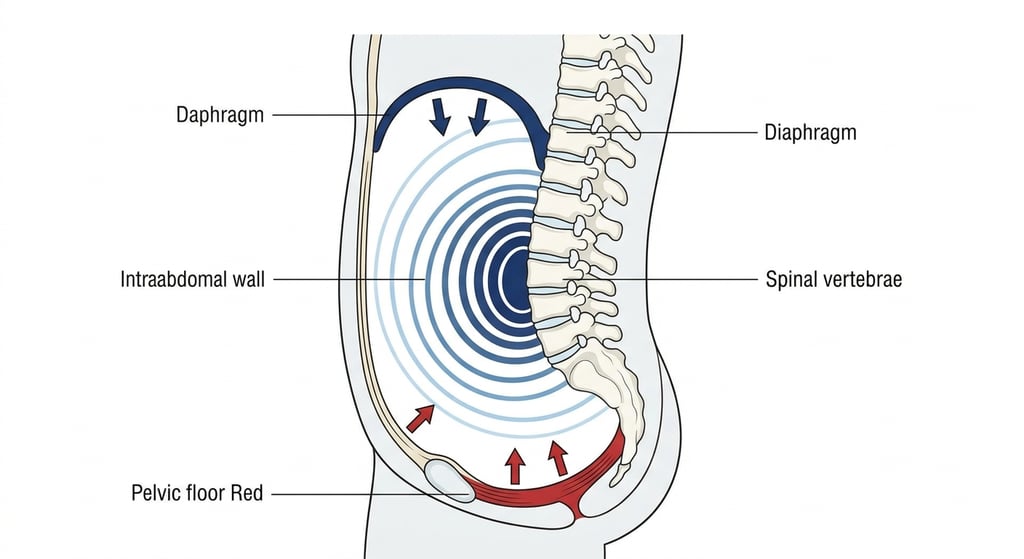
By utilizing lateral breathing, practitioners create internal spinal support, which acts like a natural corset. This neuromuscular memory ensures that even after you leave the mat, your body remembers how to hold itself. This is why beginner-friendly Pilates for spinal alignment is often recommended as a primary corrective tool for the modern lifestyle.
1. The Hundred: Deep Core Stabilization
Modern Problem Solved: Weak core foundation and slouching.
The Hundred is the quintessential Pilates exercise for building the internal pressure needed to support the spine. This move focuses on the transversus abdominis and encourages pelvic floor engagement. It prepares the body by warming up the blood and focusing the mind on the center of the body.
- Lie on your back with legs in a tabletop position (knees bent at 90 degrees).
- Lift your head and shoulders off the mat, reaching your arms long by your sides.
- Pump your arms up and down vigorously while inhaling for five counts and exhaling for five counts.
- Repeat for 10 sets to reach 100 breaths.
For those looking for Pilates posture exercises for home without equipment, the Hundred is perfect. It teaches you how to maintain a stable pelvis while the limbs are in motion, a key skill for maintaining a better stance throughout the day.
2. The Swan: Counteracting the 'Desk Slouch'
Modern Problem Solved: Rounded shoulders and tight chest.
The Swan is one of the most effective Pilates for thoracic mobility and rounded shoulders. It works by moving the spine into extension, which is the direct opposite of the forward-leaning "C-curve" we adopt while looking at laptops or phones.
- Lie on your stomach with your hands under your shoulders, elbows tucked close to your ribs.
- Press your pubic bone into the mat to engage the lower abdominals.
- Inhale as you slowly lift your chest away from the floor, using the muscles of your upper back rather than just pushing with your arms.
- Focus on thoracic extension and scapular stability, keeping your gaze slightly forward on the floor to avoid crunching the neck.
Clinical research published in the Archives of Physical Medicine and Rehabilitation found that a 12-week Pilates program for sedentary office workers resulted in statistically significant reductions in thoracic kyphosis. By opening the front of the body, you allow the shoulders to naturally drop back into their sockets.
3. Spine Stretch Forward: Spinal Articulation
Modern Problem Solved: Compressed spine from sitting.
This exercise is excellent for Pilates exercises for forward head posture from desk work because it encourages spinal articulation—the ability to move each vertebra independently. It teaches the body to create space between the joints, counteracting the effects of gravity and prolonged sitting.
- Sit tall with your legs extended slightly wider than your hips.
- Reach your arms forward at shoulder height.
- Exhale as you peel your spine off an imaginary wall, starting from the head, then the neck, then the upper back.
- Imagine reaching over a large beach ball to keep the lift in your waist.
This movement builds proprioception, helping you understand where your spine is in space. It is a fundamental part of any Pilates techniques for better stance, as it helps you identify where your back feels tight or stuck.
4. Pelvic Tilt & Bridge: Correcting Lower Crossed Syndrome
Modern Problem Solved: Anterior pelvic tilt (excessive arch in the lower back).
Many people suffer from "Lower Crossed Syndrome," where the hip flexors are tight and the glutes and abdominals are weak. This causes the pelvis to tilt forward, creating a "duck butt" appearance and lower back pain. The Pelvic Tilt and Bridge are beginner-friendly Pilates for spinal alignment that address this imbalance.
- Lie on your back with knees bent and feet flat on the floor, hip-width apart.
- Exhale to tilt your pelvis toward your nose, flattening your lower back into the mat.
- Continue peeling your spine up into a bridge, engaging your glutes and hamstrings.
- Hold at the top, ensuring your ribs stay soft and connected to your core.
By strengthening the posterior part of the kinetic chain, you provide a more stable foundation for your spine to rest upon. This reduces the strain on the lumbar region and promotes a more neutral, upright stance.
5. Chest Expansion: Opening the Thoracic Spine
Modern Problem Solved: 'Tech Neck' and cervical strain.
Chest Expansion is specifically designed for Pilates exercises for forward head posture from desk work. It focuses on shoulder retraction and neck alignment, helping to pull the head back over the shoulders where it belongs.
- Kneel or stand tall with your arms by your sides.
- Inhale as you reach your arms back behind your hips, squeezing your shoulder blades together gently.
- While holding the breath, turn your head to the right, then left, and then back to the center.
- Exhale to release the arms forward.
This move requires core exercises for posture improvement because you must keep your torso perfectly still while moving your neck and arms. It trains the scapular stability necessary to prevent the "hunched" look often associated with aging and screen time.

6. Swimming: Posterior Chain Strengthening
Modern Problem Solved: Weak back muscles and poor endurance.
If you find it difficult to sit up straight for more than five minutes, your back endurance is likely low. Swimming is a dynamic move that targets the multifidus and the entire posterior chain, building the stamina required for a healthy posture.
- Lie on your stomach with arms and legs extended.
- Lift your right arm and left leg simultaneously, then switch quickly in a fluttering motion.
- Keep your head in line with your spine, looking down at the mat.
- Focus on lengthening your limbs rather than just lifting them high.
This exercise hones your neuromuscular memory, teaching your body how to maintain a long, strong spine even during rapid movement. It is a core component of a well-rounded routine of Pilates posture exercises.
7. Wall Roll Down: Vertical Alignment Check
Modern Problem Solved: Loss of vertical awareness.
The Wall Roll Down is the ultimate Pilates posture exercises for home without equipment because the wall acts as your teacher. It provides tactile feedback, showing you exactly where your spine is out of alignment.
- Stand with your back against a wall, feet about six inches away.
- Slowly peel your spine away from the wall, one vertebra at a time, until you are hanging toward the floor.
- Shake your head "no" and "yes" to release neck tension.
- Slowly roll back up, trying to touch every single part of your spine against the wall as you rise.
This move reinforces spinal articulation and proprioception. It is the perfect way to finish a session, leaving you feeling taller and more connected to your center.
Implementation: Frequency and Results Timeline
To see lasting change, consistency is more important than intensity. Most practitioners find that a minimum effective dose consists of two to three sessions per week. However, even a 10-minute daily routine of these Pilates posture exercises can yield significant results.
Results Timeline
| Milestone | Expected Physical Changes |
|---|---|
| 4 Weeks | Improved body awareness; reduced daily neck and shoulder tension. |
| 8 Weeks | Visible changes in how you stand and sit; "Tech Neck" begins to recede. |
| 12 Weeks | Neuromuscular memory established; structural improvements in spinal curvature. |
Red Flags While Pilates is generally safe, stop immediately if you experience shooting pain, dizziness, or numbness in your extremities. If you have a diagnosed spinal condition like a herniated disc, consult a physician before attempting thoracic extension or deep spinal articulation.
FAQ
How does Pilates improve your posture?
Pilates improves posture by strengthening the deep stabilizer muscles of the core and back while increasing flexibility in the chest and hips. It focuses on alignment and spinal articulation, retraining the nervous system to hold the body in a more efficient, upright position through improved neuromuscular memory.
Which Pilates exercises are best for correcting a rounded back?
The Swan and Chest Expansion are particularly effective for correcting a rounded back. These movements emphasize thoracic extension and scapular stability, which open the chest and strengthen the upper back muscles that have become overstretched and weak from slouching.
How long does it take to see posture improvements with Pilates?
Initial improvements in awareness and tension reduction often occur within four weeks. However, visible structural changes and lasting improvements in spinal alignment typically require a Pilates posture improvement timeline for beginners of 8 to 12 weeks of consistent practice.
Can Pilates help with forward head posture?
Yes, Pilates is highly effective for forward head posture. Exercises like Chest Expansion and the Wall Roll Down focus on neck alignment and shoulder retraction, teaching the body to balance the weight of the head correctly over the cervical spine.
Does Pilates help with lower back pain related to posture?
Pilates helps alleviate posture-related lower back pain by correcting imbalances like anterior pelvic tilt. By engaging the transversus abdominis and the glutes through exercises like the Pelvic Bridge, Pilates reduces the strain on the lumbar spine and creates a more supportive "inner corset."