Quick Facts
- Root Meaning: The word comes from the Sanskrit bhaj, which means to share, adore, or serve.
- Core Text: Bhagavad Gita Chapter 12 is the primary scriptural authority on this path.
- Primary Goal: Achieving chitta-shuddhi, or the complete purification of the heart and mind.
- Accessibility: Unlike other paths, it requires no complex physical postures or intense intellectual study.
- Mental Health: A study showed a 97% in managing symptoms of anxiety and depression through devotional chanting.
- Daily Integration: Practices like kirtana and smarana can be performed during any daily activity.
Bhakti Yoga is the spiritual path of devotion and divine love, focusing on the purification of the heart through nine specific forms of practice such as shravana (hearing) and kirtana (chanting). This bhakti yoga for beginners guide serves as a foundation for individuals looking to cultivate a personal connection with the Divine while quieting the ego and fostering transcendental consciousness through mantra meditation and satsang.
Understanding the Yoga of Devotion
In the vast landscape of Indian philosophy, yoga is often described as a journey with four primary routes: the path of intellect (Jnana), the path of action (Karma), the path of meditation (Raja), and the path of love, known as Bhakti Yoga. While modern practitioners are often well-versed in the physical asanas of Hatha yoga, the yoga of devotion techniques offer a different entry point—one that begins and ends in the heart.
To understand the relationship between these paths, spiritual masters often use the bird metaphor. For a soul to fly toward liberation, it requires two strong wings. One wing is Jnana, the intellectual knowledge of the self and the universe. The other wing is Bhakti Yoga, the emotional and devotional energy that fuels the journey. Without both, the bird cannot sustain flight. This path is rooted in the concept of divine love, a state where the practitioner moves beyond the selfish desires of the ego to experience a profound sense of spiritual surrender.
Historically, the teachings of this path were codified in sacred scriptures like the Bhagavad Gita and the Srimad Bhagavatam. These texts suggest that because humans are naturally emotional beings, channeling those emotions toward a higher source is the most direct way to achieve prapatti, or total surrender to the divine will. It is a process of refining our human affections until they become a transcendental force of attraction toward the absolute.
The Nine Forms of Bhakti: A Roadmap for Practice
For those wondering how to practice the nine forms of bhakti, the ancient texts provide a systematic roadmap known as Navavidha Bhakti. These nine methods are not necessarily linear; a practitioner might find that one specific form resonates more deeply than the others, or they may choose to integrate several into their spiritual life. Each method is designed to help the practitioner achieve chitta-shuddhi, clearing the mental "dust" that prevents us from seeing our true nature.

1. Shravana (Hearing)
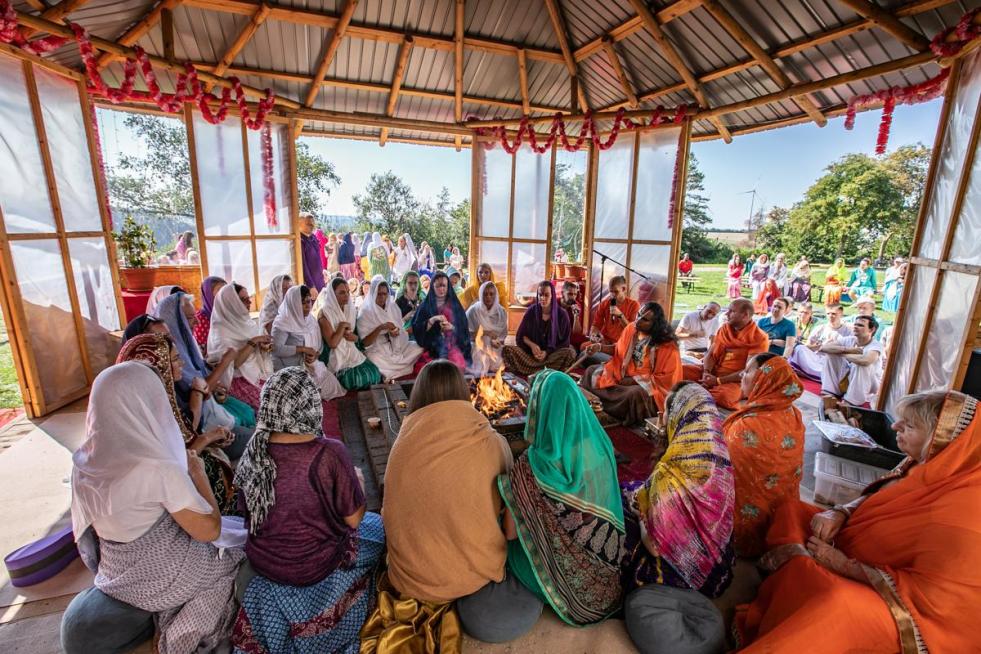
The practice begins with listening. Shravana involves hearing the names, stories, and teachings of the Divine. In a modern context, this might look like attending a satsang (a gathering of truth-seekers) or listening to podcasts and lectures about sacred scriptures. By filling the ears with spiritual sound vibrations, we begin to displace negative thought patterns with higher wisdom.
2. Kirtana (Chanting)
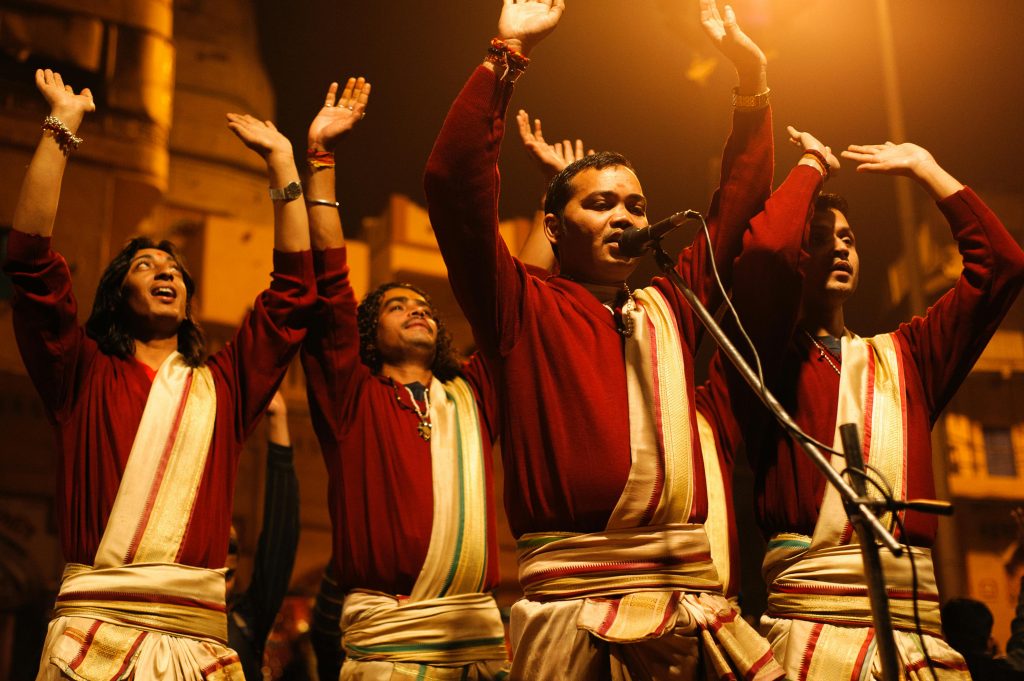
Perhaps the most recognizable aspect of Bhakti Yoga, kirtana involves singing or chanting the names of the Divine. These kirtana and chanting practices for devotion often involve a call-and-response format, accompanied by traditional instruments like the harmonium or mridanga. This vocal expression helps release pent-up emotional energy and focuses the mind through mantra meditation.
3. Smarana (Remembrance)
Smarana is the internal practice of constant remembrance. It is the act of keeping the Divine in the background of your mind throughout the day. Whether you are driving, working, or resting, the goal is to cultivate a continuous flow of thought toward the spiritual, ensuring that your inner dialogue is centered on divine love.
4. Padasevana (Service at the Feet)
Traditionally, this referred to serving the feet of a deity or a guru. In a broader sense, padasevana is about serving the world as a manifestation of the Divine. It involves humility and the recognition that the entire creation is worthy of our service and respect.
5. Archana (Worship)
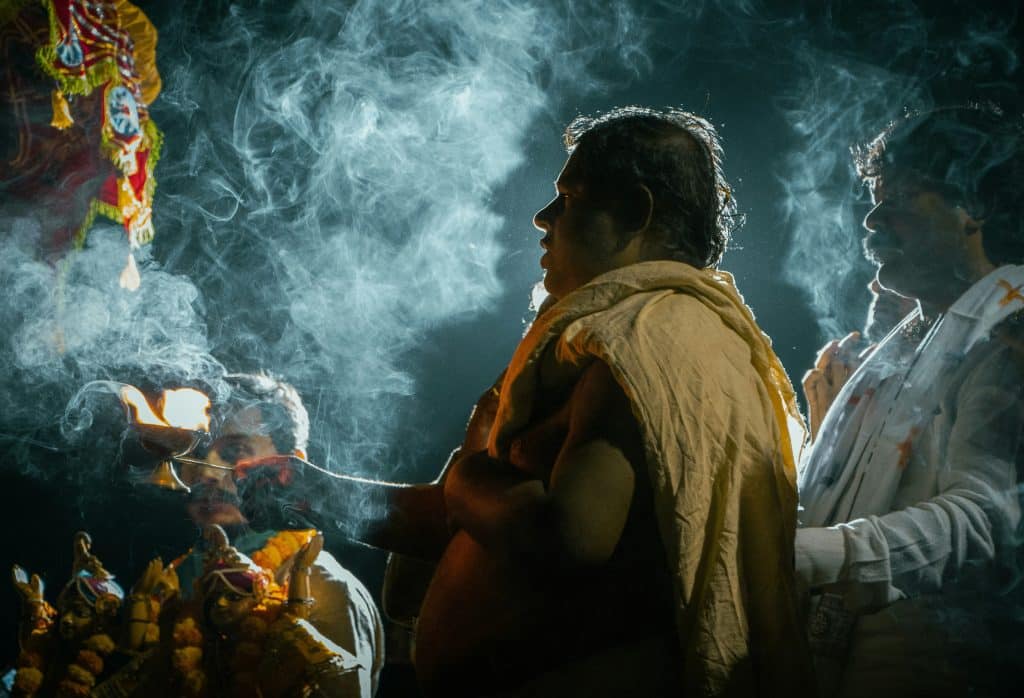
Archana involves ritual worship, often through the use of an altar or sacred images. This deity worship helps externalize our internal devotion. By offering flowers, incense, or water, we engage our physical senses in the act of love, making the spiritual experience tangible.
6. Vandana (Prayer)
Vandana is the practice of prayer and prostration. It is a moment of total vulnerability where we express our gratitude, our needs, and our longing for connection. Prayer in Bhakti Yoga is not just a request for material gains but a plea for the strength to stay on the spiritual path.
7. Dasya (Servitude)
In dasya-bhakti, the practitioner adopts the attitude of a devoted servant. It is a way of dissolving the ego by acknowledging that there is a power greater than the self. By viewing every task as a service to the Divine, we find purpose in the mundane.
8. Sakhya (Friendship)
This is a beautiful shift in the practitioner’s relationship with the Divine. Cultivating sakhya bhakti personal relationship with god means treating the Divine as a best friend. You share your secrets, your joys, and your frustrations with the Divine, removing the distance and formality often found in religious practice.
9. Atmanivedana (Self-Surrender)
The final stage is atmanivedana, the complete offering of the self. Here, the distinction between the lover and the beloved dissolves. The practitioner realizes that they and the Divine are not separate, leading to a state of bhakti-rasa, the pure "taste" of spiritual bliss.
| Practice Form | Action | Spiritual Goal |
|---|---|---|
| Shravana | Listening | Knowledge & Inspiration |
| Kirtana | Chanting | Emotional Release |
| Smarana | Remembering | Constant Connection |
| Archana | Worship | Sensorial Focus |
| Dasya | Serving | Ego Dissolution |
| Sakhya | Befriending | Intimacy with Divine |
Spiritualizing the Material: Bhakti in Daily Life
The true power of Bhakti Yoga lies in its ability to transform an ordinary life into a sacred one. You do not need to retreat to a cave or an ashram to find spiritual depth. Instead, you can use bhakti yoga daily routine examples to spiritualize your existing environment.
One of the most effective ways to do this is by integrating dasya bhakti into work and chores. When you approach your professional responsibilities or household duties as an offering, the nature of the work changes. Cleaning the house becomes a way of preparing a temple for the Divine; completing a report for your boss becomes an act of integrity and service. This shift in perspective prevents burnout and infuses your day with a sense of sacred purpose.

Furthermore, cultivating sakhya bhakti personal relationship with god allows you to bring your spirituality into your conversations. You can talk to the Divine while walking the dog or sitting in traffic. These informal "check-ins" maintain the state of smarana, ensuring that your spiritual life is not confined to a twenty-minute meditation session in the morning but is a living, breathing reality.
Modern technology can also be a tool for Smarana. Digital triggers, such as phone reminders or spiritual wallpapers, can prompt you to pause and take a mindful breath, redirecting your focus toward heart-centered spirituality. By consistently applying these yoga of devotion techniques, you begin to experience a profound shift in how you relate to the world around you.
Scientific Benefits for Mental and Physical Well-being
While Bhakti Yoga is primarily a spiritual discipline, modern science has begun to validate its profound impact on mental and physical health. The practices of chanting and devotional meditation are not just culturally significant; they have a measurable effect on the human nervous system.
A 2021 clinical study found that participants who practiced Bhakti Yoga for eight weeks experienced significant reductions in anxiety levels and depressive symptoms. The focus on divine love and externalizing focus away from the self helps break the cycles of rumination that often characterize mood disorders.
Additionally, research has shown that practicing Kirtan for 12 minutes daily over a 12-week period can lead to measurable improvements in cognitive function, sleep quality, and overall mood. The rhythmic nature of the chanting, combined with the breathwork involved in singing, activates the parasympathetic nervous system, leading to a state of transcendental consciousness. This state allows the body to recover from the chronic stress of modern life, fostering a sense of inner peace that is often hard to find through traditional exercise alone.
By quieting the "monkey mind" through kirtana, practitioners experience a decrease in cortisol levels. The repetitive sound vibrations act as a form of neuro-hacking, bypassing the analytical mind and directly impacting the emotional centers of the brain. This creates a fertile ground for chitta-shuddhi, where the practitioner feels more connected, less isolated, and more resilient in the face of life’s challenges.
FAQ
What is the main goal of Bhakti Yoga?
The primary objective is to achieve chitta-shuddhi, which is the purification of the mind and heart. By clearing away ego-driven desires and negative emotions, the practitioner aims to experience pure divine love and a direct, personal connection with the Divine. Ultimately, this path leads to spiritual liberation and the realization of one's true, blissful nature.
How do you practice Bhakti Yoga in daily life?
You can practice by transforming everyday actions into offerings. This includes viewing your job or chores as a form of dasya-bhakti (servitude), practicing smarana (remembrance) by keeping the Divine in your thoughts throughout the day, and engaging in simple rituals like prayer or mantra meditation. The goal is to spiritualize the mundane by performing all actions with an attitude of devotion.
What are the nine forms of Bhakti Yoga?
Known as Navavidha Bhakti, the nine forms include shravana (hearing sacred teachings), kirtana (chanting or singing), smarana (remembrance), padasevana (service), archana (ritual worship), vandana (prayer/prostration), dasya (servitude), sakhya (friendship with the Divine), and atmanivedana (complete self-surrender).
What is the difference between Bhakti Yoga and Karma Yoga?
While both involve service, the focus differs. Karma Yoga emphasizes the performance of duty without attachment to the results, focusing on selfless action. Bhakti Yoga emphasizes the emotional connection and love for the Divine, where the service is performed as a direct offering to the beloved. In many ways, they overlap, as a devotee naturally performs selfless service.
Do you need a guru to start Bhakti Yoga?
While having a guru or experienced teacher can provide valuable guidance and accelerate one's progress, you do not need one to begin. Anyone can start practicing shravana (listening to teachings) or kirtana (chanting) on their own. The path is highly personal and accessible to anyone with a sincere heart and a desire for spiritual growth.