Quick Facts
- Ozempic List Price: Approximately $997.58 per month as of 2025
- Wegovy List Price: Roughly $1,349 per month for a 28-day supply
- Medicare 2026 Cap: A new $2,100 annual out-of-pocket maximum for Part D beneficiaries
- Market Innovation: New oral GLP-1 formulations expected to start at $149 per month
- Future Outlook: Ozempic list price is scheduled to drop to $675 on January 1, 2027
- Coverage Reality: Only 18% of large employers currently cover these drugs for weight loss
Navigating the high price of weight loss therapy requires a strategic approach to managing GLP-1 costs. While the list prices for medications like Ozempic and Wegovy remain high, patients can leverage insurance coverage tips, manufacturer coupons, and 2026-specific oral formulations to find relief. Patients can reduce out-of-pocket expenses for GLP-1 medications by utilizing manufacturer coupons and pharmacy savings cards, which may lower monthly costs significantly for eligible individuals. Utilizing Health Savings Accounts (HSA) or Flexible Spending Accounts (FSA) allows for the use of pre-tax dollars to cover pharmacy benefits. Additionally, reviewing the insurance drug formulary for lower-tier alternatives or patient assistance programs can provide vital financial relief for long-term treatment.

Navigating the Insurance Maze: Ozempic & Wegovy Coverage
Understanding how your insurance handles high-cost specialty drugs is the first step in managing GLP-1 costs effectively. The cost of GLP-1 medications depends largely on your insurance plan's drug tier placement and your specific pharmacy benefit manager. A Pharmacy Benefit Manager (PBM) acts as the middleman between the drug manufacturer and your insurance company, determining which drugs are preferred and which are excluded.
When you look at your drug formulary, you will likely see Ozempic listed as a Tier 2 or Tier 3 medication for type 2 diabetes. However, Wegovy, which is the version of semaglutide approved specifically for weight management, is often placed in a different category or excluded entirely. While many employer-sponsored plans cover Ozempic for type 2 diabetes, coverage for weight loss medications like Wegovy often requires specific plan riders. This distinction is critical because an insurance company might cover the medication for one diagnosis but not the other, even if the active ingredient is the same.
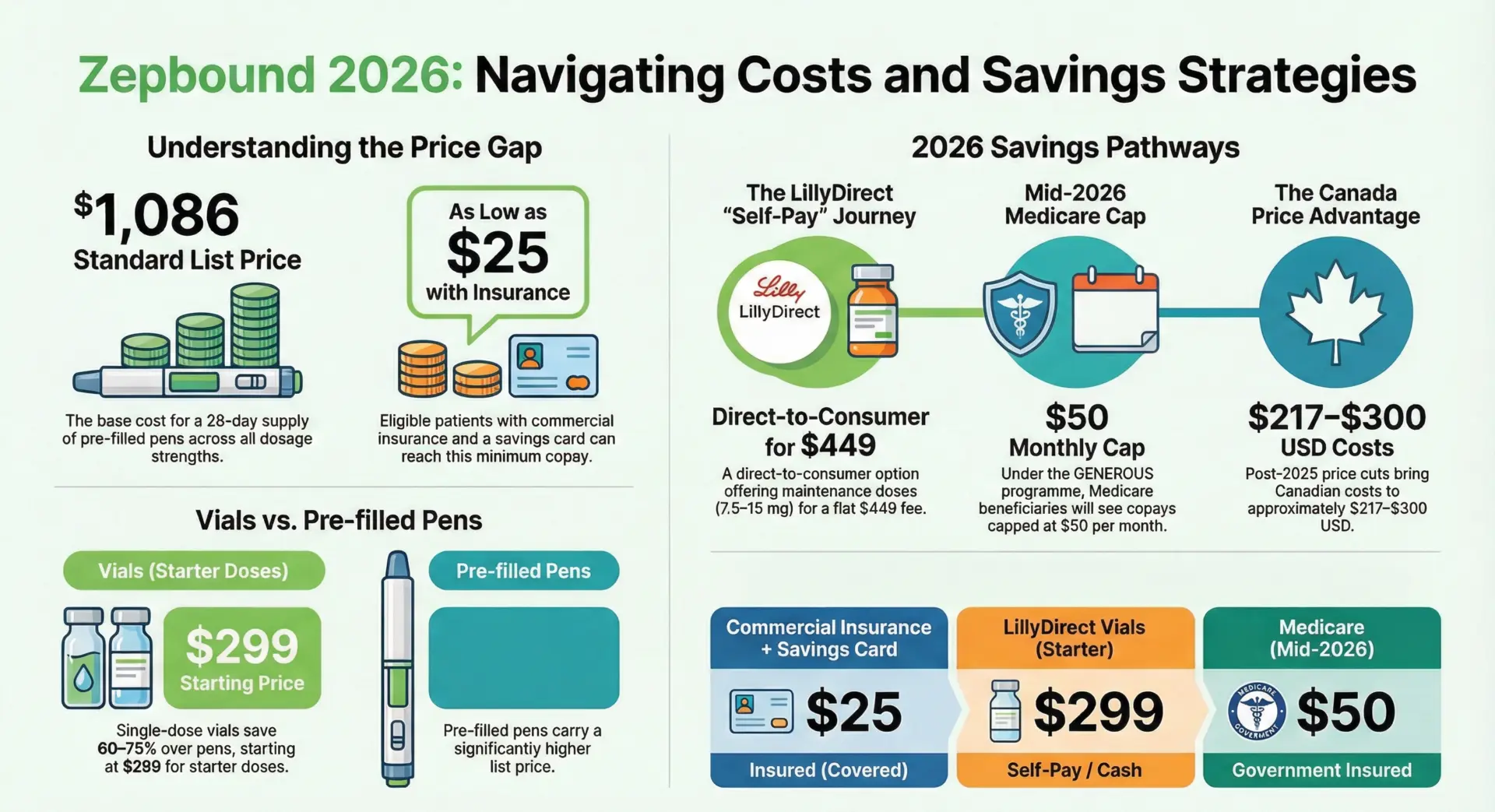
For those on Medicare, the landscape is changing significantly. Historically, Medicare was prohibited from covering weight loss drugs. However, the Inflation Reduction Act has introduced a Medicare 2026 Cap that limits annual out-of-pocket spending to $2,100. This is a massive win for GLP-1 cost management for Medicare patients who were previously stuck in the "donut hole" with no ceiling on their spending. Medicare coverage is generally available for diabetes management but remains restricted for weight loss purposes, meaning patients should verify their deductible and coinsurance rates before starting therapy. Always check your plan's specific coinsurance percentage, as a 20% coinsurance on a $1,349 drug still results in a $270 monthly bill.
Reducing Costs via GLP-1 Patient Assistance Programs & Coupons
If your insurance coverage is limited or non-existent, your next move should be exploring GLP-1 patient assistance programs and manufacturer resources. These programs are designed by pharmaceutical companies like Novo Nordisk to help bridge the gap for patients who cannot afford the high retail price.
Manufacturer coupons, often referred to as copay cards, can reduce your out-of-pocket weight loss medication costs to as little as $25 per month for those with commercial insurance. It is important to note that these coupons usually have a maximum annual benefit and cannot be used by individuals on government-funded programs like Medicare or Medicaid. For those who are uninsured or have a low income, Novo Nordisk offers more robust patient assistance programs through NovoCare.
To qualify for these more comprehensive assistance programs, you typically need to meet certain criteria:
- Your household income must be at or below 400% of the federal poverty level.
- You must be a legal resident of the United States.
- You must not have any other insurance coverage for the medication.
Beyond coupons, financial planning for long-term Wegovy use should involve your tax-advantaged accounts. Using a Health Savings Account (HSA) or Flexible Spending Account (FSA) allows you to pay for your prescriptions using pre-tax dollars. This effectively gives you a discount equal to your tax bracket, which can save you 20% to 35% on every refill. When combined with a letter of medical necessity from your doctor, these funds are a powerful tool for managing the financial burden of chronic treatment.
Strategies for Paying Cash and 2026 Market Shifts
The landscape for GLP-1 medications is shifting rapidly as we move toward 2026 and 2027. If you find yourself in a position where you must pay cash, there are several strategies for paying cash for GLP-1 medications that don't involve paying the full $1,350 list price.
The most significant change is the emergence of oral GLP-1 formulations. Starting in early 2026, several manufacturers are launching pill-based versions of semaglutide and other molecules that are expected to have a much lower cash price, potentially ranging from $149 to $199 per month. This "pills-first" approach is aimed at patients whose insurance does not cover the injectable versions. Furthermore, as we look toward January 1, 2027, the list price for Ozempic is scheduled to drop to $675 as part of government price negotiations, which will likely pull down the retail price across the board.
| Medication Type | Estimated List Price | Potential Cash/Coupon Price |
|---|---|---|
| Injectable (Ozempic/Wegovy) | $997 - $1,349 | $25 - $550 |
| New Oral GLP-1 (2026) | $149 - $199 | $149 - $199 |
| Generic Saxenda (2027) | $400 - $600 | $200 - $400 |
Another strategy involves managing costs of GLP-1 maintenance doses. Once you reach your goal weight, some healthcare providers may transition you to a lower "maintenance" dose. Depending on the brand, you may be able to use a larger pen that lasts longer or take the medication less frequently, effectively stretching your dollar. However, this must always be done under strict medical supervision to ensure the safety and efficacy of the semaglutide or tirzepatide treatment.

Overcoming Denials: Appeals and Employer Advocacy
If insurance denies coverage for Ozempic or Wegovy, the first step is to work with a healthcare provider to submit a prior authorization or a letter of medical necessity. This documentation should outline why the specific GLP-1 medication is essential for your health profile, noting any co-morbidities like high blood pressure or sleep apnea that are being treated by the weight loss.
If the request is still rejected, patients can initiate a formal appeal with their insurance provider. When learning how to appeal GLP-1 insurance denial, remember that persistence is key. Many initial denials are automated and can be overturned with a detailed clinical case.
If your plan explicitly excludes weight loss medications, the battle moves from the insurance company to your employer's human resources department. You can request that your employer add weight management benefits to their specific group health plan. This is a delicate conversation, but it can be backed by data. According to 2024 benchmark survey data from KFF, only 18% of large employers with 200 or more workers provide insurance coverage for GLP-1 medications when they are used primarily for weight loss.
When requesting GLP-1 weight loss coverage from employers, it helps to be aware of the financial pressure they face. Simulation modeling from the Employee Benefit Research Institute indicates that expanding GLP-1 drug coverage can increase employer health insurance premiums by an estimated 6% to 14% annually. To make a successful case, emphasize the long-term ROI: healthier employees often result in lower costs for treating chronic conditions like heart disease and diabetes down the line.
Checklist for an Insurance Appeal:
- Obtain the specific "Evidence of Coverage" document from your insurer.
- Gather clinical evidence (blood work, BMI history) showing previous failed weight loss attempts.
- Ask your doctor to emphasize "Medical Necessity" rather than "Lifestyle Preference."
- Track all communication with the insurance company, including dates and representative names.
FAQ
How much do GLP-1 medications cost per month?
The cost of GLP-1 medications varies based on the specific brand and your insurance status. As of 2025, the monthly list price for Ozempic in the United States is approximately $997.58, while Wegovy carries a monthly list price of roughly $1,349. However, most patients with commercial insurance pay much less through manufacturer coupons, often between $25 and $550.
Does insurance usually cover GLP-1 drugs for weight loss?
Coverage for weight loss is currently less common than coverage for diabetes. While most employer-sponsored plans cover drugs like Ozempic for Type 2 Diabetes, only 18% of large employers currently provide coverage for GLP-1 medications when the primary goal is weight loss. Many plans still consider weight loss therapy a "lifestyle" benefit and exclude it from the main pharmacy benefit.
How can I lower my out-of-pocket costs for GLP-1 therapy?
You can lower your costs by using manufacturer savings cards, which are available on the medication's official website. Additionally, using pre-tax dollars from an HSA or FSA can save you a significant amount on taxes. For those with high-deductible plans, reaching your deductible early in the year can also lead to much lower out-of-pocket weight loss medication costs for the remaining months.
Are there patient assistance programs for GLP-1 medications?
Yes, programs like NovoCare offer assistance for patients who are uninsured or have a low household income. These programs typically require you to be a U.S. resident and earn less than 400% of the federal poverty level. If you qualify, the medication may be provided at no cost or at a heavily discounted rate.
What should I do if my insurance denies coverage for a GLP-1 drug?
First, ask your doctor to submit a prior authorization or a letter of medical necessity. If that is denied, you have the right to a formal appeal. If the denial is based on a plan-wide exclusion for weight loss, you may need to speak with your employer's HR department to advocate for the inclusion of weight management benefits in future plan years.
Managing the expenses associated with these life-changing medications is a marathon, not a sprint. By staying informed about 2026 market shifts, being persistent with insurance appeals, and utilizing every available discount tool, you can make GLP-1 therapy a sustainable part of your long-term health journey. Stay proactive and keep a close eye on your pharmacy benefit manager updates each year—the landscape is changing in the patient's favor.