Quick Facts
- Duration: Most ozempic side effects are temporary, typically resolving within four to eight weeks as your gut microbiome and metabolic systems adjust.
- Nausea Statistics: Clinical data shows nausea affects 15.8% of patients on the 0.5 mg dose and increases to 20.3% at the 1 mg dose.
- Stabilization: Digestive symptoms like diarrhea or constipation generally peak during the dosage titration phase and stabilize by week twelve.
- Hydration Goal: Experts recommend consuming 80 to 100 ounces of water daily to counteract the medication’s tendency to suppress the natural thirst reflex.
- Fiber Intake: Aim for 25 to 35 grams of daily fiber to maintain gastrointestinal motility and prevent significant constipation.
- Treatment Retention: Approximately 3% to 4% of patients in clinical trials discontinued treatment due to gastrointestinal adverse reactions.
Ozempic side effects typically improve within four to eight weeks as the body adjusts to the medication. Gastrointestinal issues like nausea usually peak during dose increases and subside within a few days, while symptoms like constipation or diarrhea often stabilize by week twelve.
The Timeline: What to Expect from Week 1 to 12
Starting a GLP-1 receptor agonist like semaglutide is a significant shift for your digestive system. Think of it as a software update for your metabolism; there are bound to be a few bugs during the installation. The key to success is understanding that these symptoms are largely predictable and tied to the dosage titration schedule.
In the first two weeks, your body is introduced to the medication at a low 0.25 mg dose. This is the adjustment period where your brain and gut start communicating differently. You might notice a slight "fullness" or mild queasiness as gastrointestinal motility begins to slow down. By week four, when many patients move to a higher dose, you may experience a temporary resurgence of symptoms. This is normal. Managing side effects during ozempic dose increases requires patience, as each step up in dosage essentially resets the clock for your gut’s adaptation.
By the time you reach week eight through twelve, most users find their "new normal." Clinical reports indicate that diarrhea and vomiting affected 12% to 16% and 5% to 9.2% of patients respectively, but these numbers tend to drop significantly once the maintenance dose is reached. If you follow a slow titration protocol, you allow your enteric nervous system to accommodate the slowed gastric emptying without overwhelming your system.
Managing Ozempic Nausea: The Bland Food Strategy
Nausea is the most common hurdle, often described as a constant, low-level sea sickness. This happens because semaglutide mimics a hormone that tells your brain you are full while simultaneously slowing down the rate at which your stomach empties. When food sits in the stomach longer, it can feel like a fermentation tank, leading to that heavy, nauseous feeling or the infamous sulfur burps.
To navigate this, many clinicians recommend a diet for ozempic side effects that prioritizes bland, easy-to-digest options. Instead of three large meals, pivot to five or six micro-meals. This prevents the stomach from becoming overly distended. The BRAT diet—Bananas, Rice, Applesauce, and Toast—can be a literal lifesaver during the first few days after your subcutaneous injection.
Pro Tip: Avoid high-fat or fried foods during the first 48 hours after your shot. High-fat meals stay in the stomach even longer, which can exacerbate nausea and lead to acid reflux.

Bland Food Cheat Sheet
| Food Category | Recommended Options | Foods to Avoid |
|---|---|---|
| Proteins | Boiled chicken, eggs, tofu | Fried meats, spicy sausage, heavy stews |
| Grains | White rice, crackers, plain oatmeal | Whole wheat pasta (during peaks), pastries |
| Fruits/Veg | Bananas, steamed carrots, apples | Raw broccoli, onions, citrus fruits |
| Beverages | Ginger tea, electrolyte water | Carbonated sodas, heavy coffee, alcohol |
Practical tips for managing ozempic nausea daily include incorporating ginger or peppermint. These natural carminatives help soothe the stomach lining and move gas through the system. If you find that the sight of food makes you queasy, focus on liquid nutrition like protein shakes or bone broth until the sensation passes.

Ozempic Constipation Relief: The Conveyor Belt Method
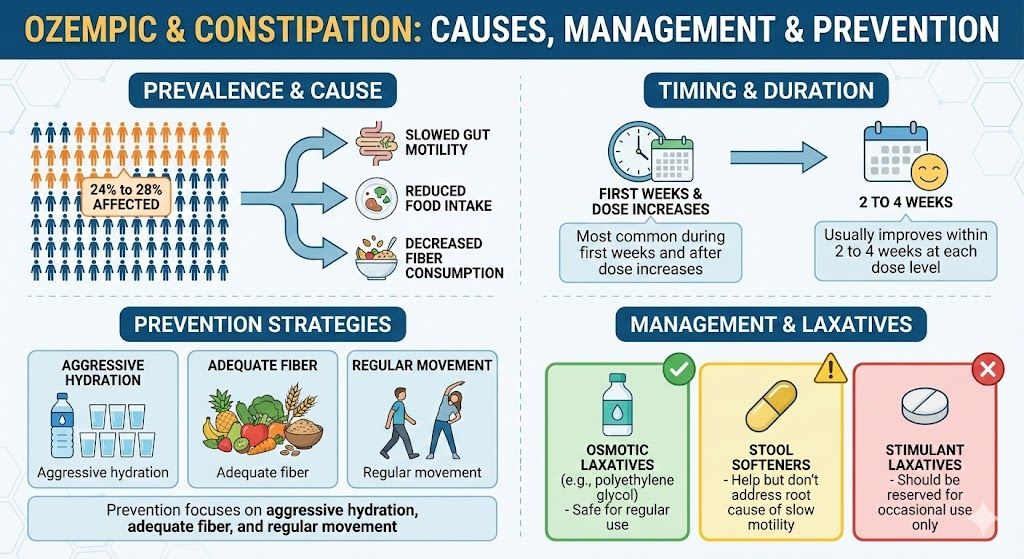
If nausea is the feeling of the system being too full, constipation is the feeling of the system stopping altogether. Because the medication reduces gastrointestinal motility, your "conveyor belt" slows down. The longer waste stays in the colon, the more water is reabsorbed, making stools hard and difficult to pass.
The most critical factor here is solving the Hydration-Thirst Paradox. Semaglutide can actually dampen your brain's signal for thirst. You might not feel thirsty, but your body is craving fluids to keep the digestive process moving. Achieving ozempic constipation relief starts with drinking 80 to 100 ounces of water daily. Adding electrolytes to at least one of those glasses ensures that the water actually gets into your cells rather than just passing through.
Regarding fiber intake recommendations for ozempic constipation, balance is key. While we usually advocate for high fiber, suddenly jumping to 40 grams can cause severe abdominal bloating if you aren't hydrated. Aim for 25 to 35 grams of a mix of soluble and insoluble fiber. Soluble fiber, found in oats and psyllium husk, absorbs water and turns into a gel, which helps move things along the conveyor belt more smoothly.
Tiered Escalation Protocol for Constipation
- Step 1: Increase water to 90 ounces and add a daily walk of 20 to 30 minutes to stimulate natural peristalsis.
- Step 2: Incorporate a daily scoop of soluble fiber or a few magnesium citrate capsules before bed.
- Step 3: If there is no movement for more than 48 hours, consult your doctor about safe over the counter remedies for ozempic constipation, such as osmotic laxatives like MiraLAX, which draw water into the colon.
Beyond the Gut: Fatigue and Muscle Preservation
While the focus is often on the stomach, many patients report a deep, systemic exhaustion. This is often labeled as "Ozempic fatigue," but it is frequently a secondary effect of a massive calorie deficit and rapid weight loss. When you aren't eating much, your body may struggle to maintain energy levels and, more importantly, muscle mass.
Research suggests that a significant portion of weight lost on GLP-1 medications can be muscle mass if protein intake isn't prioritized. To manage how to manage ozempic fatigue and low energy, focus on nutrient density. Every bite needs to count. Aim for 1.2 to 1.5 grams of protein per kilogram of body weight. This high protein intake, combined with consistent resistance training, signals to your body to burn fat while keeping your metabolically active muscle intact.
If fatigue persists, check your B12 levels. Some studies suggest that long-term use of certain metabolic medications can interfere with vitamin absorption. A high-quality methylated B-complex or a simple electrolyte replacement can often provide the spark needed to get through the afternoon slump.
Red Flags: When to See a Doctor
It is important to distinguish between the typical "adjustment period" and a more serious medical issue. While mild abdominal bloating and discomfort are standard, certain symptoms require immediate professional attention.
WARNING: MEDICAL RED FLAGS
Seek medical attention immediately if you experience:
- Severe, persistent stomach pain that radiates to your back (a potential sign of pancreatitis).
- Frequent, forceful vomiting that prevents any fluid retention.
- A complete lack of bowel movements for more than four days despite using laxatives.
- Severe dizziness or fainting, which may indicate acute dehydration or electrolyte imbalance.
Knowing when to see a doctor for ozempic stomach pain is vital for long-term safety. While the medication is generally well-tolerated, rare complications like gastroparesis (stomach paralysis) or gallbladder issues can occur. If your pain feels "sharp" rather than "heavy," or if it is accompanied by a high fever, do not wait for it to pass.
FAQ
What are the most common side effects of Ozempic?
The most frequently reported side effects are gastrointestinal in nature, including nausea, vomiting, diarrhea, and constipation. Nausea is the most prevalent, affecting approximately one in five users during the initial months of treatment. Other common experiences include abdominal pain, bloating, and a general sense of fatigue as the body adjusts to a lower caloric intake.
How long do Ozempic side effects last?
For the majority of patients, side effects are most intense during the first four to eight weeks. This timeframe coincides with the dosage titration period where the amount of medication is gradually increased. Most symptoms stabilize by week twelve. However, if a dose is increased too quickly, symptoms may temporarily reappear before the body acclimates to the new level.
How can I manage nausea while taking Ozempic?
Managing nausea involves a combination of dietary timing and food choices. Eating smaller, more frequent meals helps prevent the stomach from feeling overly full. Adopting the BRAT diet (Bananas, Rice, Applesauce, Toast) during particularly sensitive days can provide relief. Additionally, staying upright after eating and avoiding high-fat, fried, or spicy foods can prevent the delayed gastric emptying from causing significant distress.
Does Ozempic cause stomach pain?
Mild stomach pain, often described as cramping or bloating, is common and usually stems from slowed digestion or gas buildup. However, this discomfort should be manageable and temporary. If the pain becomes severe, sharp, or persistent, it is important to contact a healthcare provider to rule out more serious conditions like pancreatitis or gallstones.
What serious side effects should I watch for?
Serious side effects, though rare, include pancreatitis, changes in vision, hypoglycemia (low blood sugar), kidney problems, and serious allergic reactions. Patients should be particularly vigilant about intense pain in the upper abdomen that spreads to the back, as well as signs of severe dehydration. Always discuss your full medical history with your doctor to monitor for these risks.