Quick Facts
- Preparation Time: 15 minutes
- Cooking Time: 35 minutes
- Temperature: 200C (400F)
- Dietary: Gluten-Free, Dairy-Free
- Key Ingredient: Forbidden (Black) Rice
- Main Benefit: High in Omega-3 fatty acids and Anthocyanins
To create a sticky honey tamari salmon marinade, whisk together tamari, honey, sesame oil, grated ginger, and minced garlic. This guide covers cooking nutrient dense black rice for salmon and the secrets to a perfect pan-seared finish to ensure your Sticky Asian Salmon comes out restaurant-quality every time. For added brightness, incorporate rice vinegar or fresh lime juice and marinate the fillets for at least 30 minutes to allow the umami flavor to penetrate the fish before baking or pan-searing to achieve a caramelized finish.
The Ultimate Honey Tamari Salmon Marinade
Creating a glaze that clings to the fish without sliding off requires a specific balance of sugar and salt. In my experience, the golden ratio for a honey tamari salmon marinade is exactly 1:1 honey to tamari. This provides enough sugar for caramelization while the tamari supplies the deep, savory umami flavor that defines East Asian cuisine. Because tamari is naturally fermented and wheat-free, it makes this dish a perfect option for those seeking gluten free sticky salmon with tamari.
The foundation of the marinade starts with fresh ginger and garlic. Avoid the jarred stuff; the volatile oils in freshly grated ginger provide a spicy heat that cuts through the richness of the fish. Adding a splash of rice vinegar provides necessary acidity, ensuring the sweetness of the honey doesn't overwhelm the palate. A teaspoon of sesame oil adds a toasted, nutty aroma that rounds out the flavor profile.
For the best results, use the Skin-Side Up marination technique. Place your salmon fillets in a shallow dish and pour the marinade over them, ensuring the flesh is submerged while the skin stays relatively dry. This allows the marinade to penetrate the thickest part of the meat without making the skin too soggy to crisp up later. Aim for a 30-minute soak at room temperature; any longer and the acid in the rice vinegar might begin to "cook" the delicate protein fibers of the fish.
The Power of Forbidden Rice: Nutrient-Dense Base
While many recipes call for jasmine or brown rice, this Sticky Asian Salmon reaches its full potential when served over a bed of forbidden rice. Once reserved only for Chinese royalty, this grain is a nutritional powerhouse. Research has shown that one spoonful of black rice bran contains more anthocyanin antioxidants than an equivalent spoonful of blueberries, while also providing more fiber and vitamin E with less sugar.
Cooking nutrient dense black rice for salmon requires a bit more patience than white rice. The bran layer is thick, giving it a delightful chewy texture and a nutty flavor. To prepare it, boil the rice in salted water for 30 to 35 minutes until tender. Unlike the "absorption method" used for white rice, I recommend treating black rice like pasta: boil it in plenty of water and drain it thoroughly once the grains have just started to burst. This ensures the rice remains fluffy and individual rather than clumping together.
Beyond its striking deep purple color, black rice offers superior macros for those focused on healthy meal prep ideas for sticky asian salmon.
| Nutrient (per 1/2 cup cooked) | Black Rice | Brown Rice |
|---|---|---|
| Protein | ~4.8g | ~3.9g |
| Fiber | ~2.9g | ~1.9g |
| Anthocyanins | High | None |
| Texture | Chewy/Nutty | Soft/Mild |
This means black rice contains approximately 20% more protein and 40% more fiber per serving than brown rice.
Perfecting the Sticky Asian Salmon Technique
There are two primary ways to cook your salmon: oven-baking or pan-searing. Both require adherence to the Thickness Rule, which suggests cooking fish for 10 minutes per inch of thickness at 200C (400F).
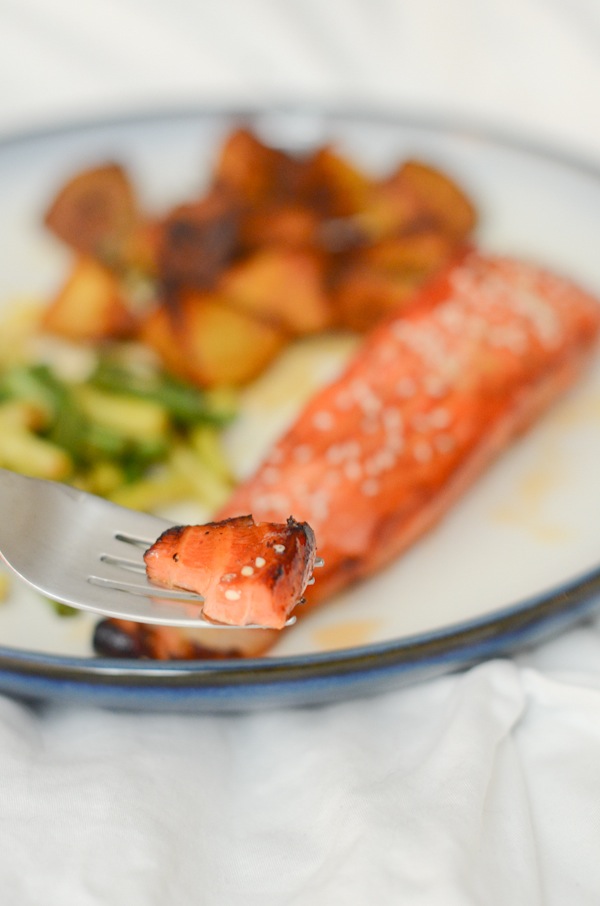
If you choose the pan-searing technique, you get the benefit of an incredibly crispy skin. Heat a cast-iron skillet over medium-high heat with a high-smoke-point oil. Place the salmon skin-side down and press gently with a spatula for 4 minutes. Flip the fish and cook for another 2 minutes. The secret to the sticky finish is the "basting window." During the final 30 to 60 seconds, pour the remaining marinade into the pan. It will bubble and reduce almost instantly. Use a spoon to continuously baste the fish, coating it in a thick, glossy, and concentrated glaze as the sugars undergo caramelization.
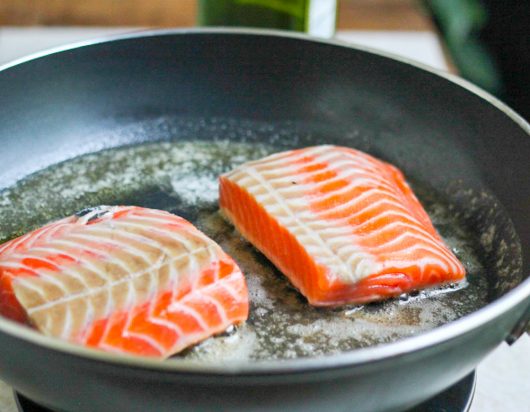
For those who prefer a more hands-off approach, oven baked sticky salmon temperature and time are key. Place the fillets on a parchment-lined tray at 200C (400F) for 12 to 15 minutes. Brush the salmon with extra glaze halfway through the cooking process. Whether you sear or bake, regular consumption of fatty fish is a win for your health. Research indicates that consuming one to two servings of fatty fish like salmon per week can reduce the risk of heart disease by 36%.
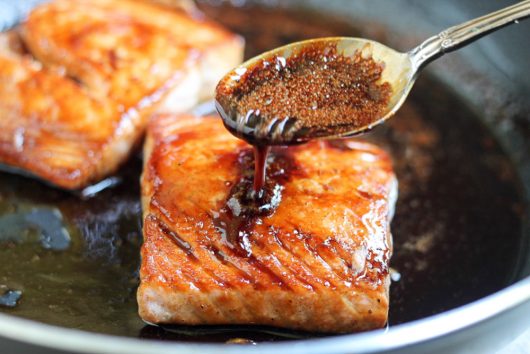
Pro-Tip: To check for doneness without a thermometer, press the top of the fillet with a fork. If the salmon flakes easily along the white lines (fat deposits), it is ready to be pulled from the heat.
Refreshing Sides: Carrot Salad and Serving Suggestions
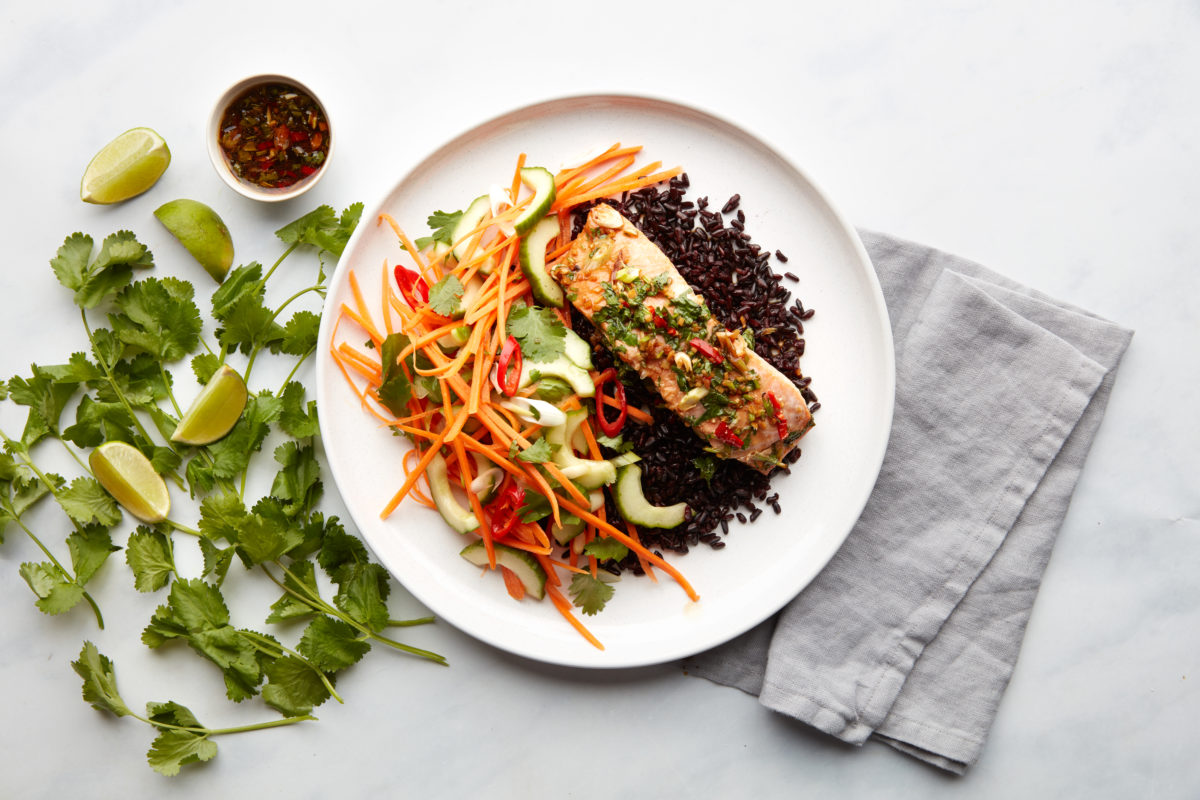
To balance the deep umami flavor and the sweetness of the glaze, you need a side dish with high acidity and crunch. A sticky salmon with crunchy carrot and cucumber salad provides the perfect textural contrast. Use a vegetable peeler to create long, thin carrot ribbons and cucumber ribbons. Toss them with a splash of rice vinegar, a squeeze of lime, and a pinch of salt.
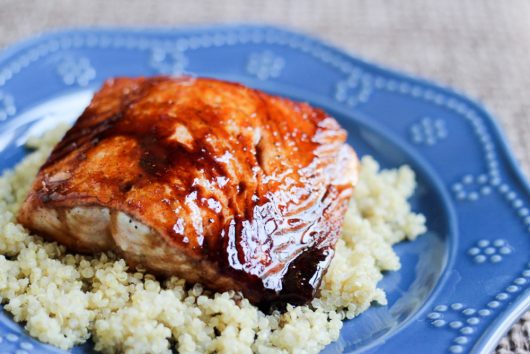
For restaurant-quality plating, scoop a generous portion of the purple-hued rice onto the center of the plate. Place the salmon fillet directly on top, allowing any excess glaze to drizzle down into the rice. Garnish with a heavy sprinkle of toasted sesame seeds, thinly sliced scallions, and a fresh cilantro garnish.
If you are serving this for a dinner party, consider the beverage pairing. The richness of the salmon and the intensity of the ginger and garlic pair beautifully with a crisp, acidic white wine. A Sauvignon Blanc or a Sancerre has the citrusy notes necessary to cut through the sticky Asian-inspired glaze, cleansing the palate between bites.
FAQ
What is sticky Asian salmon glaze made of?
The glaze is primarily a combination of honey and tamari (or soy sauce). These two ingredients create the "sticky" base. Aromatics like fresh ginger and garlic are added for depth, while sesame oil provides a nutty finish. For the best consistency, a splash of rice vinegar or lime juice is used to balance the sweetness.
How do you get salmon skin crispy and sticky?
The best way to achieve this is to pan-sear the salmon skin-side down first for about four minutes without moving it. This renders the fat and crisps the skin. The "sticky" part comes at the very end of the cooking process when you add the honey-based marinade to the pan and baste the fish as the sauce reduces into a thick glaze.
What side dishes go well with Asian salmon?
Aside from nutrient-dense forbidden rice, this dish pairs excellently with crunchy, cold salads. Carrot ribbons and cucumber ribbons tossed in a light vinegar dressing provide a refreshing contrast. Steamed bok choy, charred broccolini, or a simple edamame salad are also fantastic warm options.
How long should you marinate salmon in Asian sauce?
You should marinate salmon for at least 30 minutes, but no more than two hours. Because Asian-inspired marinades often contain acidic components like rice vinegar or lime juice, leaving the fish in the liquid too long can cause the protein to break down and become mushy.
Is sticky Asian salmon gluten-free?
This recipe is gluten-free as long as you use tamari instead of traditional soy sauce. Tamari is a Japanese version of soy sauce that is typically made without wheat. Always check the labels of your honey and sesame oil to ensure no cross-contamination, but generally, this is an excellent gluten free sticky salmon option.