Quick Facts
- Primary Goal: Reducing major adverse cardiovascular events (MACE) in patients with obesity and established heart disease.
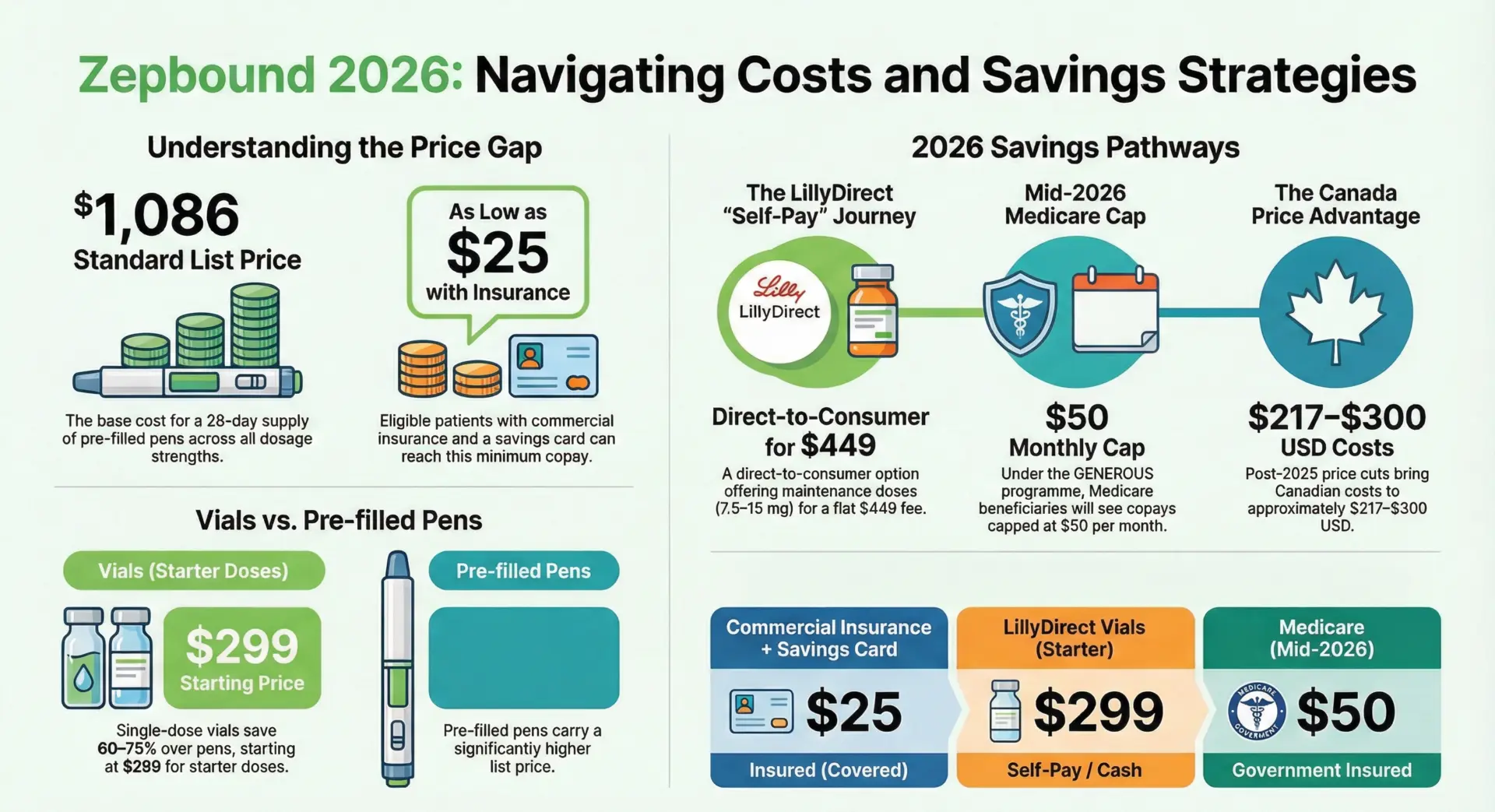
- 2026 Update: The Medicare GLP-1 Bridge program provides a $50 flat monthly copay starting July 1, 2026.
- Eligibility: BMI of 27 kg/m2 or higher plus a documented history of heart disease, stroke, or peripheral arterial disease.
- 2026 Financials: Standard Part D plans feature a $615 deductible and a $2,100 out-of-pocket cap for total drug costs.
- Coverage Mechanism: Medicare Part D plans cover Wegovy (semaglutide) when prescribed to reduce cardiovascular risks, bypassing the general federal ban on weight loss medications.
- Eligible Population: An estimated 3.6 million Medicare beneficiaries could qualify under the expanded heart health indication.
As of May 2026, Wegovy Medicare coverage has significantly expanded. While Medicare still legally excludes drugs for weight loss alone, CMS guidelines now allow coverage for patients with obesity and established cardiovascular disease. Medicare Part D plans cover Wegovy (semaglutide) when it is prescribed to reduce major cardiovascular risks in patients with obesity. While Medicare excludes drugs solely for weight loss, CMS guidelines allow coverage when the medication is FDA-approved for secondary medical reasons, such as lowering the risk of heart attacks or strokes.
The Heart Health Loophole: Why Medicare Now Covers Wegovy
For years, the Medicare Modernization Act of 2003 has acted as a legal wall, preventing the program from covering drugs used for weight loss. However, the medical community's understanding of obesity has shifted from a lifestyle issue to a chronic disease state that drives other fatal conditions. When the FDA approved Wegovy (semaglutide) specifically to reduce the risk of heart attack, stroke, and cardiovascular death, it opened a crucial door for federal coverage.
This change is rooted in evidence-first science. Clinical trials demonstrated a significant 20% reduction in major adverse cardiovascular events (MACE) among participants taking semaglutide compared to a placebo. Because Wegovy is now recognized as a life-saving cardiovascular intervention, it no longer falls strictly under the "weight loss" exclusion. The Centers for Medicare and Medicaid Services updated its guidance in March 2024 to allow Medicare Part D prescription drug plans to cover anti-obesity medications when they are FDA-approved for an additional medically accepted indication.
An estimated 3.6 million Medicare beneficiaries, representing approximately 7% of the total program population, could be eligible for Wegovy coverage under its expanded indication to reduce the risk of heart disease and stroke. This "loophole" essentially rebrands the medication's primary goal. In the eyes of Medicare, the weight management is a secondary benefit, while the primary medical necessity is Wegovy for cardiovascular risk coverage.
It is important to note that if a physician prescribes the drug solely for chronic weight management without documented heart disease, the claim will still be denied. The prescription must explicitly state that it is being used to lower cardiovascular risk in a patient with a high BMI and a history of heart issues.
2026 Cost Structure: The $50 Medicare GLP-1 Bridge Program
Navigating the costs of high-end GLP-1 receptor agonist medications has historically been a challenge for those on fixed incomes. To address this, the Medicare GLP-1 Bridge program, beginning July 1, 2026, provides eligible beneficiaries with access to Wegovy injections and tablets for a fixed $50 monthly copayment. This program is available nationwide across all states and territories and is scheduled to run through the end of 2027 to improve affordable access to FDA-approved medications.
The 2026 Part D landscape has also been restructured due to the Inflation Reduction Act, which significantly lowers out-of-pocket costs for Wegovy on Medicare Part D. Below is how the typical spending journey looks for a beneficiary in 2026:
| Spending Phase | Patient Responsibility | Details |
|---|---|---|
| Deductible Phase | First $615 | You pay the full negotiated price of the drug until you meet the deductible. |
| Initial Coverage | $50 Monthly Copay | Under the Bridge Program, your cost is capped at $50 per month once the deductible is met. |
| Full Coverage Cap | $0 After $2,100 | Once your total out-of-pocket spending reaches $2,100, you pay nothing for covered drugs for the rest of the year. |
For many, the $2,100 annual cap is a game-changer. Previously, patients could spend upwards of $10,000 annually on these medications. Now, the Medicare Prescription Payment Plan allows you to spread these costs across the entire year in monthly installments, ensuring you don't face a massive bill in January.
Furthermore, lower-income seniors may qualify for Medicare Extra Help for Wegovy prescription costs. If your annual income is below $23,475 (for an individual in 2026), your copays could be reduced even further, potentially to just a few dollars. According to a Kaiser Family Foundation analysis, if just 10% of eligible Medicare enrollees are prescribed Wegovy, the program could incur nearly $3 billion in additional annual drug costs. This highlights why the CMS guidelines are so specific regarding medical necessity documentation.
Clinical Eligibility Checklist: Do You Qualify?
Simply having a high BMI is not enough to secure Wegovy Medicare coverage. Because the medication is being covered under its cardiovascular indication, the clinical criteria for approval are strict. You must generally meet the following three pillars:
- Body Mass Index (BMI): You must have a BMI of 27 kg/m2 or higher.
- Age and Risk: Most clinical trials and plan requirements focus on patients age 45 or older who are at elevated risk.
- Documented Cardiovascular Disease: You must have a history of a previous myocardial infarction (heart attack), a stroke, or peripheral arterial disease (PAD).
If you have obesity-related comorbidities like high blood pressure or high cholesterol but have not yet suffered a major cardiovascular event, your plan may still deny the initial claim. However, 1 in 4 Medicare beneficiaries with obesity or overweight could be eligible for Medicare coverage of Wegovy if their doctors can prove the drug is essential to prevent a first-time heart attack.
There is also a distinction for patients with type 2 diabetes. If you have diabetes and obesity, you are typically prescribed Ozempic rather than Wegovy. While both drugs contain semaglutide, Ozempic has been covered by Medicare for years as a diabetes treatment. Wegovy Medicare coverage is specifically for those without diabetes who have heart disease.
Tara’s Dosage Note: Many patients believe a higher dose always equals better results. However, clinical necessity documentation often requires a titration schedule. Ensure your doctor documents your progress at the 0.25mg, 0.5mg, 1.0mg, and 1.7mg doses before moving to the 2.4mg maintenance dose.
Navigating the Approval Process: Prior Authorization & Exceptions
Even if you meet the medical criteria, getting your Wegovy Medicare coverage approved requires navigating a few administrative hurdles. Most Medicare Part D and Medicare Advantage plans use a process called prior authorization for Medicare beneficiaries to ensure the drug is being used for its FDA-approved cardiovascular purpose.
Follow these steps to secure your prescription:
- Check the Formulary: Use the Medicare Plan Finder tool to see if Wegovy is on your specific plan’s prescription drug formulary.
- Submit Documentation: Your doctor must submit a prior authorization request that includes your BMI, heart disease history, and any other failed weight-loss attempts or concurrent therapies like statins.
- Request a Medical Exception: If the medication is not listed on your formulary, your physician can submit a request for a Medicare medical exception for Wegovy. This is a formal appeal stating that the drug is medically necessary and that no other covered alternatives would be as effective.
- Enroll in the Payment Plan: If your deductible is high, ask your pharmacist about the Medicare Prescription Payment Plan to spread the initial costs over 12 months.
If your initial request is denied, don't give up. The most common reason for denial is "missing clinical data," such as a missing lab result or an incomplete heart health history. A simple re-submission with the correct medical codes can often resolve the issue.
Injection vs. Oral: New Wegovy Pill Dosages
While Wegovy is best known as a weekly subcutaneous injection, 2026 has introduced expanded options for those who are needle-averse. The FDA has recently approved and CMS has agreed to cover newer oral formulations of semaglutide for cardiovascular risk. These Wegovy pill dosages range from 1.5mg to 25mg, depending on the titration stage.
The clinical efficacy between the two formats is remarkably similar, though the oral version requires strict adherence to fasting rules (taking it first thing in the morning with a small sip of water and waiting 30 minutes to eat).
| Feature | Subcutaneous Injection | Oral Tablet |
|---|---|---|
| Frequency | Once Weekly | Once Daily |
| Dosing Range | 0.25mg to 2.4mg | 1.5mg to 25mg |
| Storage | Refrigeration Preferred | Room Temperature |
| Medicare Coverage | Covered under Part D | Covered under Part D |

Whether you choose the injection or the pill, both fall under the same Medicare GLP-1 Bridge program rules. This means the $50 monthly copay applies to both formats, provided you meet the heart health eligibility requirements. Patients often find the oral version more convenient for travel, though the injection remains the "gold standard" for those who struggle with daily pill routines.
FAQ
Does Medicare cover Wegovy for weight loss?
No, Medicare is legally prohibited from covering medications used strictly for weight loss. However, it will cover Wegovy if it is prescribed for a "medically accepted indication" other than weight loss, specifically to reduce the risk of heart attack and stroke in patients with obesity and established cardiovascular disease.
Does Medicare cover Wegovy for cardiovascular health?
Yes. Following the 2024 CMS guidance update, Medicare Part D and Medicare Advantage plans are permitted to cover Wegovy for patients who have obesity and a documented history of cardiovascular disease. The drug must be prescribed specifically to lower the risk of major adverse cardiovascular events (MACE).
How much does Wegovy cost with Medicare Part D?
Costs vary by plan, but in 2026, the standard Part D deductible is $615. Once the deductible is met, the Medicare GLP-1 Bridge program caps the copay at $50 per month. Additionally, total out-of-pocket costs for all covered drugs are capped at $2,100 per year for 2026.
What are the eligibility requirements for Wegovy coverage?
To qualify, you generally need a BMI of 27 or higher and a documented history of cardiovascular disease, such as a previous heart attack or stroke. Your physician must provide this medical evidence to your insurance plan through a prior authorization process.
How can I get Medicare to pay for Wegovy?
First, ensure your doctor documents your history of heart disease in your medical records. Then, confirm that Wegovy is on your Part D plan's formulary. Your doctor will likely need to submit a prior authorization request to prove medical necessity for cardiovascular risk reduction. If denied, you have the right to request a medical exception or appeal the decision.
Tara’s Final Verdict: A Step Toward Prevention
From a micronutrient and vitamin science perspective, the focus on Wegovy Medicare coverage is a significant shift toward preventative medicine. While I always advocate for a "food-first" approach and ensuring you are monitoring your B12 levels while on semaglutide (as GLP-1s can sometimes affect absorption), there is no denying the cardiovascular benefits shown in recent trials.
If you are a Medicare beneficiary struggling with obesity and heart health, the 2026 rules provide a rare opportunity for affordable access to a transformative medication. Consult your physician specifically about your MACE risk history to see if you can bypass the weight-loss exclusion and secure the coverage you deserve.