Quick Facts
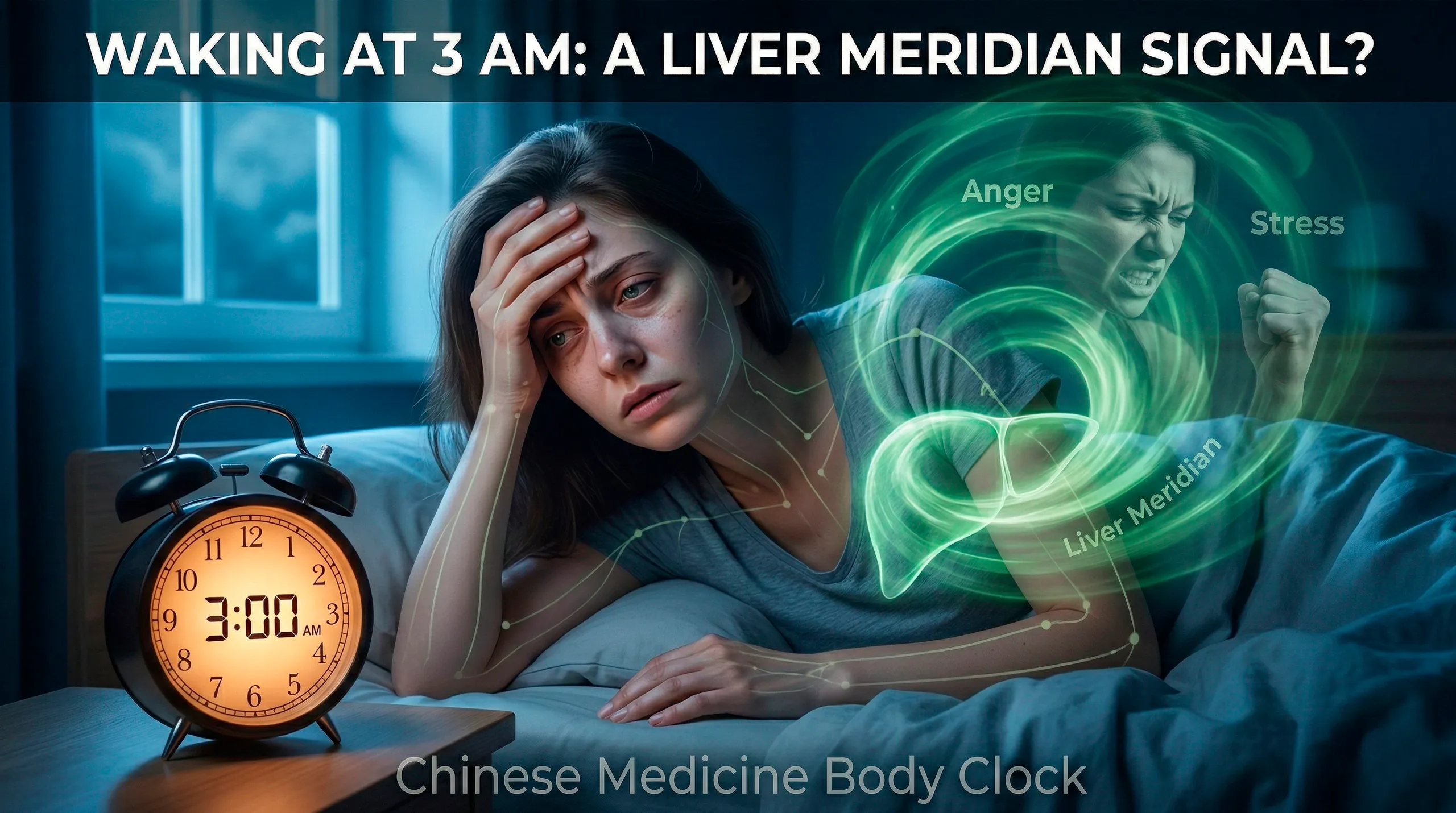
- The 3 AM Phenomenon: Research suggests that approximately 35% to 40% of adults experience consistent nighttime awakenings, with many specifically noting the 3:00 AM window.
- TCM Foundation: Traditional Chinese Medicine utilizes a 24-hour organ clock where vital energy, or Qi, peaks in the Liver meridian from 1:00 AM to 3:00 AM and in the Lung meridian from 3:00 AM to 5:00 AM.
- Emotional Connection: In the Chinese body clock, waking at specific times often points to unresolved emotions; the Liver is tied to anger and frustration, while the Lung is tied to grief and sadness.
- The 11 PM Rule: To maintain Yin and Yang balance, 11:00 PM is considered the critical hard deadline for sleep to allow the Gallbladder and Liver to begin their essential repair cycles.
- Energy Flow: The 12 main meridians act as a roadmap for Qi, and practitioners use the organ time chart meanings to diagnose the root causes of physical or emotional imbalances.
- Holistic Fixes: Improving sleep quality involves more than just darkness; it requires aligning daily rituals with organ cycles, such as practicing relaxation for the Triple Burner from 9:00 PM to 11:00 PM.
According to the Chinese body clock, the period between 3 AM and 5 AM is the peak time for the Lung meridian. Waking up during these hours may indicate that the body is processing grief or that the lungs are struggling to detoxify and move Qi effectively. Traditional Chinese Medicine suggests this is an essential time for deep breathing and emotional release to maintain respiratory and immune health, and consistently waking up between 3am and 5am meaning TCM analysis often points toward a need for letting go of emotional burdens.
The Foundation: What is the Chinese Body Clock?
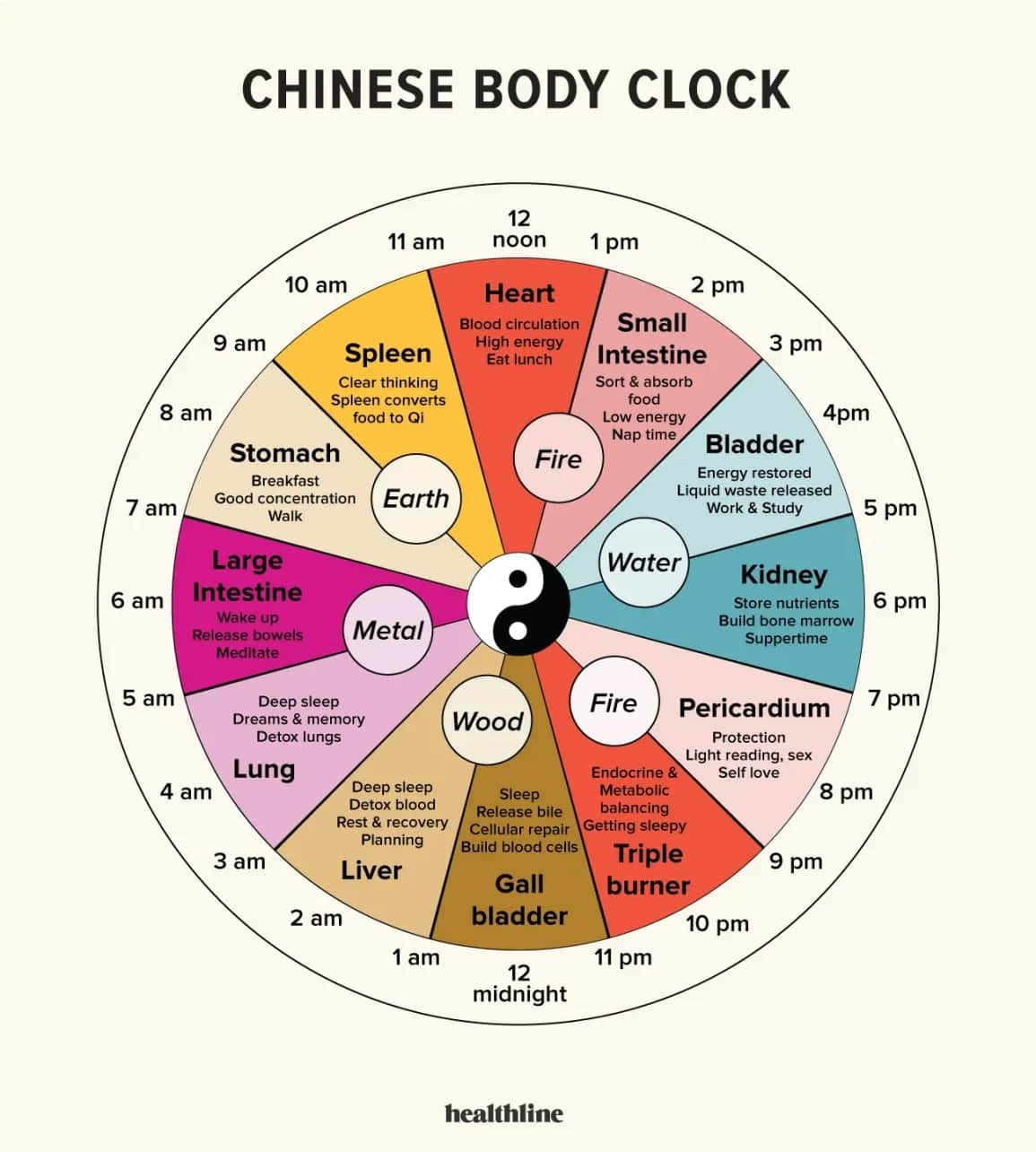
To understand why your sleep is disrupted, we must first look at the ancient framework of the Chinese body clock. This system is a 24-hour cycle that assigns specific two-hour windows to each organ system. During these windows, vital energy flow, known as Qi, is at its highest concentration in a particular meridian. When we talk about the Liver or the Lung in this context, it is important to distinguish between the biological organ and the Zang-fu organ systems. In Traditional Chinese Medicine, an organ is an energetic network that governs not just physical functions, but also specific emotions, tissues, and sensory organs.
The TCM meridian clock follows the movement of Qi through the 12 main meridians. This flow ensures that every part of the body receives the nourishment and "housekeeping" it needs to function. When the flow is smooth, we experience health and deep sleep. However, if there is an energy stagnation, you may find yourself jolted awake at the same time every night. By using a Chinese organ clock sleep chart for beginners, you can begin to see how your symptoms—like night sweats, racing thoughts, or coughing—map directly to the organ system that is struggling to complete its cycle.
Achieving Yin and Yang balance is the ultimate goal of this system. The nighttime hours are dominated by Yin energy, which is quiet, cooling, and restorative. If your lifestyle or emotional state is too Yang (active, hot, or stressed) during the evening, it creates a friction that disrupts the natural circadian rhythm alignment. Learning practical tips for aligning circadian rhythm with TCM allows you to work with your body’s internal timing rather than against it.
1 AM – 3 AM: The Liver Window and Emotional Tension
If you are waking up earlier, specifically between 1 AM and 3 AM, your body is speaking to you through the Liver meridian. This is the time when the Liver is most active, performing the vital task of detoxifying the blood and processing the events of the day. In the Chinese body clock, the Liver is also the "General" of the body, responsible for smooth planning and the flow of emotions.
When you wonder how to fix liver meridian sleep disturbance, you must look at both physical and emotional triggers. Physically, the Liver is heavily taxed by alcohol, processed fats, and late-night heavy meals. If you have been consuming alcohol, the Liver must work overtime to process these toxins, often causing a spike in heat that wakes you up, sometimes accompanied by night sweats or intense thirst.
Emotionally, the Liver is the seat of anger, resentment, and frustration. If you are repressing these feelings during the day, they often manifest as Liver Fire at night. This excess energy disrupts the peaceful Yin state required for sleep. To address this, consider lifestyle changes such as cutting out alcohol after 8:00 PM and incorporating gentle movement like Qi Gong during the day to help move stagnant energy. Journaling before bed to release the day's frustrations can also be a powerful tool to prevent the "General" from waking you up for a midnight meeting.
3 AM – 5 AM: The Lung Window and Letting Go
The window between 3 AM and 5 AM belongs to the Lung. This is a profound time of transition as the body prepares to move from the deep Yin of night into the emerging Yang of the morning. The Lung is responsible for distributing Qi to the rest of the body and governs the skin and the immune system.
However, the Lung meridian is also deeply connected to the emotion of grief. If you are experiencing a period of loss, sadness, or a struggle to "let go" of a situation, you may find yourself alert and wide awake at 3:15 AM every morning. This is the Lung meridian emotional release for better sleep calling for your attention. From a physical perspective, this may also be the time when those with respiratory issues or a weakened immune system experience coughing or shortness of breath, as the body attempts to clear phlegm and toxins from the respiratory tract.
To support the Lung during this window, focus on deep breathing exercises before sleep. This helps to tonify the Lung Qi and calm the nervous system. If you wake up, instead of reaching for your phone, try to lie flat and take slow, diaphragmatic breaths, visualizing the release of any sadness or tension you are carrying. This holistic health diagnosis suggests that by acknowledging the emotional root causes of your wakefulness, you can invite the body back into a state of rest.
Aligning Your Day: Traditional Chinese Medicine Sleep Tips
To truly master your sleep, you must look at the entire 24-hour cycle. Traditional Chinese Medicine sleep tips emphasize that the quality of your rest is determined by your actions throughout the day. For instance, the Triple Burner meridian (Sanjiao), which governs the body's thermostat and metabolism, is most active from 9 PM to 11 PM. This is the ideal time to wind down. Engaging in Traditional Chinese Medicine rituals for 9pm to 11pm, such as a warm foot soak with Epsom salts or gentle stretching, helps to settle the Triple Burner and prepare the body for the cooling Yin phase.
The 11 PM Hard Deadline: In TCM, 11:00 PM is considered the most important time to be asleep. This is when the Gallbladder begins its work, followed by the Liver. Missing this window can lead to "empty heat," making it much harder to fall into a deep, restorative sleep later in the night.
Following a daily routine based on Chinese body clock for energy also means looking at your morning. The Stomach meridian peaks from 7 AM to 9 AM, which is why a warm, nourishing breakfast is essential for building Qi for the rest of the day. When your digestive and metabolic systems are aligned with the organ clock, your body doesn't have to compensate with "stress energy," which often leads to the nighttime awakenings we are trying to avoid.
| Time Window | Meridian System | Primary Emotion | Common Sleep Disruptors | Recommended Solution |
|---|---|---|---|---|
| 9 PM - 11 PM | Triple Burner | Confusion / Stress | Screens, overstimulation | Meditation, foot soaks |
| 11 PM - 1 AM | Gallbladder | Indecisiveness | Late bedtime, heavy fat | Sleep by 11 PM |
| 1 AM - 3 AM | Liver | Anger / Frustration | Alcohol, repressed rage | Forgiveness work, hydration |
| 3 AM - 5 AM | Lung | Grief / Sadness | Respiratory issues | Deep breathing, journaling |
| 5 AM - 7 AM | Large Intestine | Guilt / Stagnation | Dehydration, poor fiber | Warm water, morning movement |
FAQ
What is the Chinese body clock?
The Chinese body clock is an ancient wellness system that maps the flow of vital energy, or Qi, through twelve different meridians over a 24-hour period. Each organ system has a two-hour window where its energy is at its peak. By understanding this cycle, individuals can identify which organs may be imbalanced based on the timing of their physical symptoms or sleep disruptions.
What does it mean if I wake up at the same time every night?
If you consistently wake up at the same time, it typically suggests an energy stagnation or imbalance in the organ meridian associated with that specific time slot. In Traditional Chinese Medicine, this is often a sign that the body is struggling to complete a detoxification process or is dealing with a specific unresolved emotion, such as anger or grief, which is preventing the transition into deeper stages of sleep.
Why do I wake up between 3 am and 5 am every night?
Waking up between 3 AM and 5 AM is linked to the Lung meridian. This window is often disrupted by the emotion of grief or sadness. Physically, it may also indicate that your lungs are struggling to move Qi or clear toxins. Because this time represents the transition from Yin to Yang, any imbalance in your respiratory or emotional health can cause you to wake up alert during these hours.
What is the best time to sleep according to the Chinese body clock?
The best time to be asleep is by 11:00 PM. This allows you to be in a state of rest when the Gallbladder (11 PM – 1 AM) and Liver (1 AM – 3 AM) meridians are most active. These organs are responsible for blood filtration, emotional processing, and physical repair. Missing this "golden window" can lead to a deficiency in Yin, resulting in chronic fatigue and irritability.
How can I use the organ clock to improve my health?
You can use the organ clock to improve your health by aligning your daily activities with the peak times of each meridian. This includes eating your largest meal when the Stomach is strongest (7 AM – 9 AM), doing focused work when the Heart is active (11 AM – 1 PM), and ensuring you are winding down during the Triple Burner phase (9 PM – 11 PM). Adjusting your lifestyle to match these natural energy flows helps maintain balance and prevents energy stagnation.