Quick Facts
- The 90-Minute Rule: Moderate exercise is safe and often beneficial if the session is finished at least 1.5 hours before sleep.
- Intensity Threshold: High-strain workouts like heavy lifting or HIIT require a 4-hour buffer to prevent disrupting sleep architecture.
- Biological Signal: Evening training can actually aid sleep by triggering a subsequent drop in core body temperature.
- Deep Sleep Boost: According to a systematic review of 23 studies, moderate evening exercise can increase deep sleep and improve overall sleep efficiency.
- Direct Answer: Moderate exercise before bed typically does not impair sleep quality as long as the session ends at least 90 minutes before bedtime.
Does a late night workout sleep quality suffer if you train near bedtime? Many wonder if exercise before bed is the culprit for tossing and turning. While some believe it ruins rest, research shows that timing of exercise for sleep is the real key to recovery. As long as you respect your body's need for heart rate recovery and a decrease in core body temperature, you can maintain your gains without sacrificing your rest.
The Biology of Bedtime Training: Temperature and Hormones
To understand how late-night training affects you, we have to look at the internal thermostat and the endocrine system. Humans are biologically programmed to experience a drop in core body temperature in the evening. This cooling is a critical signal to the brain that it is time to initiate sleep. When we exercise, our internal temperature spikes, which can temporarily override this signal.
If you finish a hard session too close to hitting the pillow, your body may still be in a state of high thermoregulation, trying to shed excess heat. This delay in the cooling process can increase sleep latency, making it harder to drift off. Beyond just heat, we have to consider the sympathetic nervous system. Intense exertion triggers a release of adrenaline and causes cortisol levels to rise. These "stress" hormones are excellent for hitting a new PR in the gym but are the antithesis of the calm needed for the parasympathetic nervous system to take over and lead you into deep sleep.
Furthermore, the impact of late night workouts on sleeping heart rate variability can be significant. If your heart rate remains elevated for hours after training, your body is effectively stuck in a "repair and recover" mode that prevents the shift into a restorative sleep state. Understanding your personal circadian rhythm is essential; some people are "night owls" who process this stimulation faster, while "early birds" may find that even moderate evening exercise keeps them wired for hours.
Intensity Tiers: How Different Workouts Affect Sleep
Not all training sessions are created equal when it comes to sleep disruption. We categorize these by physiological strain rather than just the type of movement. A heavy leg day is significantly more taxing on the central nervous system than a steady-state run.
To help you plan your schedule, I’ve broken down the timing of exercise for sleep based on intensity levels:
| Intensity Tier | Activity Examples | Recommended Buffer Before Bed | Impact on Sleep |
|---|---|---|---|
| Low Strain | Restorative Yoga, Light Stretching, Walking | 0 - 60 Minutes | Generally improves sleep onset |
| Moderate Strain | Resistance Training, Steady Jogging, Cycling | 90 Minutes | Increases deep sleep and efficiency |
| High Strain | HIIT, Heavy Powerlifting, Competitive Sports | 4 Hours | May increase sleep latency and cortisol |
For those performing high intensity interval training at night and sleep quality concerns, the window is the most restrictive. The massive spike in metabolic rate and neural drive requires hours to normalize. If you must train high-intensity late at night, your focus needs to shift immediately to cooling and calming strategies.
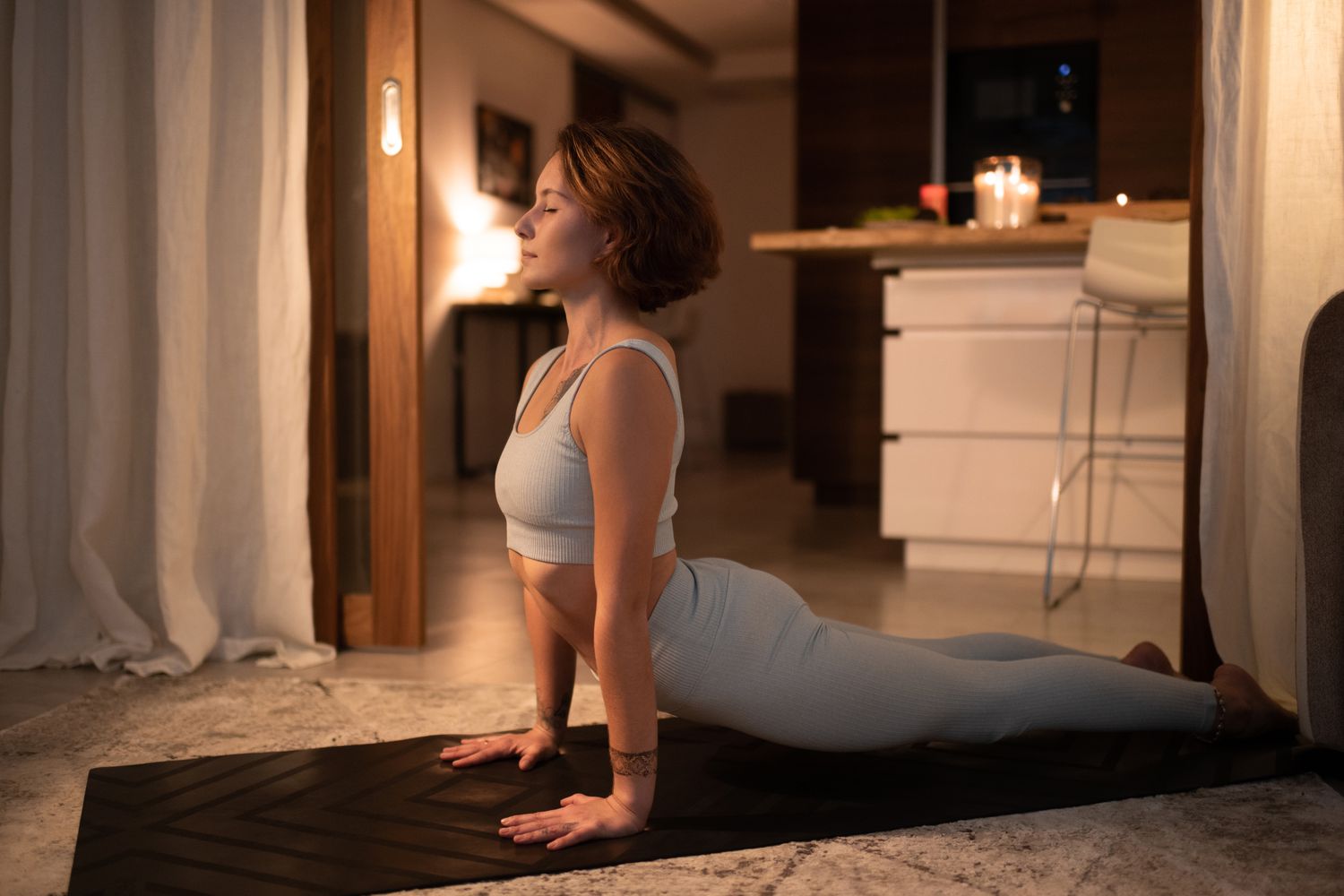
Conversely, incorporating best low intensity exercises to do before bedtime, such as mobility work or foam rolling, can actually facilitate better rest. These movements stimulate the parasympathetic nervous system, signaling to your body that the "hunt" or the "fight" is over and it is safe to rest.
Habitual vs. Acute: Does Your Body Adapt?
One of the most fascinating aspects of sports science is the body's ability to adapt to a specific schedule. There is a marked difference between an athlete who always trains at 8:00 PM and a morning lifter who occasionally hits the gym late at night.
According to the National Sleep Foundation's Sleep in America Poll, 97% of people who perform vigorous exercise in the evening believe their sleep quality is of equal or better quality compared to days they do not exercise. This suggests that for healthy adults, the body becomes accustomed to evening exertion.
Regular exercisers often show faster heart rate recovery and a more efficient return to baseline after a workout. However, acute sessions—sporadic, high-intensity workouts that your body isn't used to—are more likely to disrupt sleep architecture. This disruption often manifests as a reduction in REM cycles or an increase in nighttime awakenings. If you are training for a specific event that requires late-night performance, it is better to stay consistent with your timing rather than jumping between morning and evening sessions, which can confuse your circadian rhythm.
How to Optimize Sleep After a Late Session
If your schedule forces you to train within that 90-minute danger zone, all is not lost. You can use specific physiological "hacks" to accelerate the transition from training mode to sleep mode.
- Prioritize Thermoregulation: To help with how to lower body temperature after a late night workout, take a lukewarm or slightly cool shower after your session. While a hot shower feels good, it can sometimes keep the core temperature elevated for longer. A cool shower helps dissipate heat more rapidly.
- Post-Workout Nutrition: Avoid heavy, spicy meals right before bed, as these can increase metabolic heat. Focus on easily digestible proteins and complex carbohydrates that can help with serotonin production.
- Light and Environment: Immediately after your workout, dim the lights. Bright gym lights suppress melatonin production. By switching to warm, dim lighting at home, you tell your brain to begin the sleep onset process.
- Active Downregulation: Spend 10 minutes on the floor doing deep diaphragmatic breathing. This is the fastest way to switch from the sympathetic (fight or flight) to the parasympathetic (rest and digest) nervous system.
- Supplementation Strategy: For athletes on fixed, late-night schedules, magnesium or a low dose of melatonin can assist in resetting the internal clock after the stimulation of a workout.
Remember, the goal is to minimize sleep latency—the time it takes to go from fully awake to asleep. If you find yourself staring at the ceiling for more than 30 minutes after a late session, you likely need to increase your buffer or decrease the intensity of evening exercise.
FAQ
Is it bad to exercise right before bed?
Generally, performing vigorous exercise within 60 minutes of sleep is not recommended as it can increase sleep latency and disrupt sleep architecture. However, light movement like stretching is perfectly fine and may even help you relax.
How many hours before sleep should I stop exercising?
For most moderate-intensity workouts, finishing 90 minutes before your head hits the pillow is the sweet spot. If you are doing very high-intensity training, try to leave a 4-hour gap to allow your heart rate and temperature to normalize.
Does intense cardio before bed keep you awake?
Yes, intense cardio can keep you awake by significantly raising your core body temperature and stimulating the release of cortisol and adrenaline. This keeps your nervous system in an aroused state, making it difficult to fall into a deep sleep.
Does stretching before bed improve sleep?
Absolutely. Stretching is one of the best low intensity exercises to do before bedtime because it helps relieve muscle tension and promotes parasympathetic activation, which prepares the body for a restful night.
What are the best types of exercise to do before bed?
The best types of exercise near bedtime are low-strain activities such as hatha yoga, foam rolling, or a casual walk. These activities provide the benefits of movement without the hormonal and thermal spikes associated with heavy lifting or sprinting.