Quick Facts
- The 60% Rule: Up to 60% of women in perimenopause experience insomnia as they transition through hormonal shifts.
- Night Sweat Duration: Vasomotor symptoms like hot flashes and night sweats last an average of 7 years for many women.
- Ideal Temp: Set your thermostat to 62°F to support the body’s natural cooling process and improve sleep quality.
- Hormone Impact: A drastic estrogen decline of 60-80% is the primary trigger for disrupted sleep architecture and thermoregulation.
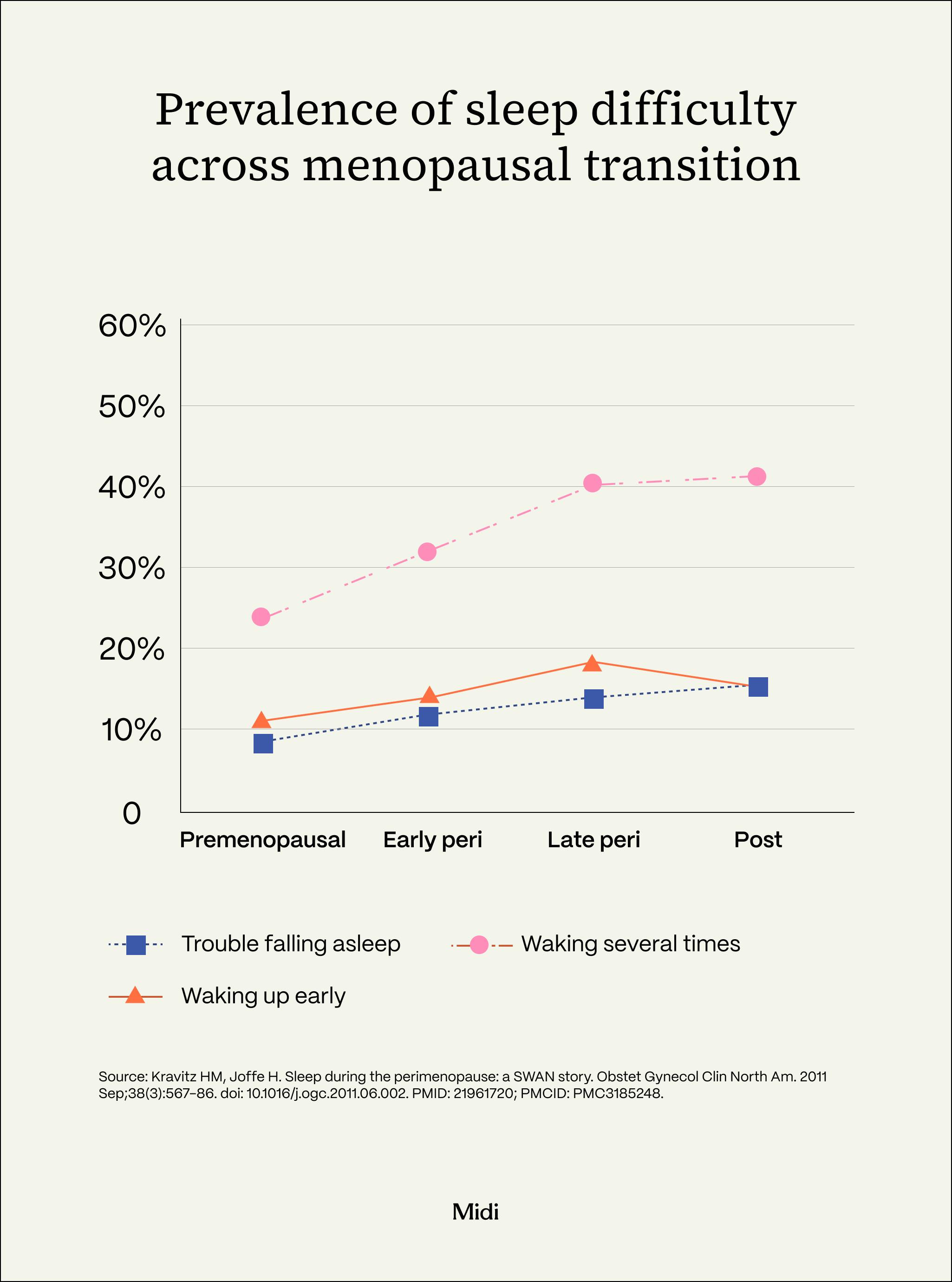
- Clinical Prevalence: According to the Study of Women's Health Across the Nation (SWAN), sleep disorders rise from 16–42% in premenopause to nearly 60% in postmenopause.
Menopause insomnia is primarily driven by fluctuating levels of estrogen and progesterone, which disrupt the body's internal clock and thermoregulation. These hormonal sleep disturbances often trigger vasomotor symptoms like night sweats, causing frequent awakenings and reducing overall sleep quality during the perimenopause and menopause transition. Finding effective night sweats relief and adopting specific menopause sleep hygiene practices are essential steps toward regaining restorative rest.
The Hormonal Shift: Why Your Internal Clock is Breaking
If you find yourself staring at the ceiling at 3 a.m., feeling a strange mix of exhaustion and wired energy, you are not alone. This phenomenon is a hallmark of menopause insomnia. To understand why your once-reliable sleep has vanished, we have to look at the endocrine system. During the perimenopause transition, the ovaries begin to slow their production of key hormones, creating a domino effect on your brain's sleep centers.
Progesterone levels are often the first to drop. In the female body, progesterone acts as a natural sedative; it has a calming effect on the brain by stimulating GABA receptors, the "brakes" of the nervous system. When progesterone disappears, women often experience heightened anxiety and difficulty falling asleep. Simultaneously, the loss of estrogen affects the production of serotonin and dopamine, neurotransmitters that regulate sleep architecture. Without stable estrogen, the transition between light and deep sleep becomes fragmented, leading to what many describe as "junk sleep"—rest that never feels quite deep enough.
Furthermore, the fluctuation of these hormones triggers cortisol spikes. Normally, cortisol should stay low at night to allow for rest. However, during menopause, your body may release cortisol as a response to falling estrogen levels, leading to that dreaded middle-of-the-night wake-up call. Understanding how estrogen levels affect sleep during menopause is the first step in moving from frustration to a targeted solution.
Research indicates that the prevalence of chronic insomnia increases significantly with the severity of vasomotor symptoms. In fact, over 80% of perimenopausal and postmenopausal women who experience severe hot flashes also suffer from significant sleep disruption.
Managing Night Sweats: Cooling Strategies for Better Rest
One of the most physically disruptive elements of the menopausal transition is the sudden onset of vasomotor symptoms. Your hypothalamus, which acts as the body's thermostat, becomes hyper-sensitive to even minor changes in temperature due to the 60% to 80% decline in estrogen production. When the brain mistakenly thinks the body is overheating, it triggers a massive cooling response: a hot flash followed by intense sweating.
For many women, this results in waking up drenched, necessitating a change of pajamas or sheets. Seeking night sweats relief is not just about comfort; it is about preventing the "wake-chill-wake" cycle that ruins sleep maintenance.
Effective environmental management includes:
- Thermoregulation via Layering: Use multiple thin layers of bedding rather than one heavy duvet. This allows you to adjust your microclimate instantly without fully waking up.
- Moisture-Wicking Fabrics: Swap traditional cotton for moisture-wicking fabrics like bamboo, Tencel, or specialized athletic blends. Cotton tends to trap moisture and stay cold and wet, whereas these breathable alternatives pull sweat away from the skin.
- The 62°F Rule: Experts recommend keeping the bedroom significantly cooler than the rest of the house. A room temperature around 62°F helps the body drop its core temperature, a necessary biological signal for deep sleep.

If you find yourself in the middle of a hot flash, try quick cooling techniques for middle of the night hot flashes such as keeping a cooling gel pad under your pillow or using a bedside fan. Some women also find natural remedies for menopause night sweats relief like drinking a small glass of ice water or using a cooling mist spray on the back of the neck can provide immediate sensory distraction and lower the perceived heat.
Menopause Sleep Hygiene: A Routine for Restorative Sleep
When your hormones are in flux, your external environment must be more stable than ever. This is where a strict menopause sleep hygiene routine comes into play. Because your internal clock is already under stress, keeping a consistent circadian rhythm is vital.
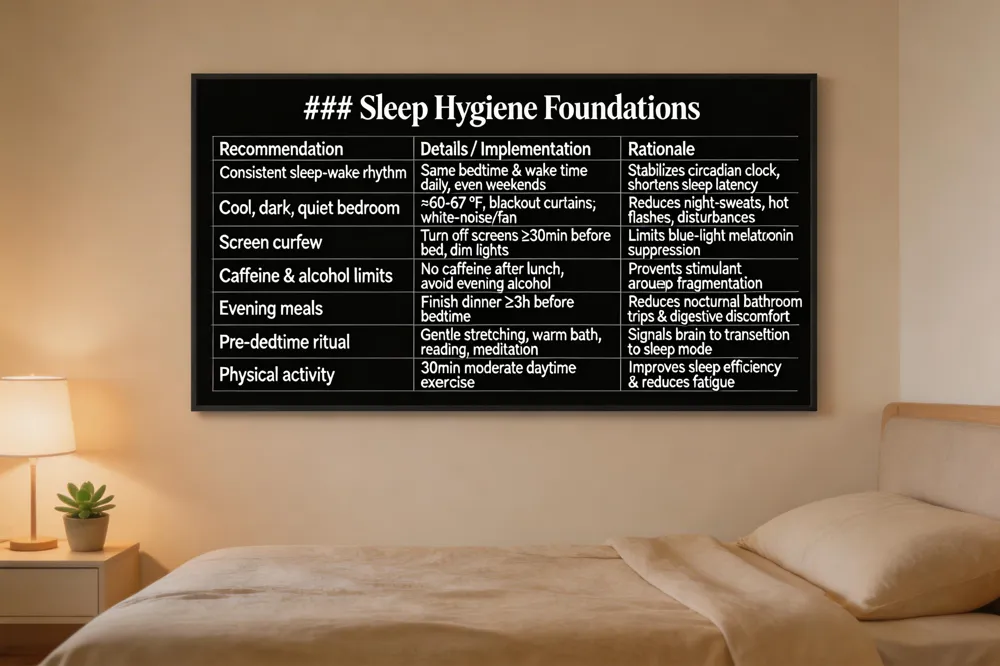
A menopause sleep hygiene routine for better rest should start at least 60 minutes before you intend to be asleep. This "wind-down" period allows your nervous system to transition from the "doing" mode of the day to the "being" mode of the night.
- Light Management: Dim the lights in your home after dinner. Exposure to blue light from phones and tablets suppresses melatonin, which is already declining with age.
- Temperature Control: Take a warm (not hot) bath 90 minutes before bed. The subsequent drop in body temperature after you get out of the tub mimics the natural temperature dip required for sleep.
- Stimulant Awareness: Limit caffeine to the morning hours. During menopause, the liver processes caffeine more slowly, meaning that 2 p.m. latte might still be circulating in your system at 10 p.m.
- Circadian Anchoring: Go to bed and wake up at the same time every day, including weekends. This consistency helps train your brain to recognize when it is time to shut down.

Stepping outside for 10 minutes of direct sunlight shortly after waking up is one of the most powerful ways to anchor your internal clock. This morning light signals to the brain to stop melatonin production and start the countdown for when it should begin again in the evening.
Beyond Hormones: Hidden Causes of Menopause Insomnia
While hormones are often the primary culprit, they are not always the only factor. The menopausal transition can unmask or exacerbate other sleep-disrupting conditions. It is important to look at the whole picture of women's health to ensure you aren't missing a secondary cause of hormonal sleep disturbances.
One common issue is Restless Leg Syndrome (RLS). Many women find that as they enter perimenopause, they develop an irresistible urge to move their legs in the evening. This is often linked to declining iron levels or changes in how the brain uses dopamine. Magnesium glycinate is a highly recommended supplement in this stage, as it supports muscle relaxation and can help soothe the nervous system before bed.
Another critical concern is sleep apnea. Estrogen and progesterone help keep the airway muscles toned during sleep. As these levels fall, women become significantly more likely to experience disordered breathing or snoring. Unlike the classic "snoring man" stereotype, sleep apnea in women often presents as waking up with a headache, feeling unrefreshed despite sleeping eight hours, or experiencing sudden gasping episodes.
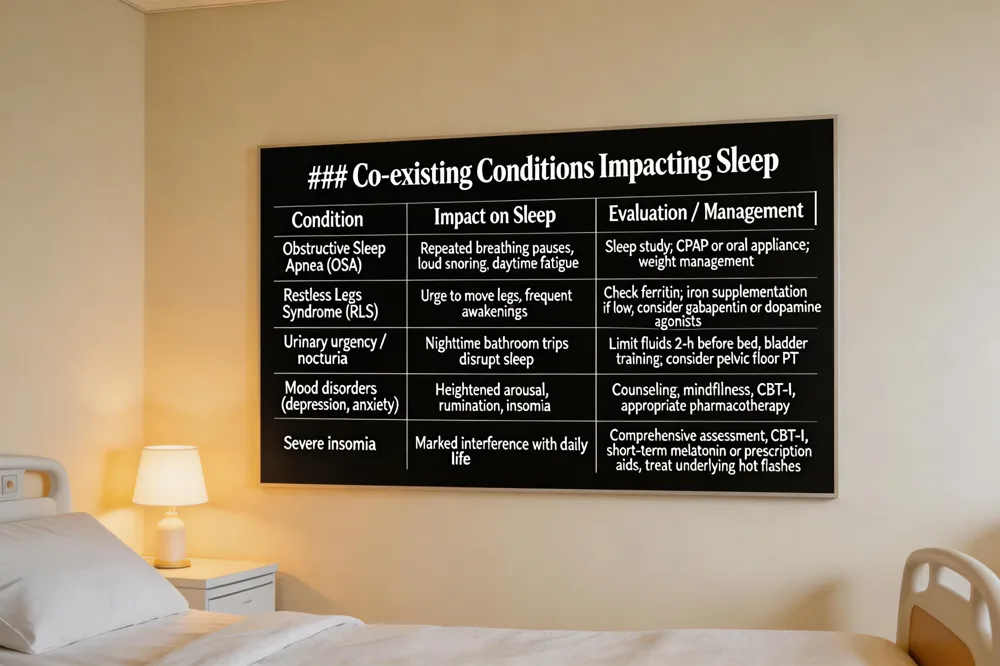
If your menopause insomnia persists despite improving your sleep hygiene and managing night sweats, it may be time to speak with a healthcare provider about a sleep study or blood work to check Vitamin D and ferritin levels.
Clinical Solutions: HRT and Evidence-Based Medications
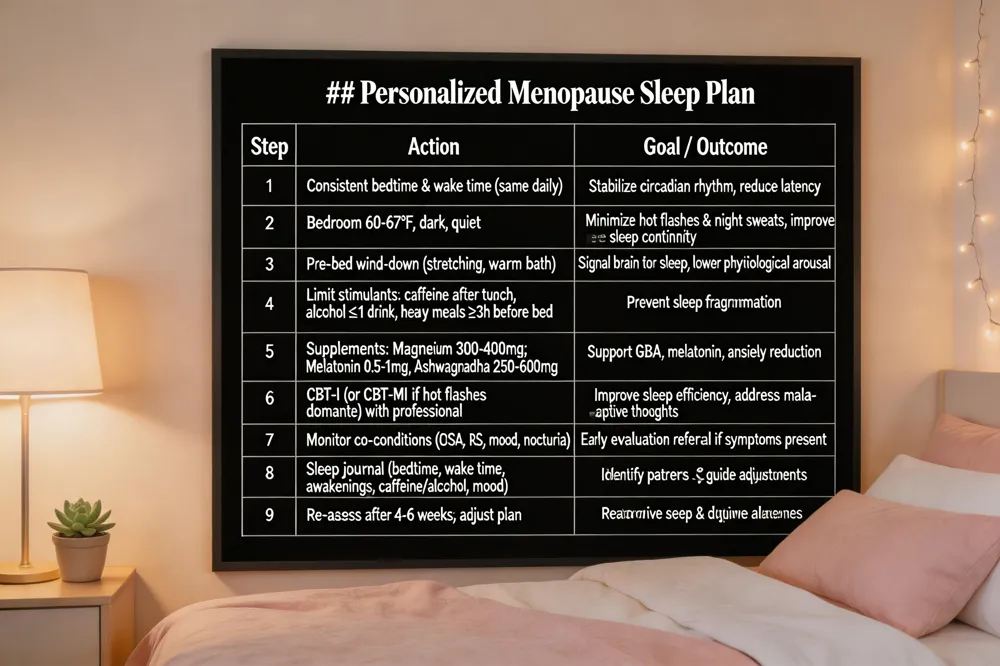
For many, lifestyle adjustments are a foundation, but clinical intervention is the bridge to true relief. If your quality of life is suffering, discussing medical options with a specialist is a proactive step in self-care.
Hormone replacement therapy (HRT) remains the "gold standard" for managing severe vasomotor symptoms and menopause insomnia. By stabilizing the levels of estrogen and progesterone, HRT can effectively "reset" the body's thermostat and restore the natural sedating effects of progesterone. Many women report that the benefits of hormone replacement therapy for insomnia are almost immediate, with a significant reduction in night sweats and a smoother transition into deep sleep.
However, HRT is not for everyone. For those who cannot or choose not to use hormones, there are effective non hormonal medications for menopause sleep problems. These include:
- Low-dose SSRIs/SNRIs: Often used to help regulate the hypothalamus and reduce the frequency of hot flashes.
- Gabapentin: Sometimes prescribed off-label for use at night to reduce night sweats and improve sleep maintenance.
- Cognitive Behavioral Therapy for Insomnia (CBT-I): An evidence-based psychological treatment that helps rewire the brain's association between the bed and wakefulness.
Medical Alert: If you are considering oral micronized progesterone (such as Prometrium), please be aware that some formulations contain peanut oil. If you have a peanut allergy, ensure your pharmacist provides a peanut-free version or an alternative. Always consult with a doctor before beginning any new medication or supplement regimen.
According to the Study of Women's Health Across the Nation (SWAN), sleep issues are not just a phase but a significant shift in biological needs. In premenopause, roughly 16–42% of women report sleep disorders, but this jumps to 39–47% in perimenopause and up to 60% in postmenopause. This data highlights the importance of seeking professional guidance rather than simply "waiting it out."
FAQ
What causes insomnia during menopause?
Menopause insomnia is primarily caused by the decline of estrogen and progesterone. Progesterone has a natural calming effect, and its loss makes it harder to stay asleep. Simultaneously, lower estrogen levels disrupt the body’s temperature regulation, leading to night sweats that cause frequent awakenings.
How long does menopause-related insomnia usually last?
The duration varies, but the transition through perimenopause to postmenopause can take several years. Vasomotor symptoms like night sweats, which are a major cause of insomnia, last an average of seven years for many women, though some experience them for a shorter or longer period.
Does hormone replacement therapy help with sleep issues?
Yes, HRT is often very effective. By replacing the hormones your body no longer produces, it stabilizes your internal thermostat and reduces night sweats. Oral progesterone, specifically, is known for its sedative properties and can help women fall asleep more easily.
What vitamins or supplements are best for sleep during menopause?
Magnesium glycinate is a top recommendation for its ability to relax muscles and support the nervous system. Other women find relief with Vitamin D, as deficiency is linked to poor sleep, or herbal options like black cohosh for night sweats, though you should always consult a provider first.
Is it normal to wake up at 3 a.m. during menopause?
It is very common. This often happens because of a cortisol spike or a night sweat episode. As estrogen levels drop, the body’s stress response can become more sensitive, leading to "alertness" in the middle of the night when you should be in deep sleep.
How can I stop night sweats and insomnia during menopause?
A combination of environmental changes and clinical support is usually most effective. Start by keeping your room at 62°F, using moisture-wicking bedding, and establishing a strict wind-down routine. If these lifestyle changes aren't enough, talk to your doctor about HRT or non-hormonal medical options.