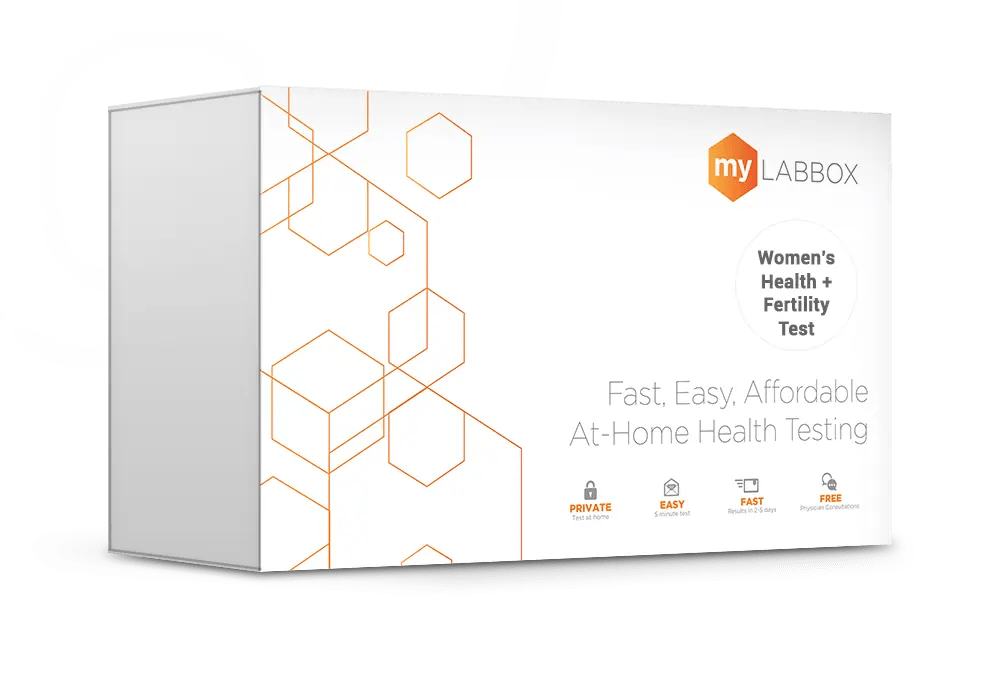
Taking control of your reproductive health shouldn't be complicated. An at-home fertility test like myLAB Box offers a private, clinical-grade way to monitor your hormonal baseline. In this guide, we explore how female hormone screening works and what your results mean for your family planning journey.
Quick Facts
- Method: Finger-prick dried blood spot
- Turnaround: Physician-reviewed results in 1-5 days
- Lab Standards: CLIA-certified and CAP-accredited
- Physician Oversight: Every test is reviewed by a board-certified physician
- HSA/FSA: Fully eligible for reimbursement
- Privacy: HIPAA-compliant data encryption
myLAB Box at-home fertility tests use a finger-prick blood collection method to screen key reproductive hormones. Users collect a dried blood spot sample and send it to a CLIA-certified lab for physician-reviewed results. This provides a convenient way to establish a hormonal baseline and monitor reproductive health from home, offering high diagnostic precision for family planning.
Why Start with a Home Hormone Blood Test?
For many women, the journey toward parenthood or simply understanding their body starts with more questions than answers. Traditionally, getting a clear picture of your reproductive health meant scheduling multiple doctor appointments, navigating insurance hurdles, and often waiting weeks for a specialist opening. By starting with a home hormone blood test, you shift the power dynamic. You enter your doctor's office not just with concerns, but with data.
Having a recorded hormonal baseline allows you to have much more nuanced conversations with healthcare providers. Instead of a general "I'm worried about my fertility," you can say, "I've noticed my AMH levels are on the lower end for my age group; can we discuss what this means for my timeline?" This proactive approach is one of the primary benefits of testing fertility hormones at home before seeing a doctor. It allows for a screening phase in the comfort of your own home, reducing the stress often associated with clinical environments.
It is important to remember that these tests are screening tools designed to provide information about your current status. While they offer deep insights into your reproductive health, they are not a replacement for a clinical diagnosis by a reproductive endocrinologist. However, the privacy and convenience they offer make them an excellent first step for anyone who wants to monitor their body without the immediate pressure of a clinical setting.

How to Use myLAB Box Fertility Test at Home
The process of conducting a female hormone screening through myLAB Box is designed to be as seamless as possible. You don't need to be a medical professional to collect a high-quality sample; the kit is engineered for the average person to use safely and accurately at their kitchen table.
Step 1: Ordering and Preparation
Once you order your at-home fertility test, it arrives in discreet packaging. Before you begin, it is vital to read the instructions regarding the timing of your cycle. For many fertility markers, such as FSH and Estradiol, testing on day 3 of your menstrual cycle (the third day of your period) is standard to ensure the most accurate results for your follicular phase.
Step 2: Sample Collection
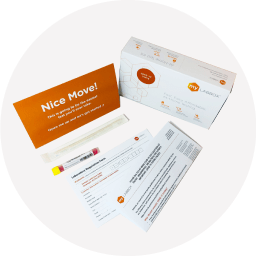
The kit utilizes a dried blood spot method. This involves a simple finger prick using a small lancet provided in the kit. You will drop a few small beads of blood onto a specialized collection card. This method is often preferred over traditional venous blood draws because it is less invasive and the sample remains stable during transit without the need for refrigeration.
Step 3: Shipping and Security
After your sample has dried, you place the card into the provided biohazard bag and then into the pre-paid return envelope. myLAB Box prioritizes your data, ensuring HIPAA compliance throughout the entire process. Your sample is sent directly to a laboratory that is certified under the Clinical Laboratory Improvement Amendments (CLIA) and accredited by the College of American Pathologists (CAP). These physician-reviewed fertility results are typically available within one to five days.

Interpreting At-Home Ovarian Reserve Test Results
When your report arrives via the secure online portal, it can feel overwhelming to see a list of acronyms and numbers. An ovarian reserve test at home primarily measures Anti-Müllerian Hormone (AMH) along with FSH and Estradiol to evaluate egg quality and quantity. Understanding these markers is key to interpreting at-home ovarian reserve test results.
- AMH (Anti-Müllerian Hormone): This is often considered one of the most important egg quality indicators because it reflects the size of your remaining egg pool. Unlike other hormones, AMH levels remain relatively stable throughout your menstrual cycle. Higher levels generally suggest a more robust ovarian reserve, while lower levels for your age might suggest a shorter fertile window.
- FSH (Follicle-Stimulating Hormone): Measured at the beginning of your cycle, FSH tells your ovaries to mature an egg. If your ovaries are working harder to produce an egg, your FSH levels will rise. Consistently high FSH levels can be a sign of a diminishing ovarian reserve.
- Estradiol: This is a form of estrogen. In the context of an at-home fertility test, it is used to ensure the FSH reading is accurate. If Estradiol is too high too early in the cycle, it can artificially lower the FSH reading, so seeing both together provides a more complete picture.
The report provided by myLAB Box doesn't just give you raw data; it provides context. You will see where your levels fall on a reference range based on your age. This makes the information actionable, allowing you to identify if you are within the "normal" range or if there are areas that require a follow-up with a specialist.

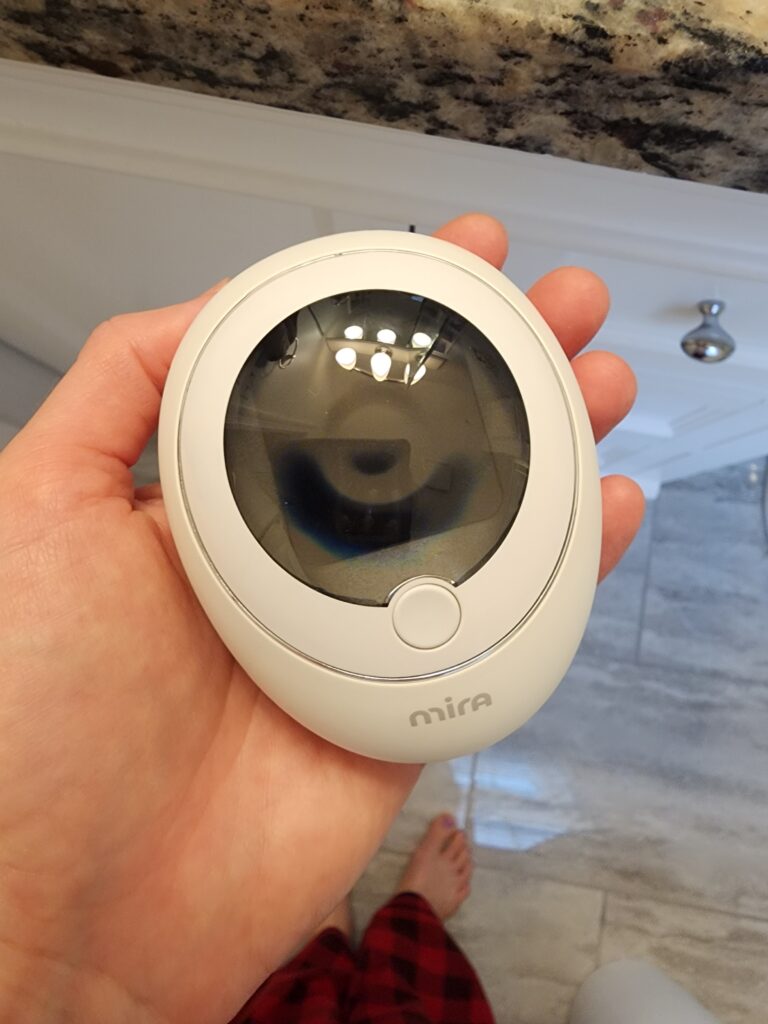
Comparison: myLAB Box vs Mira Fertility Tracker
While both myLAB Box and Mira are popular tools in the reproductive health space, they serve very different purposes. Understanding the difference between a home hormone blood test and urine-based trackers is the first step in choosing the right tool for your needs.
| Feature | myLAB Box | Mira Fertility Tracker |
|---|---|---|
| Testing Medium | Blood (Dried Blood Spot) | Urine (Test Wands) |
| Frequency | Single-point clinical screening | Daily tracking throughout cycle |
| Primary Goal | Assessing ovarian reserve and hormonal baseline | Identifying the fertile window/ovulation |
| Hormones Measured | AMH, FSH, Estradiol (Clinical levels) | LH, PdG, E3G (Metabolites) |
| Best For | Long-term family planning & baseline health | Predicting the best days to conceive each month |
The myLAB Box vs Mira fertility tracker comparison highlights a choice between a "snapshot" and a "video." myLAB Box provides a deep, clinical analysis of your actual hormone concentrations in the blood. This is essential for understanding your overall fertility potential and ovarian health. On the other hand, Mira tracks daily fluctuations in urine metabolites to help you time intercourse or insemination. Many women find that using both—a blood test for the baseline and a tracker for daily monitoring—provides the most comprehensive view of their reproductive health.
Specialized Insights: PCOS and Age 35+
The utility of an at-home fertility test becomes even more apparent for those dealing with specific challenges like Polycystic Ovary Syndrome (PCOS) or the natural decline in fertility that occurs as we age.
For individuals over 35, the rate of egg loss accelerates. At-home fertility testing for women over 35 is a vital tool for those who may be considering freezing their eggs or who want to know how much time they have to conceive naturally. Because these tests provide an actual value for AMH, they offer a clearer timeline than simple ovulation strips.
For those managing PCOS symptoms, traditional ovulation trackers (which look for a surge in Luteinizing Hormone) can often be frustrating. People with PCOS may have multiple LH surges or high baseline LH, leading to "false positives" on urine strips. Using a blood-based female hormone screening provides a more stable look at your health. It can help identify the characteristic hormonal imbalances of PCOS, such as high testosterone or skewed FSH-to-LH ratios, providing data that can help your doctor tailor a treatment or supplement plan specifically for you. Choosing the best at-home fertility test for pcos symptoms means looking for one that captures a broad panel of hormones rather than just tracking ovulation.
Medical Disclaimer: At-home fertility tests are screening tools intended for informational and educational purposes. They are not a substitute for professional medical advice, diagnosis, or treatment. Always seek the advice of your physician or other qualified health provider with any questions you may have regarding a medical condition or the interpretation of your results.
FAQ
How accurate are at-home fertility tests?
At-home fertility tests like those from myLAB Box are highly accurate because they use the same CLIA-certified laboratories as traditional clinics. For example, the myLAB Box At-Home Male Fertility Test is an FDA-cleared diagnostic tool that provides results with over 97% accuracy compared to standard laboratory tests. The female hormone panels follow these same rigorous standards, ensuring the data you receive is clinically reliable.
What hormones do at-home fertility tests measure?
A comprehensive at-home fertility test typically measures Anti-Müllerian Hormone (AMH), Follicle-Stimulating Hormone (FSH), and Estradiol. Some expanded panels may also include Luteinizing Hormone (LH), Thyroid-Stimulating Hormone (TSH), and Testosterone to give a more complete picture of reproductive and metabolic health.
Can a home fertility test detect PCOS?
While a home test cannot provide a formal clinical diagnosis of PCOS on its own, it can detect the hormonal markers commonly associated with the condition. By measuring levels of testosterone, FSH, and LH, an at-home fertility test can provide the evidence needed to have a more focused discussion with your doctor about a PCOS diagnosis.
How long does it take to get results from a home fertility kit?
Once you mail your sample back to the lab, the turnaround time is very efficient. Most users receive their physician-reviewed results through a secure online portal within one to five days after the sample reaches the laboratory.
Does insurance cover the cost of at-home fertility testing?
Most standard health insurance plans do not directly cover the upfront cost of at-home testing kits. However, myLAB Box tests are HSA (Health Savings Account) and FSA (Flexible Spending Account) eligible. This means you can use your pre-tax dollars to purchase the kits, making them a much more affordable option than many out-of-pocket clinical lab fees.
Start Your Fertility Journey Today
Navigating your reproductive health can feel like a lonely process, but it doesn't have to be. By choosing to establish a hormonal baseline from the privacy of your home, you are taking a significant step toward self-advocacy and empowerment. Whether you are planning to start a family soon, or simply want to understand how your body is changing as you enter a new life stage, an at-home fertility test provides the clarity you deserve.
The myLAB Box experience is unique because it doesn't leave you stranded with your data. If your results show values that are outside the normal range or concerning, the service includes a physician consultation to help you understand the next steps. This bridge between home testing and clinical care ensures that your journey toward reproductive health is supported every step of the way. Take the first step today and gain the peace of mind that comes with knowing exactly where you stand.