Quick Facts
- Primary Cause: PCOS facial hair is driven by hyperandrogenism, where elevated levels of androgens like testosterone change hair follicle behavior.
- Clinical Prevalence: Hirsutism affects between 65% and 80% of women living with Polycystic Ovary Syndrome.
- Biological Shift: The condition involves the conversion of soft vellus hair into dark, coarse terminal hair in male-pattern areas.
- Diagnostic Standard: Doctors use the Ferriman-Gallwey scale to assess hair growth, with a score of 8 or higher indicating clinical hirsutism.
- Top Medical Treatments: Combined oral contraceptives and anti-androgens like Spironolactone are the gold standards for hormonal management.
- Permanent Solutions: While lasers offer significant reduction, electrolysis remains the only FDA-approved method for permanent hair removal.
- Timeline for Results: Because of the natural hair growth cycle, most treatments require 6 to 12 months of consistency to show visible improvement.
PCOS facial hair, clinically known as hirsutism, is primarily caused by hyperandrogenism, a state where the ovaries or adrenal glands produce excess androgens. These hormones act on hair follicles, causing fine vellus hair to transform into thick, dark terminal hair in areas typically associated with male growth patterns, such as the chin, upper lip, and jawline. Understanding the difference between pcos facial hair vs normal female peach fuzz is essential, as the former is rooted in internal hormonal shifts rather than simple genetics or aging.
The Biological Trigger: Why PCOS Causes Facial Hair
For many women, discovering coarse hair on the chin or neck can be a source of significant distress. To understand why this happens, we have to look deep into the endocrine system. In a balanced cycle, women produce small amounts of androgens. However, Polycystic Ovary Syndrome disrupts this balance. When the ovaries or adrenal glands produce more testosterone than the body needs, it creates a state of hyperandrogenism.
This hormonal surplus directly targets the hair follicles on the face and body. Every human is covered in vellus hair, which is the soft, translucent fuzz often called peach fuzz. Under the influence of high androgens, these follicles undergo a physical transformation. They become larger and produce terminal hair, which is deeply pigmented, thicker, and more rooted.
This process is frequently fueled by insulin resistance. It is estimated that Polycystic Ovary Syndrome affects 10% to 13% of women of reproductive age globally, and a high percentage of these women struggle with how insulin impacts their ovaries. When insulin levels are chronically high, it signals the ovaries to pump out even more androgens, creating a cycle that makes PCOS excess hair management a long-term metabolic challenge.
Clinical Diagnosis: The Ferriman-Gallwey Scale
When you visit a healthcare provider to discuss unwanted hair, they don't just look at one area; they use a standardized tool called the Ferriman-Gallwey scale. This system evaluates nine body areas, including the upper lip, chin, chest, and back, assigning a score from 0 (no hair) to 4 (frankly virile growth). A cumulative score of 8 or higher is generally considered the threshold for a clinical diagnosis of hirsutism.
If your score is elevated, your next step should be a consultation with an Endocrinologist. They will typically order blood work to measure your free and total testosterone levels, as well as DHEA-S, a hormone produced by the adrenal glands. Understanding these numbers is vital because hirsutism causes and treatments are not one-size-fits-all. Some women may have mild hair growth with significant insulin issues, while others may have high testosterone but clearer skin. Accurate diagnosis ensures you are treating the root cause rather than just the symptoms.
Best Medical Treatments for PCOS Facial Hair
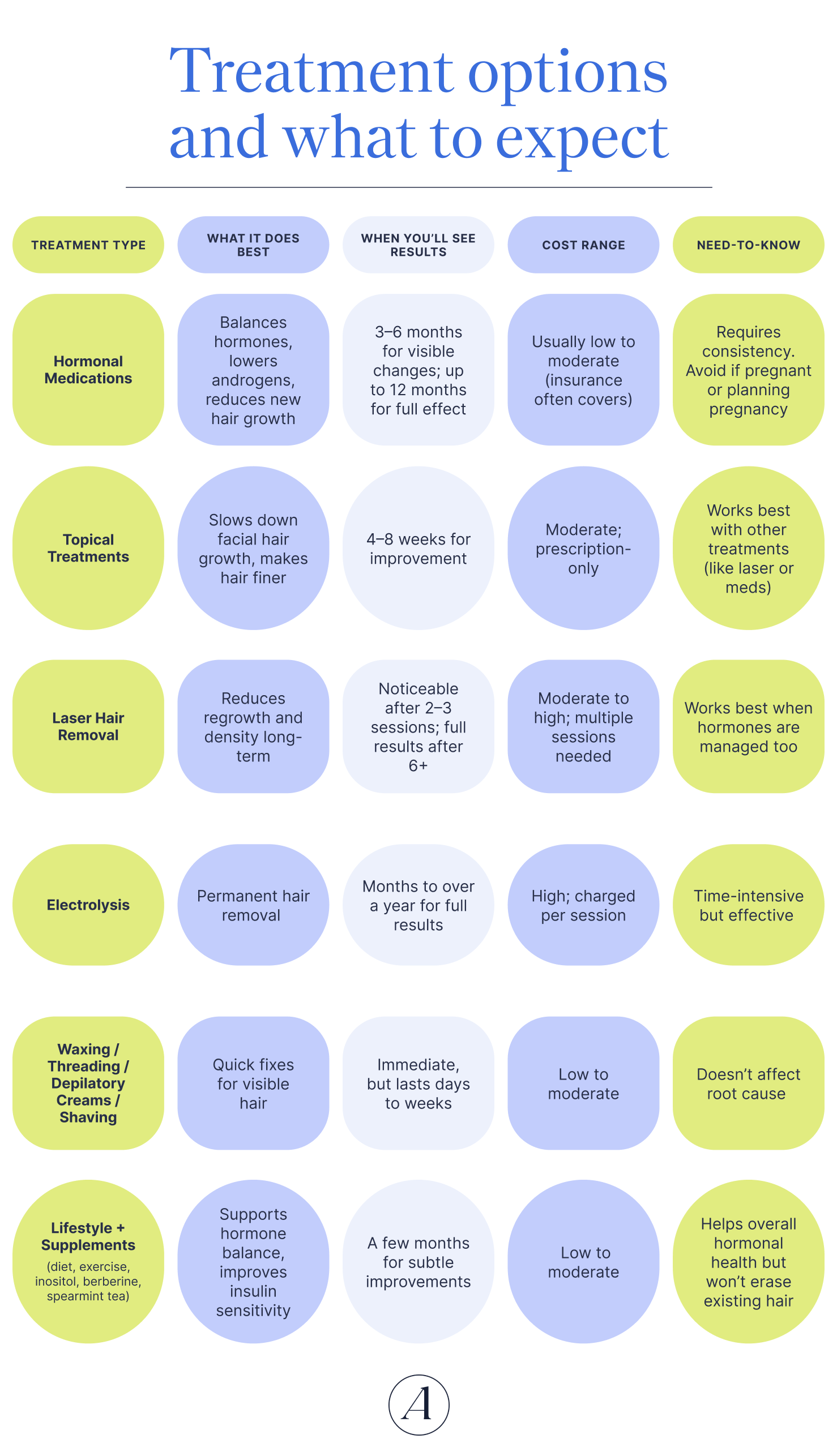
Managing androgens and female facial hair often requires a pharmaceutical approach to slow down the "factory" of hair production. The primary goal of medical therapy is to lower circulating androgens or block their ability to bind to the hair follicle.
- Combined Oral Contraceptives (COCs): These are often the first-line therapy. They work by suppressing androgen production in the ovaries and increasing a protein called sex hormone-binding globulin (SHBG), which mops up excess testosterone in the blood.
- Anti-androgens: If birth control alone isn't enough, doctors often prescribe Spironolactone. While originally a blood pressure medication, spironolactone for pcos facial hair effectiveness is well-documented at dosages between 50 mg and 200 mg. It works by blocking androgen receptors at the skin level.
- Topical Interventions: Eflornithine 13.9% (Vaniqa) is a prescription cream that interferes with an enzyme in the hair follicle necessary for hair growth.
Pro Tip: The 5-Minute Wait Rule When using topical treatments like Eflornithine, wait at least five minutes after washing your face or applying moisturizer before applying the cream. This ensures the product is absorbed effectively into the follicle rather than being diluted or wiped away.
Medical Treatments vs. Removal Procedures
| Feature | Medical Treatments (COCs, Anti-androgens) | Clinical Removal (Laser, Electrolysis) |
|---|---|---|
| Primary Goal | Slows new hair growth and thins texture | Removes existing terminal hair |
| Method | Hormonal regulation | Physical destruction of the follicle |
| Pain Level | Low | Low to Moderate |
| Cost | Ongoing prescription costs | Higher upfront per-session cost |
| Best For | Preventing future growth | Clearing current visible hair |
Removal Options: Laser vs. Electrolysis
While medications stop the cycle of new hair development, they cannot "un-grow" the terminal hair that is already there. For that, we turn to mechanical removal. It is a common misconception that laser therapy is the only option, but the choice depends heavily on your skin type and hair color.
Laser therapy works by targeting the pigment in the hair. For women with dark hair and light skin, Nd:YAG lasers have shown a high success rate, often achieving more than a 75% reduction in hair density over several sessions. However, lasers are generally considered "permanent reduction," not permanent removal.
For those seeking a truly permanent solution, electrolysis is the only FDA-approved permanent removal method. During electrolysis, a fine probe is inserted into each individual hair follicle, and an electric current destroys the growth center. This is particularly effective for women with light-colored or red hair that lasers cannot "see," or for those who want to ensure that specific terminal hairs never return.

Lifestyle and Natural Management Strategies
Beyond the pharmacy and the clinic, your daily habits play a profound role in metabolic health and androgen levels. Since insulin resistance is a primary driver of the ovaries' overproduction of testosterone, lifestyle changes for managing hirsutism in women with pcos are foundational.
Dietary patterns that focus on low-glycemic foods can help stabilize insulin, which in turn reduces the hormonal stimulus for hair growth. Many women also find success with Inositol supplements, which improve insulin sensitivity. Furthermore, there is compelling clinical evidence for natural ways to manage pcos facial hair growth, such as drinking two cups of spearmint tea daily. Studies have shown that spearmint tea possesses significant anti-androgen properties, helping to reduce free testosterone levels over time.
Daily Anti-Androgen Routine
- [ ] Morning: High-protein, low-glycemic breakfast to stabilize insulin.
- [ ] Mid-Day: One cup of organic spearmint tea.
- [ ] Evening: 30 minutes of moderate physical activity to improve metabolic health.
- [ ] Night: Second cup of spearmint tea and consistent skin care.
- [ ] Supplementation: Consistent intake of Inositol or prescribed anti-androgens as directed by your doctor.
FAQ
Why does PCOS cause facial hair growth?
Polycystic ovary syndrome is the most common underlying cause of hirsutism, accounting for approximately 72% to 82% of all cases in women. It happens because the body produces an excess of androgens, which are hormones like testosterone. These hormones signal the small, soft hair follicles on your face to start producing thicker, darker, and longer hair.
How can I get rid of PCOS facial hair permanently?
To achieve permanent hair removal options for pcos hirsutism, electrolysis is the only method officially recognized as permanent by the FDA. It destroys the follicle's ability to grow hair entirely. While laser treatments provide long-term reduction, they may require maintenance sessions over time. For the best results, permanent removal should be paired with medical treatment to prevent new follicles from becoming terminal.
Does laser hair removal work for PCOS patients?
Yes, laser therapy can be very effective, but it requires patience. Because PCOS patients have a continuous hormonal drive to produce new hair, you may need more sessions than someone without a hormonal imbalance. It is best to start laser treatments only after you have stabilized your hormone levels with medication for at least 6 months to ensure the laser is targeting stable growth.
What is the best medication for PCOS facial hair?
There isn't a single "best" medication for everyone, but the most common medical treatments for pcos facial hair include combined oral contraceptives and spironolactone. Birth control regulates the cycle and lowers androgen production, while spironolactone acts as a shield to prevent those androgens from affecting your skin and hair follicles.
Can birth control stop PCOS facial hair growth?
Birth control can stop the development of new excess hair by lowering the amount of testosterone your ovaries produce. However, it will not make the hair that is already there disappear. You will still need to use removal methods like shaving, waxing, or laser to clear existing hair while the medication works to prevent new growth.
Are there natural remedies for reducing PCOS facial hair?
Yes, several natural strategies can support hormonal balance. Drinking spearmint tea twice daily has been shown in clinical trials to lower androgen levels. Additionally, managing insulin through a balanced diet and taking Inositol can address the root metabolic issues that cause the ovaries to overproduce testosterone in the first place.
Next Steps
Living with PCOS facial hair is a journey that requires both clinical intervention and self-compassion. It is important to remember that up to 70% of affected women worldwide remain undiagnosed, so seeking professional help is a powerful act of self-advocacy.
As you move forward, keep a realistic timeline in mind. Because hair grows in cycles, any change in your internal hormones will take about 6 to 12 months to reflect in the mirror. Work closely with an Endocrinologist to find the right balance of medication and lifestyle changes, and don't hesitate to utilize modern removal technologies to help you feel like yourself again. You are not alone in this, and with the right approach, this condition is highly manageable.