Quick Facts
- Most Common Cause: Irritant Contact Dermatitis (80% of cases).
- Primary Irritants: Trapped sweat, soap residue, and friction.
- Key Allergens: Nickel, acrylates, and fluoroelastomers.
- Immediate Fix: The 'Skin Break' method (remove watch for 24-48 hours).
- Best Band for Sensitive Skin: Breathable nylon sport loops or surgical-grade steel.
An Apple Watch rash is typically a form of contact dermatitis caused by moisture trap, soap residue, or allergic reactions to materials like nickel and fluoroelastomer. This guide covers how to treat the irritation and prevent future breakouts through proper cleaning and band selection.
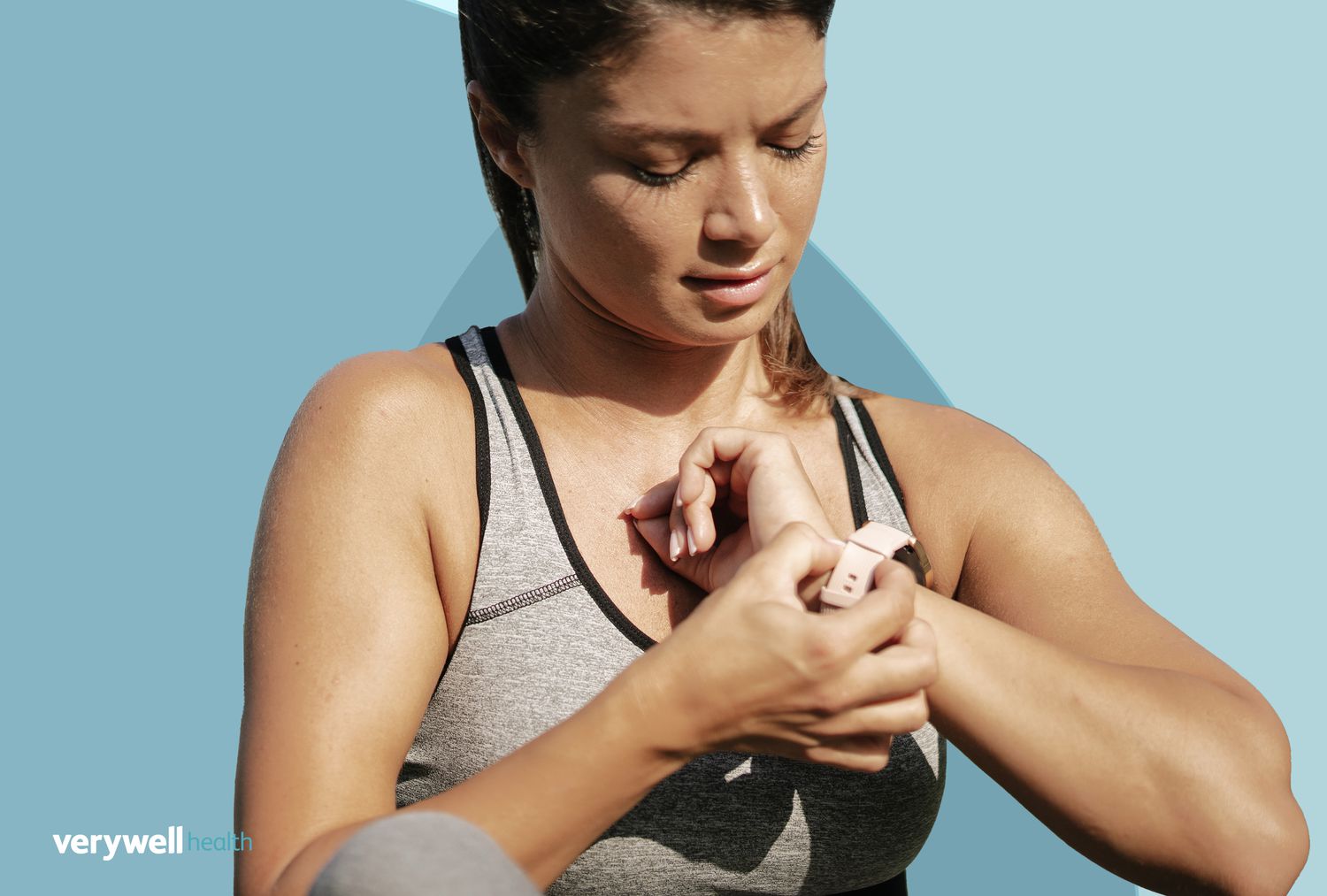
Why It Happens: Identifying Your Rash
If you have ever looked down at your wrist to find a red, itchy, or peeling patch of skin exactly where your wearable sits, you are not alone. Understanding why this happens is the first step toward relief. Most cases of apple watch band skin irritation fall into two categories: irritant contact dermatitis or allergic contact dermatitis.
Irritant contact dermatitis is a non-allergic skin reaction that occurs when the skin is physically or chemically irritated. According to clinical data, this condition accounts for approximately 80 percent of all contact dermatitis cases. In the context of a smartwatch, this is often triggered by a moisture trap where sweat, water, or soap residue becomes locked between the band and your skin. Over time, this constant exposure breaks down the skin barrier, leading to a painful friction burn or red inflammation.
On the other hand, allergic contact dermatitis is an immune response to specific materials. Apple officially states that its watches and bands contain trace amounts of nickel, acrylates, and methacrylates, which may cause skin reactions in a small number of users who have sensitivities to these materials. The symptoms of apple watch band nickel allergy often appear specifically where the metal pin or buckle touches your skin.
Furthermore, a 2024 study published in Environmental Science & Technology Letters found that certain fluoroelastomer watch bands contained perfluorohexanoic acid (PFHxA) at average concentrations four times higher than those typically found in cosmetic products. This chemical presence, combined with bacterial accumulation under the sensor area, creates a perfect storm for skin inflammation during regular use or intense workouts.
Immediate Relief: Apple Watch Rash Home Remedies
When an Apple Watch rash first appears, the most important thing you can do is give your skin room to breathe. Continuing to wear the device will only exacerbate the skin inflammation and could lead to a secondary infection.
- The Skin Break Method: Remove the watch immediately. Most minor irritations will subside within 24 to 48 hours if the area is kept clean and dry. Do not put the watch back on until the redness has completely vanished.
- Gentle Cleansing: Wash the affected area with lukewarm water and a mild, fragrance-free soap. Avoid harsh exfoliants or alcohol-based sanitizers, which can further damage the compromised skin barrier.
- Soothing Agents: Applying a thin layer of Manuka honey or a fragrance-free barrier cream can help lock in moisture while providing a protective shield. If the itching is intense, apple watch rash home remedies like a cool compress can provide immediate cooling relief.
- Over-the-Counter Options: For persistent redness, a small amount of 1% hydrocortisone cream can reduce the allergic reaction and swelling. However, use this sparingly and consult a professional if the rash does not improve within a few days.
During this recovery phase, focus on your wrist hygiene. Avoid wearing tight sleeves that might rub against the area, and ensure that no perfumes or lotions are applied directly to the irritated spot.
Prevention: How to Clean Apple Watch Band Properly
Hygiene is the most effective tool in your arsenal to prevent an Apple Watch rash from returning. Because these devices are worn almost 24/7, they become magnets for bacterial accumulation and soap residue.
To maintain a healthy skin environment, you must learn how to clean apple watch band regularly. If you use a silicone or fluoroelastomer band, follow these steps:
- Remove the band from the watch face.
- Use a soft, lint-free cloth dampened with fresh water. If the band is particularly dirty, use a tiny drop of mild soap.
- Rinse the band thoroughly. It is vital to remove every trace of soap residue, as dried soap is a major trigger for irritant contact dermatitis.
- Air dry the band completely before reattaching it. Never wear a damp band.
Special care is needed for preventing apple watch rash during intense workouts. Sweat contains salts and minerals that, when trapped, lead to a rapid moisture trap. After every workout, rinse both your wrist and the watch band with fresh water and pat them dry with a clean towel.
Another critical factor is the fit. If the band is too tight, it creates a friction burn by constantly rubbing against the skin. Conversely, if it is too loose, the sensor may rub and cause irritation. The goal is a fit that is snug but not restrictive, allowing for enough skin breathability to let moisture escape.
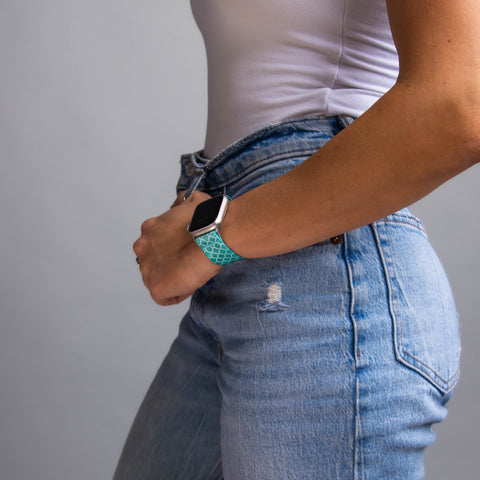
Material Choices: Best Breathable Bands for Sensitive Skin
If you have naturally sensitive skin, the material of your strap is just as important as how you clean it. While silicone is popular for its durability, it is not porous, meaning it offers zero skin breathability. This makes it a common culprit for a moisture trap.
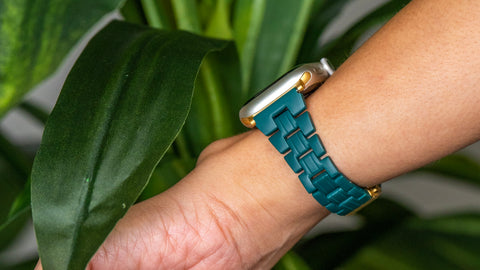
Many users find that switching to hypoallergenic apple watch bands solves the problem entirely. Here is a comparison of common materials:
| Material | Breathability | Best For | Potential Issues |
|---|---|---|---|
| Silicone / Fluoroelastomer | Low | Swimming, heavy gym use | Traps sweat easily; chemical sensitivity. |
| Nylon (Sport Loop) | High | Daily wear, sensitive skin | Can hold water if not dried properly. |
| Stainless Steel | Medium | Professional settings | Potential nickel allergy in lower grades. |
| Leather | Medium | Casual wear | Not water-resistant; can trap bacteria. |
For many, the best breathable apple watch bands for sensitive skin are the nylon sport loops. The hook-and-loop closure allows for micro-adjustments to prevent a friction burn, and the woven fabric allows air to circulate freely. If you prefer a metal look, ensure you are choosing surgical-grade steel to minimize the risk of an allergic reaction.
Medical Guidance: When to See a Doctor
While most cases of Apple Watch rash are minor and resolve with home care, there are times when medical intervention is necessary. You should seek a dermatologist consultation if you notice any of the following:
- The rash begins to blister or ooze fluid.
- The redness spreads beyond the area covered by the watch.
- You experience significant pain, swelling, or heat in the affected area, which could indicate a bacterial infection.
- The rash persists for more than a week despite removing the watch and using home remedies.
Knowing when to see a doctor for apple watch rash can prevent long-term skin damage or scarring. A professional can perform patch testing to identify a specific allergic reaction to materials like nickel or acrylates, allowing you to make more informed choices about your wearables in the future.
FAQ
Why is my Apple Watch causing a rash on my wrist?
An Apple Watch rash is usually caused by irritant contact dermatitis, where moisture like sweat or soap gets trapped against the skin. It can also be an allergic reaction to materials in the band, such as nickel or fluoroelastomer chemicals.
How do I treat a skin irritation from my Apple Watch?
The first step is to remove the watch for at least 24 to 48 hours. Clean the area with mild soap and water, keep it dry, and apply a soothing barrier cream or a small amount of hydrocortisone if the itching is severe.
Can you be allergic to the metal on the Apple Watch?
Yes, some users are sensitive to nickel, which is present in trace amounts in the stainless steel and magnets of some Apple Watch models and bands. If you have a known nickel allergy, look for bands made from surgical-grade steel or high-quality titanium.
Are certain Apple Watch bands better for sensitive skin?
Breathable materials like nylon sport loops are generally much better for sensitive skin because they allow sweat to evaporate. Hypoallergenic apple watch bands made of surgical-grade stainless steel are also a good alternative to standard silicone straps.
Should I see a doctor for a rash caused by a smartwatch?
You should consult a doctor if the rash becomes very painful, starts to blister, shows signs of infection like pus, or does not improve after a week of not wearing the device. A dermatologist can provide a formal diagnosis and stronger treatment if needed.