Quick Facts
- Top Pick for Integration: Dexcom G7 (8.2% MARD)
- Most Discreet Sensor: FreeStyle Libre 3 (7.9% MARD)
- Best for Non-Insulin Users: Dexcom Stelo (First OTC Clearance)
- Longest Wear Duration: Eversense (180 days)
- Best for Budget: FreeStyle Libre 3 (~$168/month out-of-pocket)
Navigating the market for the best CGM wearables in 2024 requires a look at accuracy, connectivity, and lifestyle fit. Whether you need a sensor for a closed-loop system or an affordable out-of-pocket option, current real-time glucose tracking technology has never been more discreet or precise. The top continuous glucose monitoring systems in 2024 include the Dexcom G7, FreeStyle Libre 3, and the implantable Eversense system. Selecting the ideal CGM depends on individual health goals, pump compatibility, and cost, with options now expanding into the over-the-counter market for the first time.
| Feature | Dexcom G7 | FreeStyle Libre 3 | Eversense E3 |
|---|---|---|---|
| MARD Rating | 8.2% | 7.9% | 8.5% |
| Sensor Life | 10 Days (+12h grace) | 14 Days | 180 Days |
| Warm-up Period | 30 Minutes | 60 Minutes | 24 Hours |
| Pump Integration | Tandem, Omnipod 5 | Select Systems | Limited |
| Approx. Monthly Cost | High ($300+) | Moderate ($160+) | High (Professional) |
The Heavyweights: Dexcom G7 vs. FreeStyle Libre 3 Comparison
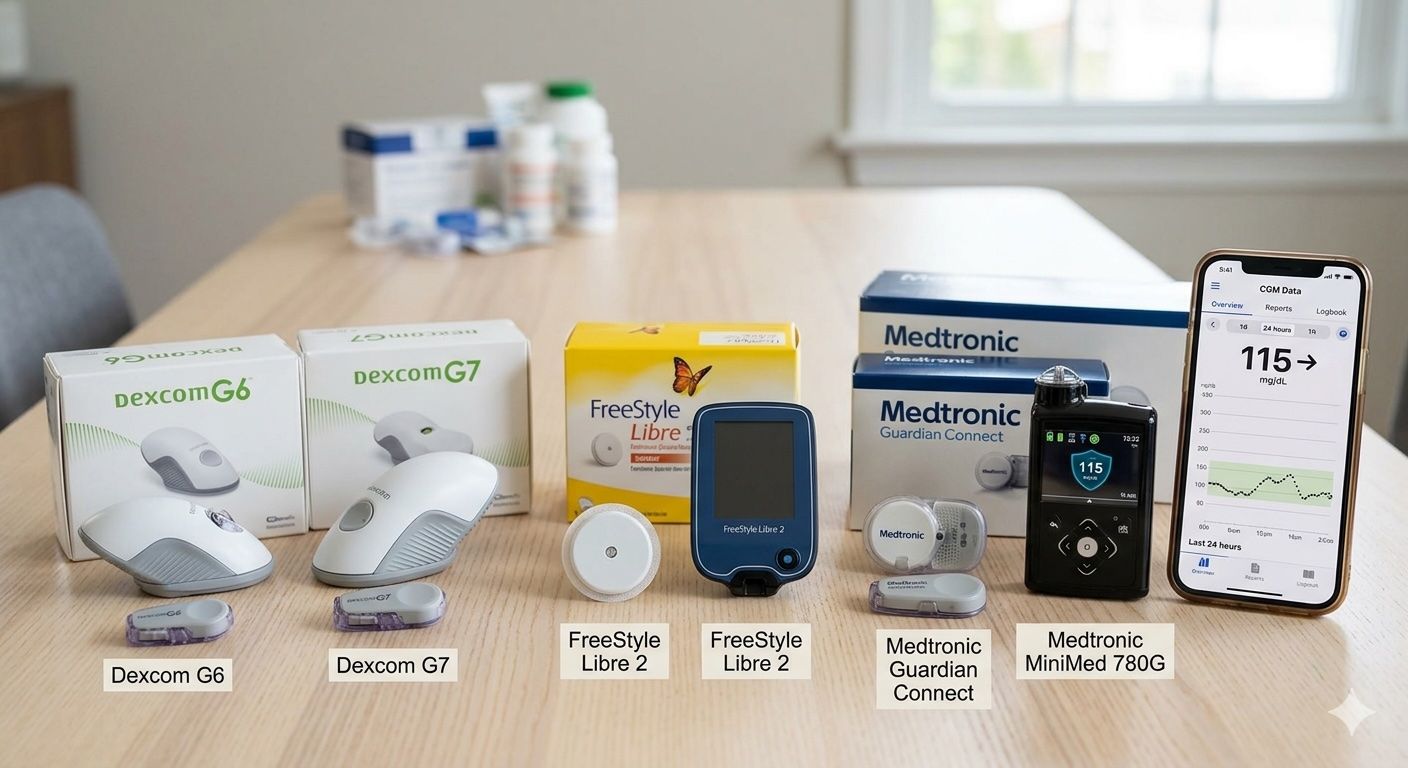
When analyzing the current landscape, any CGM device comparison must begin with the two dominant players: Dexcom and Abbott. The Dexcom G7 represents a significant leap forward from its predecessor, featuring a 60% reduction in size and a streamlined all-in-one sensor and transmitter design. One of its most praised features is the remarkably short 30-minute warm-up period, allowing users to regain their data stream quickly after a sensor change. For those managing Type 1 diabetes, it is often cited as the best CGM for insulin pump integration because of its established partnerships with automated insulin delivery systems like the Tandem t:slim X2 and Omnipod 5.
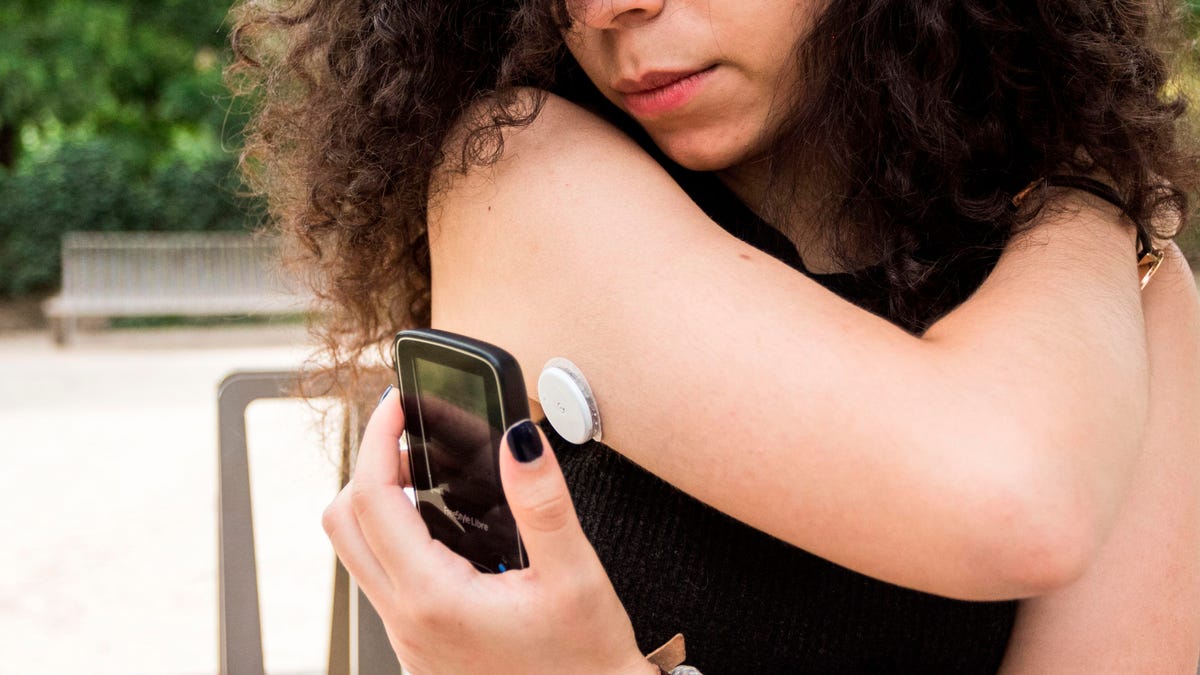
The FreeStyle Libre 3, however, holds the title for the smallest and thinnest sensor on the market, roughly the size of two stacked pennies. It has set a new industry benchmark with a mean absolute relative difference (MARD) of 7.9% for adults, making it the first 14-day continuous glucose monitor to achieve a MARD below 8%. Unlike earlier versions that required manual scans, the Libre 3 utilizes Bluetooth LE connectivity to stream glucose readings directly to a smartphone every minute.
In a direct Dexcom G7 vs FreeStyle Libre 3 comparison, the choice often comes down to specific software needs. Dexcom offers predictive alerts that can warn a user up to 20 minutes before a hypoglycemic event occurs. These glucose trend arrows are vital for proactive management. While the Libre 3 provides similar real-time alerts, many users find the Dexcom interface more robust for sharing data with clinical teams. However, for those looking for the most discreet, set-it-and-forget-it experience, the Libre 3 is nearly impossible to beat in terms of physical footprint.
Specialized Tracking: Long-Wear and OTC Options
While short-term wearable patches dominate the market, there is a growing demand for long-wear continuous glucose monitors that reduce the frequency of sensor changes. The Eversense E3 system offers a unique solution: a tiny, fluorescent-based sensor that is subcutaneously implanted by a healthcare provider. This long-term implantable CGM systems 180 days option is ideal for individuals who experience skin irritation from traditional adhesives or those who simply do not want to manage a new sensor every two weeks. The system does require a removable smart transmitter to be worn over the implant site to relay data to a phone, but the sensor itself stays put for half a year.
2024 also marked a historic shift in accessibility. On March 5, 2024, the Dexcom Stelo became the first continuous glucose monitor cleared by the FDA for over-the-counter use in the United States. This device is specifically designed for adults with Type 2 diabetes who do not use insulin, or for health-conscious individuals interested in monitoring their glycemic variability. By removing the prescription requirement, Stelo opens the door for a broader population to understand how lifestyle choices impact their metabolic health.
Managing metabolic health isn't just about avoiding highs and lows; it’s about maximizing time-in-range. This metric is becoming more popular than HbA1c for many users because it reflects the daily reality of glucose fluctuations. These specialized tools provide the data necessary to make immediate adjustments to diet and exercise, which is far more actionable than a three-month laboratory average.

Accuracy Benchmarking: Understanding MARD and the Smartwatch Myth
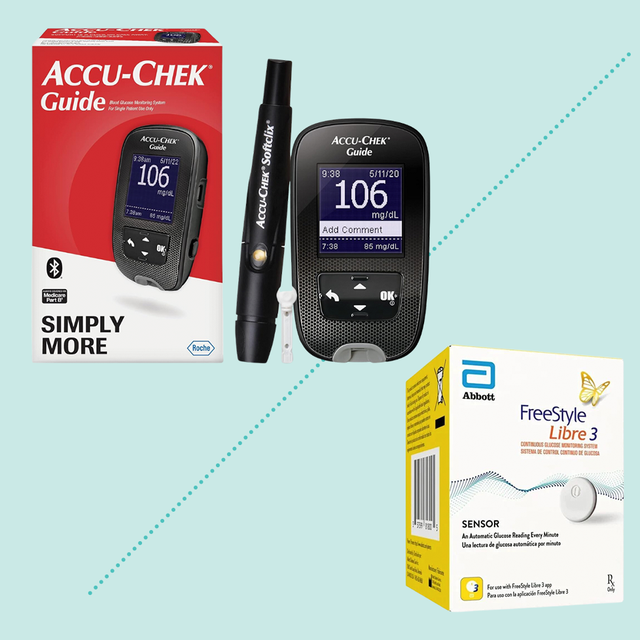
To truly evaluate accurate glucose monitoring systems, one must understand the MARD rating. MARD stands for Mean Absolute Relative Difference; the lower the percentage, the closer the device's readings are to a lab-grade blood reference. While the Dexcom G7 has an overall MARD of 8.2% when worn on the upper arm, it is important to remember that all CGMs measure glucose in the interstitial fluid rather than the blood. This results in a physiological lag time of about 5 to 15 minutes, which is why finger-prick tests are still recommended when symptoms don't match sensor readings.
The Smartwatch Myth There is a common misconception that popular smartwatches can measure blood sugar levels directly through the skin using light sensors. As of 2024, the FDA has not cleared any smartwatch or smart ring to independently monitor glucose levels. Any device claiming to do so without an under-the-skin sensor is currently considered unproven and potentially dangerous for medical decision-making.
The real value of these wearables lies in hypoglycemia prevention. The most accurate CGM for predictive low alerts can literally be a lifesaver, sounding an alarm before glucose levels reach a dangerous threshold. This is a core component of a closed-loop system, where the CGM "talks" to an insulin pump to automatically pause or adjust insulin delivery based on the sensor's trajectory. Without this high level of accuracy and predictive logic, the dream of an artificial pancreas would not be possible.
Lifestyle and Budget: Choosing the Right Wearable
For many, the decision of which device to wear is dictated by finances and daily activity. If you are looking for affordable continuous glucose monitors without insurance, the price gap can be significant. The FreeStyle Libre 3 is frequently cited as the most cost-effective option for cash-pay patients, often costing around $160 to $170 per month for a 30-day supply of two sensors. In contrast, the Dexcom G7 can cost upwards of $350 per month without insurance coverage or manufacturer coupons.
Beyond the price tag, consider your physical activity level. Active users often struggle with sensor longevity due to sweat or physical contact during sports. Finding the best CGM wearables for active lifestyle and sports often involves more than just the sensor itself; it involves the ecosystem of overpatch adhesives. Both Dexcom and Abbott offer proprietary overpatches, but a secondary market of high-strength medical adhesives has emerged to help sensors stay attached for their full 10 or 14-day duration during marathons or swimming.
Insurance eligibility is also a major factor. Most private insurers and Medicare have expanded coverage for CGMs, but they often require a diagnosis of diabetes and evidence of frequent insulin use or a history of severe hypoglycemia. However, as the benefits of real-time tracking for Type 2 management become clearer, these restrictive policies are slowly beginning to shift, favoring the long-term cost savings of better-managed glucose levels.
FAQ
Which CGM is considered the most accurate?
The FreeStyle Libre 3 currently holds the record for the lowest MARD in a 14-day wearable, with a clinical rating of 7.9% for adults. However, the Dexcom G7 is also highly accurate at 8.2% and is often preferred for its integration with automated insulin pumps.
How much does a CGM cost per month without insurance?
Prices vary by pharmacy, but the FreeStyle Libre 3 typically costs between $160 and $180 per month. The Dexcom G7 is more expensive, often ranging from $300 to $400 per month without insurance, though manufacturer coupons can often reduce this price significantly.
Do you need a prescription to buy a CGM wearable?
For the majority of clinical-grade CGMs like the Dexcom G7 and Libre 3, a prescription is still required in the United States. However, the Dexcom Stelo has recently received FDA clearance as an over-the-counter option, meaning it can be purchased without a doctor's script.
Can you wear a CGM while swimming or showering?
Yes, all major CGM sensors from Dexcom and Abbott are water-resistant. The Dexcom G7 and Libre 3 are rated for submersion in up to 8 feet of water for up to 30 minutes. For long-distance swimmers, using an additional waterproof overpatch is highly recommended.
What is the difference between a CGM and a finger-prick test?
A finger-prick test measures glucose levels in the blood at a single moment in time. A CGM measures glucose in the interstitial fluid (the fluid surrounding your cells) continuously, providing trend data and alerts. Because of the difference in fluid, there may be a slight time lag in CGM readings compared to blood.
Conclusion & Next Steps
Choosing from the best CGM wearables in 2024 is no longer just about managing a chronic condition; it is about reclaiming control over your daily health. If you are using an insulin pump, the Dexcom G7 is likely your strongest candidate due to its seamless integration and predictive capabilities. For those prioritizing a low profile and the lowest out-of-pocket cost, the FreeStyle Libre 3 remains the gold standard for discreet, highly accurate monitoring.
As the technology moves toward the over-the-counter market with products like the Dexcom Stelo, the barrier to entry for metabolic health tracking is disappearing. Whether your goal is to prevent hypoglycemia, manage Type 2 diabetes, or simply optimize your nutrition through a better understanding of glycemic variability, there is a wearable sensor designed for your needs. Your next step should be a conversation with your healthcare provider to determine which system aligns with your clinical requirements and insurance profile.