Quick Facts
- The Coin Rule: If you can point to the pain with a single finger and it covers an area smaller than a coin, it is rarely a cardiac event.
- Duration Threshold: True ischemic pain related to a heart attack typically lasts longer than 20 minutes and does not resolve with a change in posture.
- Prevalence: Research indicates that only about 20% of patients who present to emergency departments with chest pain are actually diagnosed with a heart attack.
- Primary Mimic: Non-cardiac chest pain is highly prevalent, and GERD accounts for approximately 50% to 60% of such cases.
- Silent Events: According to the Centers for Disease Control and Prevention, roughly one in five heart attacks is silent, occurring without the individual being aware of the event.
- Key Differentiator: To identify chest pain types, look for crushing pressure for cardiac issues versus burning for GI issues or sharp pain for muscular strain.
Feeling chest discomfort can be frightening, but not all chest pain types indicate a heart attack. Understanding the source—whether cardiac, digestive, or muscular—is critical for your health. Chest pain types are generally categorized into cardiac causes like myocardial infarction and non-cardiac causes like GERD or musculoskeletal strain. Differentiating them requires assessing location, duration, and triggers.
The Cardiac Profile: Identifying Ischemic Pain
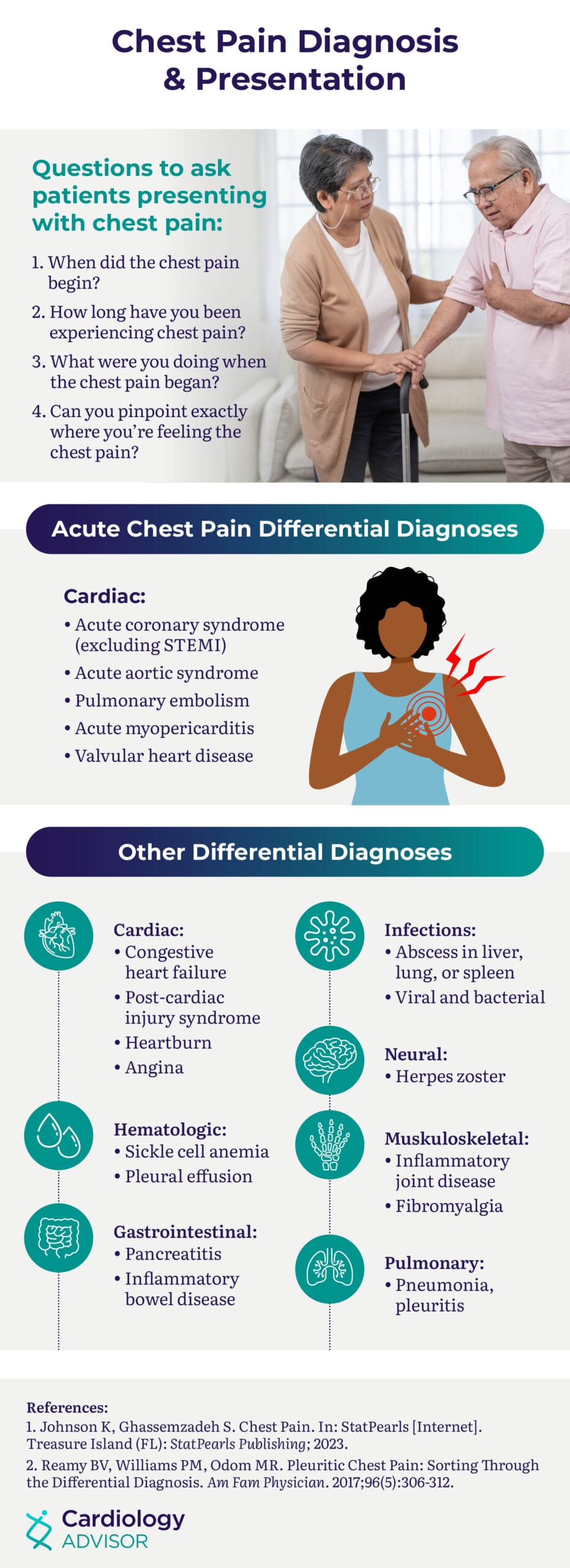
When the heart muscle does not receive enough oxygenated blood, it triggers an ischemic response. This is often experienced as a myocardial infarction or angina. Unlike the sharp "niggling" pain of a pulled muscle, cardiac pain is typically described as a crushing pressure or a heavy squeezing sensation, as if an elephant is sitting on your chest.
You should pay close attention to where the pain travels. Cardiac discomfort often radiates to the left arm, the jaw, the neck, or even the back between the shoulder blades. This radiation is a hallmark of coronary artery disease and should be treated with the utmost urgency. Along with the pressure, you might experience chest pain emergency signs such as dyspnea, which is a significant shortness of breath, and diaphoresis, or profuse cold sweating.
If you notice that the discomfort is triggered by physical exertion or intense emotional stress and subsides when you rest, it may be angina. However, if the pain persists while you are at rest or is accompanied by nausea and lightheadedness, these are emergency warning signs of cardiac chest pain that require an immediate call to emergency services.
Red Flag Symptoms: Sudden, intense pressure accompanied by shortness of breath, profuse sweating, and pain radiating to the neck or jaw. If these occur, do not drive yourself to the hospital; call for an ambulance immediately.
Angina vs Heartburn: The Digestive Divide
It is incredibly common to mistake gastrointestinal distress for a heart problem because the esophagus and the heart share the same nerve pathways. This is why angina vs heartburn symptoms often feel strikingly similar. However, the timing and triggers of the pain usually tell the story.
Heartburn, caused by Gastroesophageal reflux (GERD), typically presents as a burning sensation that starts in the upper abdomen and moves upward behind the breastbone. It frequently follows a large meal, especially if it was spicy or acidic, and tends to worsen when you lie down or bend over. In contrast, angina is rarely affected by your digestive state and is more likely to improve with rest or medications like nitroglycerin.
To help you distinguish the two, consider the following angina vs heartburn symptoms comparison:
| Feature | Angina (Cardiac) | Heartburn (GI) | Musculoskeletal |
|---|---|---|---|
| Sensation | Pressure, squeezing, heaviness | Burning, acidic taste in throat | Sharp, stabbing, or tender |
| Primary Trigger | Physical exertion or stress | Large meals or lying flat | Movement, coughing, or touch |
| Radiation | Jaw, neck, left arm, or back | Rarely radiates; stays central | Localized to a specific rib or muscle |
| Relief | Rest or nitroglycerin | Antacids or sitting upright | Rest or anti-inflammatories |
Musculoskeletal and Respiratory Causes
If you find that your chest pain becomes sharper when you take a deep breath, cough, or move your torso in a specific way, you are likely dealing with musculoskeletal chest pain symptoms. One of the most frequent causes is costochondritis, which is an inflammation of the cartilage connecting your ribs to your breastbone.
In a costochondritis vs heart attack symptoms comparison, the key is palpation. If the area is tender to the touch—meaning you can press on a specific spot on your chest and recreate the pain—it is almost certainly not a heart attack. Musculoskeletal pain is often described as "sharp" or "stabbing" rather than the "dull weight" associated with the heart.
Other non-cardiac causes include respiratory issues. For instance, a pulmonary embolism (a blood clot in the lung) can cause sudden chest pain and shortness of breath, but it is usually accompanied by a rapid heart rate and pain that worsens with inhalation. Similarly, pericarditis—inflammation of the sac surrounding the heart—causes a sharp pain that often feels better when you lean forward and worse when you lie back.
Mental Health and Anxiety Indicators
Anxiety and panic attacks are frequent visitors to the emergency room. A panic attack can mimic a heart attack so closely that even clinical professionals must rely on an Electrocardiogram (ECG) to rule out cardiac distress. During a period of high anxiety, your body releases adrenaline, which increases your heart rate and can cause chest tightness.
When distinguishing anxiety from heart pain, look for associated psychological symptoms. Panic-driven discomfort is often accompanied by trembling, a sense of impending doom, and tingling in the hands or feet. While the chest pain can feel very real, it often peaks within ten minutes and then slowly dissipates, unlike the steady or worsening pressure of a myocardial infarction. Even so, if you have never experienced a panic attack before, seeking a medical evaluation is the safest course of action to ensure the heart is not involved.
The 15-Minute Rule: When to Seek Medical Help
In the world of cardiology, "time is muscle." If you experience persistent chest discomfort that lasts for more than 15 minutes, you should seek immediate medical attention. This is especially true if the pain is new, worsening, or different from anything you have felt before.
Medical professionals use sophisticated risk stratification models to determine the cause of your pain. When you arrive at an emergency department, the staff will likely perform an Electrocardiogram (ECG) to check the heart's electrical activity and a blood test for high-sensitivity troponin. Troponin is a protein released into the bloodstream when the heart muscle is damaged; its presence is a definitive marker for a heart attack.
The goal for doctors is the "door-to-balloon" time—a 90-minute window to open a blocked artery and minimize permanent damage. Because atypical presentations are common in women and older adults—who may experience fatigue or nausea rather than traditional chest pressure—you should never ignore unexplained discomfort. Knowing when to seek medical evaluation for chest discomfort can quite literally be a life-saving decision.
FAQ
How can I tell if chest pain is heart-related?
Heart-related pain is usually felt as a heavy pressure, squeezing, or fullness in the center of the chest rather than a sharp or localized sensation. It often radiates to the jaw, neck, or left arm and is frequently triggered by physical activity or emotional stress. If the pain is accompanied by nausea, cold sweats, or shortness of breath, it is more likely to be cardiac in nature.
How can you distinguish between heartburn and a heart attack?
Heartburn typically causes a burning sensation that moves upward toward the throat and is often triggered by eating or lying down. It is usually relieved by antacids. A heart attack feels more like a heavy weight or crushing pressure and is not affected by eating. While heartburn can be uncomfortable, it does not typically cause the extreme exhaustion or radiation of pain to the jaw and arms seen in heart attacks.
What does muscular chest pain feel like?
Muscular chest pain is generally sharp and well-localized, meaning you can often point to the exact spot where it hurts. It usually worsens when you twist your body, reach overhead, or take deep breaths. Unlike heart pain, musculoskeletal issues often make the chest wall tender to the touch, so pressing on the area will cause the pain to increase.
What are the signs that chest pain is caused by anxiety?
Anxiety-related chest pain often occurs alongside a rapid heartbeat, sweating, trembling, and a feeling of intense fear or panic. The pain may feel like a sharp stab or a sudden tightness, but it typically lacks the heavy, radiating pressure of a heart attack. However, because the physical symptoms of a panic attack are so intense, a medical professional should rule out cardiac issues if it is your first time experiencing these symptoms.
When should I see a doctor for chest pain?
You should see a doctor immediately if you experience chest pain that lasts longer than 15 minutes, especially if it is accompanied by shortness of breath, sweating, or nausea. Any new, severe, or unexplained chest discomfort warrants an evaluation. If you have risk factors such as high blood pressure, diabetes, or a history of smoking, you should be even more vigilant about seeking professional help for any chest symptoms.