Quick Facts
- Prevalence: Greater trochanteric pain syndrome affects between 10% and 25% of the population in industrialized nations.
- Gender Disparity: This condition is significantly more common in women, with a female-to-male prevalence ratio of approximately 4 to 1.
- Treatment Success: Conservative management, such as physical therapy and rest, has success rates for symptom resolution reported at over 90%.
- The 24-Hour Rule: You can safely gauge exercise intensity by ensuring any increased pain returns to your baseline level within 24 hours.
- Key Recovery Metric: Most patients see significant functional improvement within six to twelve weeks of consistent care.
Home management of trochanteric bursitis involves reducing inflammation through rest, ice, and non-steroidal anti-inflammatory drugs. It is crucial to adopt lateral hip precautions, such as avoiding sleeping on the affected side and not crossing your legs, to minimize compression of the synovial sac. Using a pillow between the knees while sleeping can further alleviate pressure and provide comfort.
Understanding GTPS: Is it Bursitis or Tendon Pain?
When you feel a sharp, nagging ache on the outer side of your hip, the term you will most likely hear is trochanteric bursitis. However, in the clinical world, we increasingly use the umbrella term greater trochanteric pain syndrome to describe this discomfort. While the word bursitis implies that the bursa—the small, fluid-filled synovial sac that cushions the hip bone—is inflamed, the reality is often more complex.
For many women, especially those navigating the hormonal shifts of perimenopause or menopause, the root cause is often gluteal tendinopathy. This involves tiny tears or irritation in the tendons of the hip abductor muscles where they attach to the bone. Because the bursa and the tendons are so close together, it can be hard to tell the difference between hip bursitis and gluteal tendon tear without imaging. However, the treatment for both usually focuses on the same goal: reducing compression and improving pelvic alignment to take the load off the sensitive area.
If you are wondering if your pain fits this profile, try the 30-second single-leg stand. Stand on your affected leg for 30 seconds (hold onto a chair for balance). If this reproduces that familiar ache on the outside of your hip, it is a strong indicator of greater trochanteric pain syndrome. Understanding this distinction helps us move away from just "resting" and toward a strategy of progressive loading that actually heals the tissue.
Immediate Relief: Ergonomics and Home Management
Finding trochanteric bursitis relief for women over 40 often starts with how you move and rest during the day. Since the condition is frequently caused or aggravated by compression, the first step in hip bursitis treatment at home is identifying "compressive" habits. When you cross your legs while sitting or stand with all your weight shifted onto one "hitch" hip, you are pulling the IT band tightness tight against the bursa and tendons.
Icing is another foundational tool. Applying an ice pack for 15 to 20 minutes, three times daily, can help quiet down soft tissue inflammation. When combined with over-the-counter non-steroidal anti-inflammatory drugs, this can create a window of comfort that allows you to begin gentle movements.
One of the biggest hurdles my readers face is getting a good night's rest. To find the best sleeping positions for hip bursitis relief, you must avoid lying directly on the painful side. If you sleep on your "good" side, your top (painful) leg naturally falls forward and down toward the mattress. This movement, called adduction, stretches the painful structures over the bone.
Rationale + Action: The Side-Sleeper Strategy Rationale: Keeping the hips parallel prevents the top leg from pulling on the gluteal tendons and compressing the bursa. Action: Place one or two firm pillows between your knees and ankles. This keeps your top leg level with your hip, maintaining neutral pelvic alignment and reducing nocturnal pain.
The 4-Phase Progressive Exercise Roadmap
If you want to know how to treat trochanteric bursitis at home effectively, you must look beyond just stretching. In fact, aggressive stretching of the IT band can sometimes make the pain worse by increasing compression. Instead, we use a staged approach to hip bursitis exercises that builds strength and resilience.
Phase 1: Pain Management and Isometrics
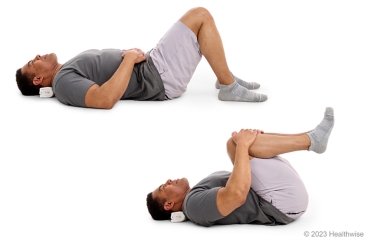
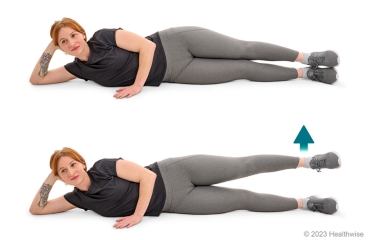
The goal here is to settle the pain without losing muscle tone. Isometric tendon loading involves holding a muscle contraction without moving the joint. A simple exercise is the isometric side-lying hip abduction: lie on your back and push the outside of your ankles against a strap or a heavy piece of furniture for 10 seconds, then relax.
Phase 2: Range of Motion and Gentle Loading
Once the sharpest pain subsides, we introduce gentle hip bursitis exercises for pain management that involve movement. This phase focuses on the hip abductor muscles. Clamshells and glute bridges are staples here. They help restore range of motion and start teaching the glutes to support the hip joint again.

Phase 3: Weight-Bearing Stability
Now we move to standing. This is where we correct pelvic alignment during daily activities. Exercises like the "hip hitch" (standing on a step and lowering/raising one hip) or sit-to-stands focus on keeping the knees and hips tracking correctly. This phase is critical for long-term recovery and preventing an overuse injury from returning.
Phase 4: Energy Storage and Return to Impact
For active women, this final phase involves preparing the hip for walking, running, or hiking. We introduce faster movements and increased resistance to ensure the tendons can handle the "spring" of impact.
| Phase | Core Exercise Example | Recommended Reps/Sets | Frequency |
|---|---|---|---|
| Phase 1 | Isometric Hip Abduction | 5 holds of 45 seconds | Daily |
| Phase 2 | Glute Bridges | 3 sets of 15-20 reps | 3-4x per week |
| Phase 3 | Controlled Lateral Step-ups | 3 sets of 10 reps | 3x per week |
| Phase 4 | Functional Squats | 3 sets of 12 reps | 2-3x per week |
When to See a Specialist
While home care is highly effective, it is important to know when to see a specialist for chronic hip bursitis. If you have been consistent with your exercises and ergonomic changes for six weeks without any improvement, a physical therapist or sports medicine doctor can provide a more tailored assessment.
You should seek immediate medical attention if you experience "red flags" such as a fever, significant redness or warmth over the hip, or an absolute inability to bear weight on the leg. These could indicate an infection or a more serious fracture.
For persistent cases, specialists may suggest advanced interventions like corticosteroid injections to reduce acute swelling or extracorporeal shockwave therapy to stimulate healing in the tendons. However, these are usually most effective when paired with the rehabilitation exercises mentioned above.
How long does trochanteric bursitis take to heal? While mild cases might resolve in a few weeks, chronic greater trochanteric pain syndrome involving the tendons often requires three to six months of structured loading to reach full functional recovery. Consistency is your greatest ally.

FAQ
What are the first signs of trochanteric bursitis?
The earliest signs usually include a localized ache or tenderness on the bony point of the outer hip. You might notice it first when lying on your side at night, or you may feel a sharp twinge when getting out of a car or climbing stairs. The area may feel sensitive to the touch, and the pain may eventually radiate down the outside of your thigh toward the knee.
How long does it take for hip bursitis to go away?
With proper rest and activity modification, acute symptoms can often settle within six to twelve weeks. However, if the underlying cause is gluteal tendinopathy rather than simple inflammation, it may take several months of progressive strengthening to fully resolve the issue and prevent it from returning.
What is the best treatment for trochanteric bursitis?
The "gold standard" treatment is a combination of education on avoiding compression (like not crossing legs) and a progressive exercise program. Strengthening the hip abductor muscles through isometric and isotonic loading has been shown to be more effective for long-term relief than corticosteroid injections alone, which often only provide short-term pain reduction.
Can you walk with trochanteric bursitis?
Yes, walking is generally encouraged as long as it does not cause a significant flare-up. Use the 24-hour rule: if your pain increases during your walk but returns to your baseline level within 24 hours, the activity is likely safe. If the pain lingers or causes you to limp, you should shorten your distance and focus on your hip-strengthening exercises first.
How should I sleep with trochanteric bursitis?
The most comfortable position is usually sleeping on your unaffected side with one or two pillows placed between your knees and ankles. This keeps your hips stacked and prevents the top leg from pulling across your body, which reduces pressure on the bursa and tendons. Avoid sleeping flat on your back if it causes your hips to roll outward, as this can also create tension.
When is surgery necessary for trochanteric bursitis?
Surgery is very rarely necessary and is usually considered only after at least six to twelve months of dedicated, high-quality physical therapy has failed. Procedures might involve removing the inflamed bursa or repairing tears in the gluteal tendons, but given the 90% success rate of conservative care, surgery is a last resort.